
Argentina’s Falklands Banner Sparks UK Protest as White House Defends Free Speech
Argentina's Falklands banner after its World Cup victory over England has sparked criticism from the UK, while the White House defended the players' free speech. FIFA faces calls to investigate.


Follow Nukunya
Get the latest breaking news and updates from Nukunya.
Argentina’s World Cup celebrations have triggered a diplomatic dispute after players displayed a banner reaffirming Argentina’s claim to the Falkland Islands. Britain condemned the display, the White House defended the team’s right to free expression, and FIFA now faces calls to determine whether its political neutrality rules were breached.
DALLAS / LONDON / BUENOS AIRES — Argentina’s celebrations after defeating England to reach the FIFA World Cup final have sparked a diplomatic dispute after players displayed a banner supporting Argentina’s claim to the Falkland Islands, prompting criticism from the United Kingdom while the White House defended the team’s right to free expression.
The banner carried by several Argentina players read “Las Malvinas son Argentinas” (“The Falkland Islands are Argentine”), referring to the British Overseas Territory in the South Atlantic whose sovereignty has been disputed by Britain and Argentina for decades. The display came immediately after Argentina’s victory over England and has prompted calls for FIFA to examine whether the celebration breached its regulations on political messaging during official competitions.
FIFA’s disciplinary regulations prohibit political, religious and ideological messages at its competitions unless expressly authorised. Although football’s governing body has not announced any investigation, British officials say the incident should be reviewed under those rules.
The UK reaffirms its sovereignty claim.
Downing Street reiterated Britain’s long-standing position that the Falkland Islands remain British and that their future should be determined by the wishes of the islands’ residents.
“The World Cup might not be ours, but the Falkland Islands definitely are,” the Prime Minister’s official spokesperson said, reaffirming the UK’s commitment to the territory.
British ministers said any disciplinary action would ultimately be a matter for FIFA but supported calls for the governing body to assess whether the banner contravened tournament regulations.
The Falkland Islands Government also criticised the display, saying it was disappointed that a major international sporting event had been used to highlight a political dispute. Officials urged FIFA to apply its rules consistently and emphasised the right of the islands’ residents to determine their own political future.

The White House cites free speech protections.
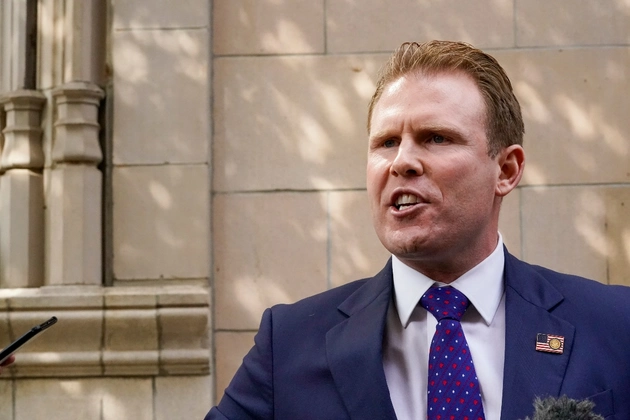
The controversy widened after the White House defended the Argentina players’ actions. Andrew Giuliani, who heads the White House’s FIFA task force, said the players were entitled to express their views while competing in the United States, citing constitutional protections for freedom of speech. His remarks contrast with the UK’s position and introduce another diplomatic dimension to an issue already involving governments, football authorities and the Falkland Islands administration.
Argentina maintains a longstanding claim.
Argentina refers to the Falkland Islands as Las Malvinas and has consistently maintained that the territory forms part of its sovereign territory.
Successive Argentine governments have argued that sovereignty should be resolved through negotiations in line with relevant United Nations resolutions. President Javier Milei has said Argentina remains committed to pursuing its claim through diplomatic and peaceful means.
Britain rejects that position, arguing that the principle of self-determination is paramount.
In a referendum organised by the Falkland Islands Government in 2013, more than 99% of participating voters supported remaining a British Overseas Territory. Argentina does not recognise the referendum as determining the sovereignty dispute.

A dispute rooted in history
Britain has administered the Falkland Islands since 1833, while Argentina has continued to dispute British sovereignty.
The disagreement escalated into armed conflict in 1982 when Argentine forces landed on the islands before British troops retook the territory during a 74-day war.
The conflict claimed the lives of 255 British military personnel, three Falkland Islanders and 649 Argentine service personnel, leaving a legacy that continues to shape relations between the two countries.
Although diplomatic relations have improved in many areas since then, sovereignty remains one of the most sensitive issues in UK-Argentina relations.
FIFA under growing scrutiny
FIFA has not indicated whether it intends to investigate the incident.
Should a formal complaint be lodged, the governing body could review match reports, photographic evidence and submissions from the relevant football associations before determining whether disciplinary proceedings are warranted. Any decision could establish an important precedent for how FIFA applies its rules on political messaging during future international tournaments.
Sport & Geopolitics
FIFA response pending
Why African Readers Should Care
The dispute shows how major sporting events can become stages for unresolved questions of territory, sovereignty, historical memory and national identity.
Nukunya Analysis
Sport Is Increasingly a Diplomatic Arena
The controversy illustrates how major sporting events increasingly become platforms for wider geopolitical disputes. Players, supporters and governments may use the visibility of international competition to express political claims that extend far beyond the pitch.
Across Africa, sport has frequently intersected with debates over sovereignty, national identity, colonial history, regional diplomacy and political recognition.
FIFA’s eventual response could therefore carry implications beyond Europe and South America. It may influence how football authorities address political symbolism at future global competitions involving African teams and territories with contested or politically sensitive status.
African relevance
Why the Precedent Could Matter Across Africa
Sovereignty Disputes
African competitions can involve politically sensitive territorial, border or recognition questions.
Colonial Memory
Sporting symbolism may revive disputes rooted in colonial boundaries, occupation or independence struggles.
National Identity
Players and supporters may view flags, slogans and commemorations as expressions of identity rather than party politics.
Regulatory Consistency
African associations will expect FIFA to apply the same standards regardless of the teams or governments involved.
Controversy at a glance
What Happened
Argentina displayed a “Las Malvinas son Argentinas” banner after defeating England.
Britain condemned the display and restated its position that the Falkland Islands remain British.
The White House reportedly defended the players’ right to free expression.
FIFA had not publicly confirmed whether it would open disciplinary proceedings at the time of publication.
Editorial transparency
What Is Confirmed — and What Remains Unclear
What Is Reported
- Argentina displayed the banner after the match.
- The wording asserted Argentina’s claim to the islands.
- British officials criticised the display.
- The episode generated an international political response.
What Remains Unresolved
- Whether FIFA will open a formal investigation.
- Whether disciplinary rules were breached.
- Whether the banner was authorised by the team or federation.
- What sanction, if any, FIFA might consider.
Quick brief
Key Takeaways
- 01
Argentina displayed a “Las Malvinas son Argentinas” banner after defeating England.
- 02
Britain condemned the display and reaffirmed its sovereignty position on the Falkland Islands.
- 03
The White House reportedly defended the players’ right to free expression.
- 04
FIFA had not announced whether it would investigate the incident at the time of publication.
- 05
The controversy reflects the continuing sensitivity of the sovereignty dispute decades after the 1982 conflict.
- 06
FIFA’s response may shape future treatment of political symbolism at international tournaments.
Related posts:
 Spain Outclasses France to Reach FIFA World Cup 2026 Final with Dominant 2-0 Victory
  Mexico Beat South Africa 2-0 in World Cup Opener Marked by Three Red Cards
  Cape Verde become smallest nation to reach World Cup knockouts
  Messi Scores as Argentina Survive Cape Verde Scare to Reach World Cup Last 16
  Egypt Makes World Cup History as Salah Leads Pharaohs Past Australia into Last 16