Documents Reveal Shell Poured Oil Through Damaged Nigeria Pipelines for Years Despite Poll


Follow Nukunya
Get the latest breaking news and updates from Nukunya.
The Nembe Creek Contradiction: Internal Warnings vs. Corporate Action
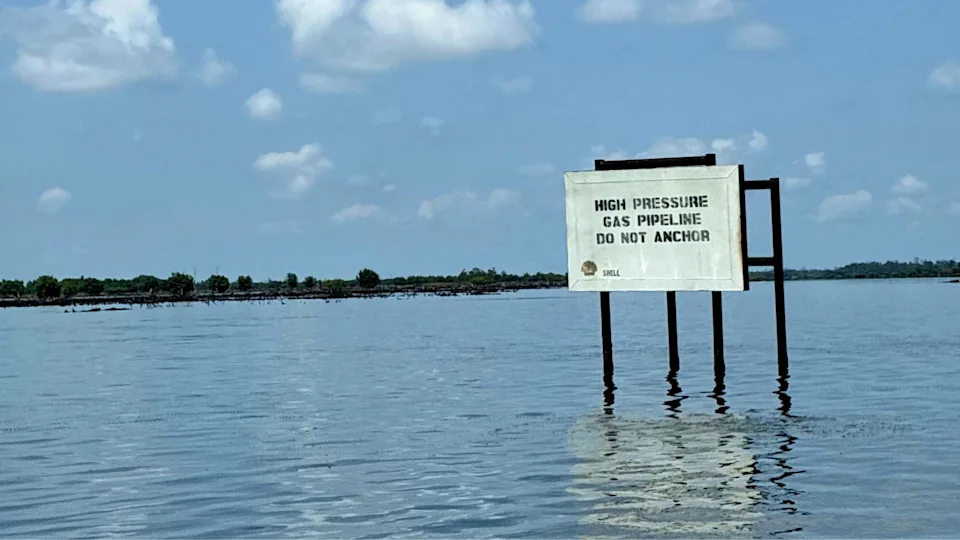
Internal documents obtained by the BBC have revealed a stark contradiction between Shell’s public stance and its internal knowledge regarding the safety of its Nigerian infrastructure. As early as 2008, a senior executive warned that the company was taking significant risks by continuing to pump millions of barrels of unrefined fuel through the Nembe Creek Trunk Line. Despite evidence of massive pollution and systematic infrastructure failure, Shell continued to operate the 60-mile (96.5km) pipeline for years.
The disclosed files, which include internal emails and presentations, suggest that Shell was aware of the hazards posed by “massive and destructive uncontrolled theft” and technical breakdowns. These Shell UK court records emerged as part of ongoing legal proceedings brought by Niger Delta communities, who argue that Shell should be held liable for more than 100 leaks occurring between 2011 and 2013. The documents indicate that the company prioritized operational continuity even when its own technical standards and staff warnings suggested the pipeline’s integrity was compromised.
Systemic Underestimation: The Bodo Oil Spill Controversy
The scale of Niger Delta oil pollution has long been a point of contention, but court disclosures have exposed what Amnesty International Shell report findings describe as a pattern of systemic underestimation. In the case of two major spills in the Bodo area in 2008, Shell’s official reports claimed that only 1,640 barrels of oil were lost. However, an independent assessment by the US-based firm Accufacts Inc. calculated the actual volume to be in excess of 100,000 barrels.
Amnesty International’s Director for Global Issues, Audrey Gaughran, stated that the company “repeatedly made false claims” to minimize compensation payments. After years of defending its lower figures, Shell admitted in UK court documents that its original estimates for the Bodo spills were incorrect. This admission has cast immediate doubt on hundreds of other “Joint Investigation Visit” (JIV) reports, which serve as the primary basis for determining community compensation and the extent of environmental cleanup required.
Economic and Environmental Devastation in Bille and Bodo Communities
For the residents of the Bille community, oil leaks have resulted in more than just environmental damage; they have destroyed a way of life. Bille, a riverine community comprised of 45 islands, once relied on its healthy mangroves and creeks for sustenance. Today, the landscape is deeply scarred, with sediment coated in crude oil.
Balafama Augustus Bruce, a 64-year-old fisherman from Bille, told the BBC that the area was beautiful before 2011. “People play here and go into the river. We used to fish around here. But because of the damage [the spills] have caused, nobody is fishing,” Bruce noted. This sentiment is echoed across the region, where 15,000 people from the Bodo area also saw their livelihoods devastated. The Shell Nigeria oil spills’ pollution has turned once-fertile wetlands into contaminated dead zones, leaving the local population struggling with long-term health and economic crises.
Shell’s Defense: Theft, Sabotage, and Complex Environments
In response to the allegations, Shell has consistently maintained that the majority of the pollution in the Niger Delta is the result of third-party interference. In court papers, the oil giant argues that large-scale oil theft, sabotage, and the operation of dozens of illegal refineries are the primary drivers of environmental degradation. A Shell spokesperson stated that the internal documents recently brought to light ignore the “critical context of the complex operating environment” in Nigeria at the time.
Shell maintains that its Nigerian subsidiary invested heavily over many years to reduce the risk of spills and improve response times. The company argues that the Nembe Creek Trunk Line—which was capable of carrying 150,000 barrels a day before being sold last year—was a frequent target of criminal syndicates, making it nearly impossible to maintain standard safety protocols without constant disruption.
The Legal Battle in UK Courts
The ongoing Shell UK court records and disclosures are part of a landmark legal battle that has shifted the focus from Nigerian jurisdictions to the British legal system. By bringing the case to the UK, the 15,000 claimants have successfully forced the disclosure of internal corporate communications that were previously shielded from public view.
These documents have proved pivotal in challenging the Joint Investigation Visit reports. Because Shell typically dictates the assessment of volume and damage in these JIVs, communities have historically had little recourse to contest the findings. Audrey Gaughran of Amnesty International noted that these reports “aren’t worth the paper they’re written on” now that Shell has admitted to underplaying the magnitude of spills under legal pressure, suggesting that thousands of people may have been denied proper compensation for years.
Global Context: Energy Infrastructure and Conflict Risks
The crisis in the Niger Delta reflects a broader global vulnerability within energy infrastructure, where oil installations often become flashpoints for conflict and environmental catastrophe. For instance, recent reports show that energy hubs remain primary targets in modern warfare, such as the Ukrainian drone strike on a St Petersburg oil terminal and the ongoing maritime tensions in the Strait of Hormuz, where the US military recently disabled a tanker.
While the causes vary—from state-sponsored conflict in the Middle East and Eastern Europe to corporate negligence and local militancy in Nigeria—the result is the same: massive environmental risk and the disruption of local lives. The revelations regarding Shell in Nigeria underscore the high cost of maintaining ageing infrastructure in volatile regions and the legal complications that arise when corporate interests clash with environmental safety.
As the legal proceedings continue, the documents provide a rare look into how one of the world’s largest oil companies managed a deteriorating asset that its own staff knew was a “ticking time bomb” for the environment. For the people of Bille and Bodo, the quest for accountability remains a struggle against decades of systemic pollution and contested data.
Related posts:
 Africa’s drought crisis intensifies as food insecurity rises
  Nigeria’s currency reforms stabilise naira after months of volatility
  Gabon’s social media clampdown draws rights concerns after platform suspensions and phone seizures
  Ghana Pushes Border Cooperation as Sahel Insecurity Raises Regional Security Risks
  First group of Ghanaians repatriated from South Africa after migrant protests