Egypt Denied Historic First World Cup Victory as Belgium Rescue Point


Follow Nukunya
Get the latest breaking news and updates from Nukunya.
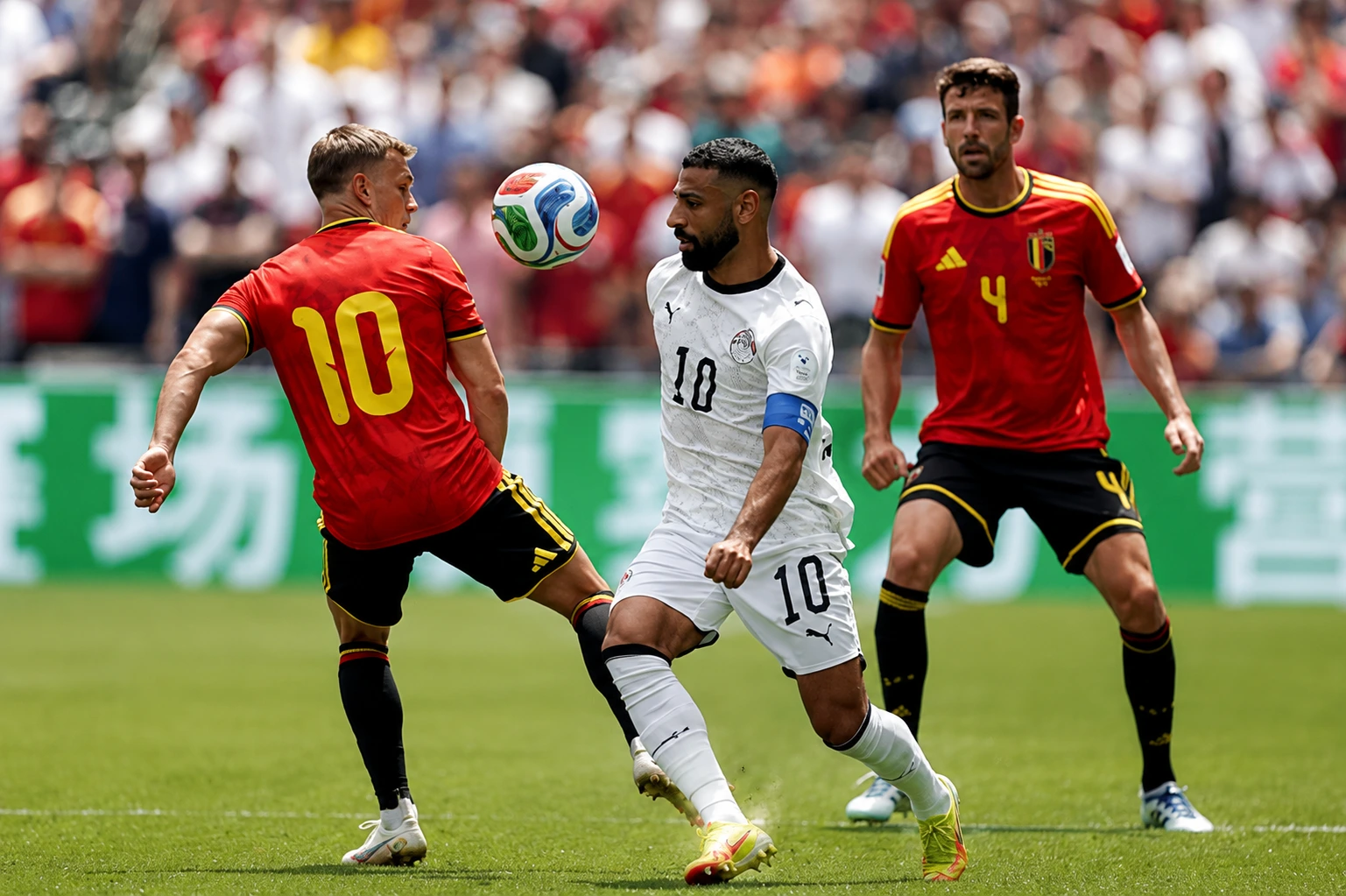
Egypt came within 24 minutes of securing the country’s first-ever FIFA World Cup victory before Belgium fought back to earn a 1-1 draw in Seattle. The result extended Egypt’s 92-year wait for a World Cup win but reinforced the growing competitiveness of African football on the global stage.
SEATTLE, United States – Egypt came within touching distance of a historic first FIFA World Cup victory before Belgium rescued a 1-1 draw through a second-half own goal, denying the Pharaohs a result that would have ended a wait stretching back 92 years.
The seven-time African champions led for much of the match after Emam Ashour’s first-half strike and looked on course to secure one of the most significant victories in Egyptian football history. However, Belgium equalised shortly after Romelu Lukaku’s introduction from the bench, leaving both sides with a point in their Group G opener.
For Egypt, the draw brought mixed emotions. Pride in a disciplined and accomplished performance was tempered by the knowledge that a first-ever World Cup victory had slipped away in the closing stages. Egypt first appeared at the World Cup in 1934 and remain without a victory after eight tournament matches across multiple editions. The result also came on a memorable personal occasion for captain Mohamed Salah, who marked his 34th birthday with an assist and an influential display that underlined his importance to the Egyptian side.
Ashour Delivers a Dream Start
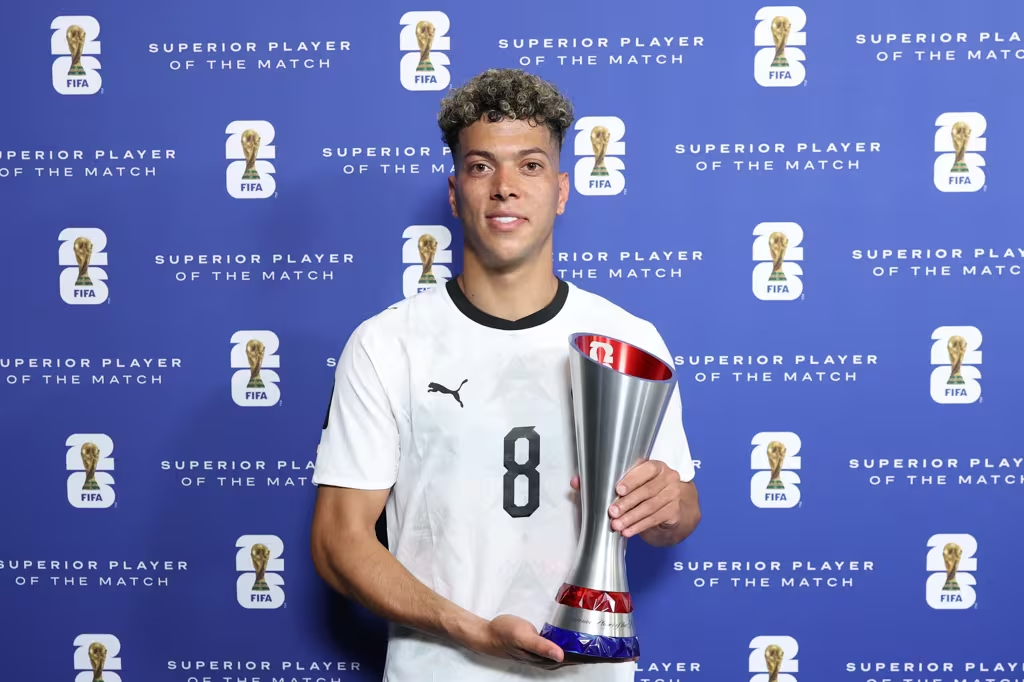
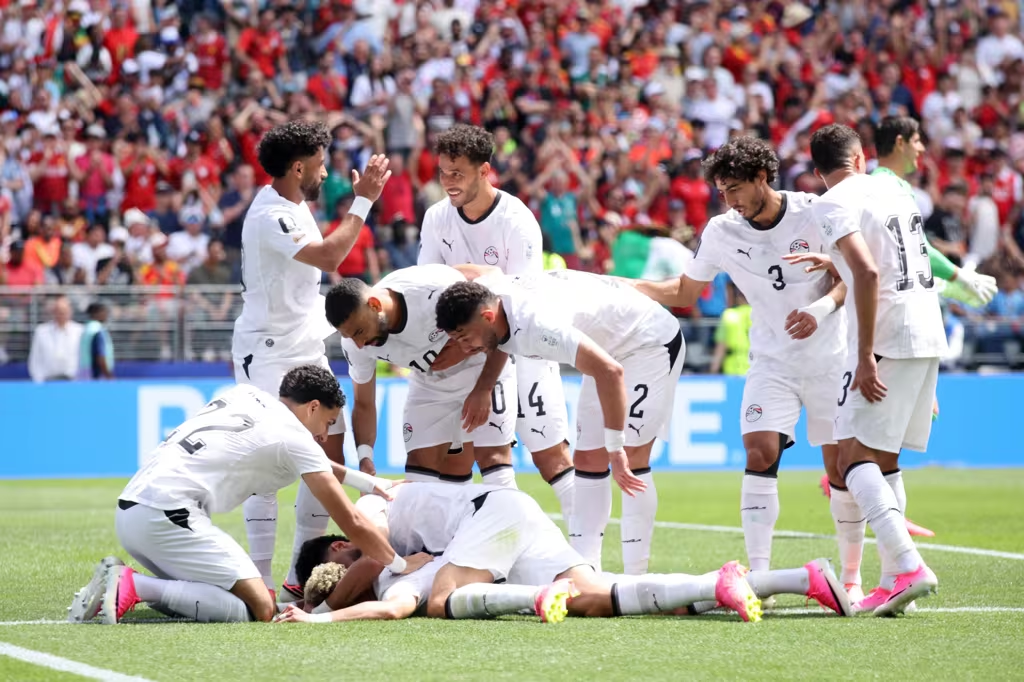
Egypt’s breakthrough arrived in the 20th minute.
Salah collected possession before finding Al Ahly midfielder Emam Ashour, who unleashed a powerful low strike from outside the penalty area beyond Belgium goalkeeper Thibaut Courtois. The goal was Ashour’s first for the national team and immediately shifted momentum towards the African side.
The Pharaohs remained organised and confident after taking the lead. Mostafa Zizo nearly doubled the advantage before half-time, forcing Courtois into an important save as Egypt continued to threaten on the counterattack.
How Egypt Frustrated Belgium
One of the most impressive aspects of Egypt’s performance was their tactical discipline.
Rather than attempting to dominate possession, Egypt adopted a compact defensive structure and looked to exploit transitions through Salah, Ashour and Zizo.
The approach limited Belgium’s opportunities during the first half and forced the Europeans into repeated attacks from wide areas. Belgium enjoyed more possession and territory but struggled to create clear openings against a well-organised Egyptian defence. Kevin De Bruyne attempted to dictate play, while Jeremy Doku looked to stretch the game, yet Egypt remained largely comfortable for long periods.
The tactical plan was executed effectively and demonstrated the growing sophistication of African teams competing at the highest level.
Lukaku Changes the Match in Seconds
Belgium coach Rudi Garcia turned to Romelu Lukaku in the 66th minute as his side searched for a way back into the match.
The impact was immediate.
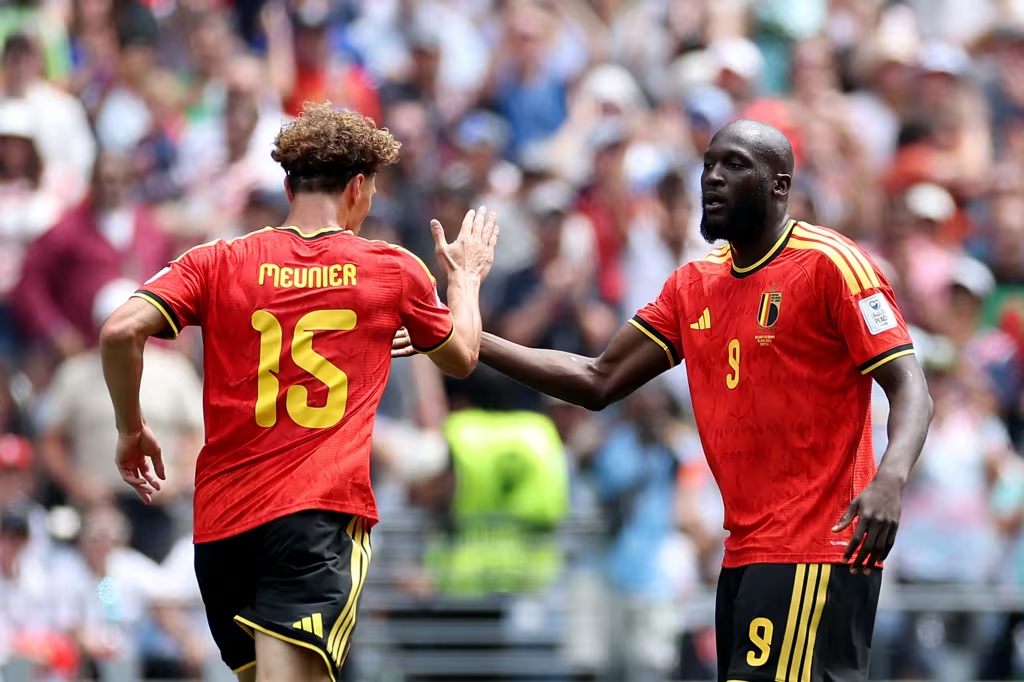
Just seconds after entering the field, Lukaku’s presence inside the penalty area contributed to the moment that changed the game. Thomas Meunier delivered a low cross, and Egypt defender Mohamed Hany, attempting to deal with the danger under pressure, diverted the ball into his own net.
Although recorded as an own goal, Lukaku’s movement and physical presence played a decisive role. The equaliser transformed the atmosphere and gave Belgium renewed confidence.
“A player came off the bench and helped us find the equaliser,” Belgium coach Rudi Garcia said afterwards as he praised his team’s response.
What the Result Means for Group G
The draw leaves Group G perfectly balanced after the opening round of matches.
| Group G | P | W | D | L | GF | GA | GD | Pts | Form | |
|---|---|---|---|---|---|---|---|---|---|---|
| 1 |  New Zealand New Zealand | 1 | 0 | 1 | 0 | 2 | 2 | 0 | 1 | |
| 2 |  IR Iran IR Iran | 1 | 0 | 1 | 0 | 2 | 2 | 0 | 1 | |
| 3 |  Belgium Belgium | 1 | 0 | 1 | 0 | 1 | 1 | 0 | 1 | |
| 4 |  Egypt Egypt | 1 | 0 | 1 | 0 | 1 | 1 | 0 | 1 | |
All four nations remain firmly in contention for qualification.
For Belgium, the result serves as an early warning that reputation alone will not be enough to navigate the group stage. For Egypt, the point significantly improves their prospects heading into fixtures against New Zealand and Iran.
Egypt midfielder Hamza Abdelkarim reflected the mood within the squad afterwards.
“We got one point at the end, but we gave it our all,” he said.
Why This Matters for African Football
Beyond Egypt, the result carries wider significance for African football.
Recent World Cups have shown a steady narrowing of the gap between African teams and traditional football powers. Morocco’s run to the semi-finals in 2022 demonstrated what is possible, while Senegal, Ghana and Cameroon have all produced landmark World Cup performances over the past two decades.
Egypt’s display against Belgium belongs within that broader trend.
The Pharaohs matched one of Europe’s strongest teams tactically, physically and technically for much of the contest.
The performance reinforced the view that African football is increasingly capable of competing on equal terms with established global powers.
What This Means for Ghana
For Ghanaian football observers, Egypt’s performance offers important lessons.
The match highlighted the value of tactical organisation, patience and efficient use of key attacking moments against higher-ranked opponents.
It also demonstrated how African teams can remain competitive through collective discipline even when facing nations with greater depth and resources. As Ghana continues to rebuild towards future international tournaments, Egypt’s display provides a useful example of how preparation and tactical clarity can reduce the gap between Africa and football’s traditional powers.
Five Questions After Belgium v Egypt
Why was this result historic?
Egypt were only 24 minutes away from securing the country’s first-ever FIFA World Cup victory.
Who was the standout performer?
Emam Ashour scored the opening goal and delivered one of the best performances of his international career.
How important was Lukaku?
Crucial. Belgium equalised within seconds of his introduction.
Did Egypt deserve more?
Many observers would argue yes. Egypt created good chances, defended effectively and led for much of the match.
Can Egypt still qualify?
Absolutely. The draw leaves Group G completely open and strengthens Egypt’s chances of reaching the knockout stages.
The Bigger Picture
World Cups often produce moments that define teams even when they do not win. Egypt left Seattle without the historic victory they craved but with renewed belief that they belong on football’s biggest stage.
For Belgium, the draw exposed vulnerabilities. For Egypt, it showcased resilience, organisation and ambition. And for African football, it provided another reminder that the continent’s leading teams are increasingly capable of standing toe-to-toe with the world’s traditional powers.
Related posts:
 Omar Artan Handed UEFA Super Cup Final After World Cup Exclusion
  Ghana Challenges Canada’s Thomas Partey Visa Decision as World Cup Row Deepens
  Canada Earn Historic First World Cup Point as Larin Rescues Draw Against Bosnia
  ANALYSIS: The USA’s World Cup Statement Win Raises a Bigger Question: Have They Finally Joined Football’s Elite?
  Amad Diallo’s Late Winner Gives Ivory Coast Crucial World Cup Victory