
Ghana shifts November public-sector payday to Friday: What workers should know
A two-day payroll delay puts the focus on payment reliability as Ghana implements revised public-sector pay arrangements.

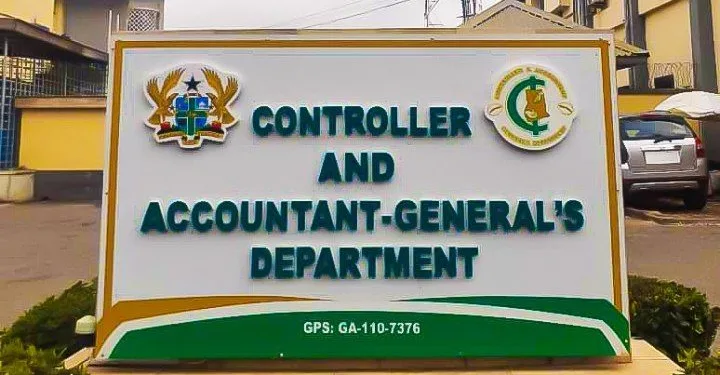

A two-day payroll delay puts the focus on payment reliability as Ghana implements revised public-sector pay arrangements.
Government employees on Ghana’s mechanised payroll whose November salaries were due on Wednesday, 25 November 2026, are now expected to be paid on Friday, 27 November. The Controller and Accountant-General’s Department (CAGD) attributed the postponement to processing difficulties and changes to public-sector remuneration.
The revised date was communicated in a departmental statement on Wednesday. Friday remains the announced payment date, not confirmation that funds have already reached employees.
Beyond payday: Why payroll reliability matters
Understanding Ghana’s November public sector salary payment postponement, payroll accuracy and the financial commitments of affected workers.
The revised schedule is an announced commitment, not independent confirmation of completed payments.
The revised payment schedule
The announced postponement moves the expected payment day by two calendar days. Its practical significance depends on employees’ individual financial circumstances.
Paying employees correctly is more than transferring money
The department’s explanation identifies changes to remuneration, including adjustments affecting education and judicial service employees.
Some education-sector payments had already been processed earlier in November. This does not establish that every outstanding payment or adjustment has been completed.
Remuneration changes
Identify applicable salary adjustments, eligibility and effective dates.
Payroll validation
Check employee records, entitlements, deductions and payment calculations.
Payment processing
Process authorised payments and reconcile payment records.
Employee receipt
Employees receive the correct amounts within the announced timeframe.
Nukunya’s conceptual payroll control framework. It does not describe verified CAGD internal system architecture or establish the precise technical cause of the postponement.
Underpayment
Incorrect entitlements or deductions can leave employees receiving less than the amount properly due.
Overpayment
Incorrect calculations can result in excess payments that may subsequently require recovery.
Incorrect effective dates
Applying a remuneration adjustment to the wrong period can create discrepancies in current or historical pay.
Payment delays
Even where salary calculations are correct, delayed receipt can disrupt employees’ financial commitments.
The department’s published payroll responsibilities include salary payment scheduling, validation of payment vouchers and management of deductions.
What could a delayed payday mean for a household?
Employees who arrange household purchases, rent, transport costs or loan repayments around a fixed payday may need to reconsider those commitments when salary payments are postponed.
Exclude expenses already included in essential daily expenditure.
Two days is the announced postponement. Other durations are hypothetical sensitivity scenarios, not forecasts.
Household cash-flow comparison
A temporary cash-flow shortfall is not equivalent to lost income, a salary reduction, borrowing costs or confirmed financial harm. This calculator does not assume that employees must borrow money.
How financial circumstances change the impact
| Scenario | Available funds | Commitments | Potential shortfall |
|---|---|---|---|
| Household A | GH¢50 | GH¢360 | GH¢310 |
| Household B | GH¢100 | GH¢360 | GH¢260 |
| Household C | GH¢250 | GH¢360 | GH¢110 |
| Household D | GH¢500 | GH¢360 | GH¢0 |
The same payment postponement can have different consequences for households. Available financial reserves and the timing of essential commitments matter.
All household scenarios are hypothetical. No representative employee survey or household financial dataset was used.
What affected employees can check
Workers can monitor official updates, review their payment records and raise discrepancies through appropriate channels.
0 of 6 checks completed.
Measuring payroll modernisation beyond processing speed
Predictable and accurate salary payments are important components of effective public administration.
Nukunya proposes six complementary indicators for evaluating payroll reliability.
| Indicator | Suggested measurement | Why it matters |
|---|---|---|
| On-time payment rate | Employees paid by the announced deadline divided by employees due payment, multiplied by 100 | Measures payment reliability |
| Payroll accuracy rate | Correctly calculated employee payments divided by payments independently checked, multiplied by 100 | Identifies calculation and entitlement errors |
| Discrepancy resolution time | Median elapsed time between a recorded discrepancy and its verified resolution | Measures responsiveness to employee concerns |
| Payment reconciliation | Successfully reconciled payments divided by payments initiated, multiplied by 100 | Supports financial control and auditability |
| Advance notification | Time between an official disruption notice and the original scheduled payday | Helps assess whether employees have adequate time to plan |
| Employee support accessibility | Availability of accessible enquiry channels and documented response times | Examines whether affected employees can obtain assistance |
These are Nukunya’s proposed accountability indicators, not official CAGD performance targets or reported results. Consistent definitions, complete records and independent verification would be required for reliable performance assessment.
The next test is delivery
The immediate measure of success will be whether affected employees receive the correct amounts on the revised date.
Beyond Friday, timely communication, effective financial controls and accessible employee support would help workers plan their finances with greater certainty.
Payroll modernisation should ultimately be assessed not only by processing accuracy but also by reliability for the people who depend on it.
Nukunya — Beyond the headlines. Evidence, context and perspective.Frequently asked questions
How long is the announced salary payment delay?
The announced postponement is two calendar days, with Friday identified as the revised payment day.
Does the delay mean public sector salaries have been reduced?
The announcement described in this report does not establish a general reduction in public sector salaries.
Have all outstanding salary payments been completed?
Completion of all outstanding payments has not been independently established in this report.
What should employees do if their salary is incorrect?
Employees can review their payment records, contact their employer’s payroll or human resources team and use official CAGD contact channels where necessary.
Does the calculator show actual salary losses?
No. It illustrates potential temporary cash-flow shortfalls using hypothetical financial commitments and available funds. It does not calculate lost salary.
How should payroll reliability be measured?
Nukunya proposes examining payment timeliness, accuracy, reconciliation, discrepancy resolution, advance notification and employee support accessibility.
Related posts:
 Ghana Parliament Passes Human Sexual Rights and Family Values Bill
 Mahama Calls for Renewed Pan-African Unity and Reparations Agenda During UK Visit
 Missing Newborn at Salaga Hospital Sparks Police Investigation
 Three Arrested in Police Raid on Illegal Mining Site Along Ghana Water Pipeline
 Ghana Anti-Galamsey Operations Hand Over 141 Seized Firearms for Destruction