Ghana Postpones South Africa Talks as Anti-Migrant Violence Escalates


Follow Nukunya
Get the latest breaking news and updates from Nukunya.
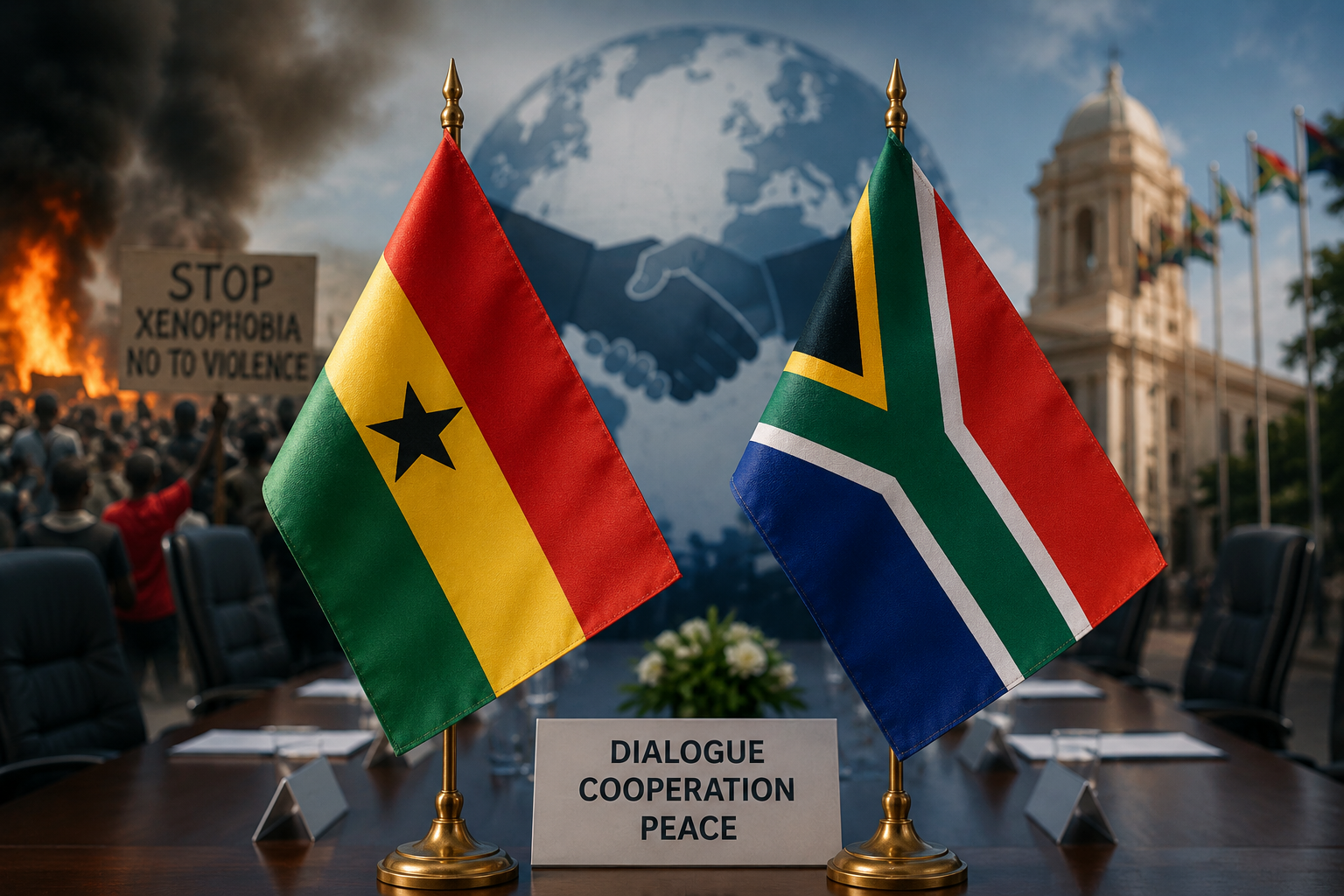
The Government of Ghana has postponed planned bilateral talks with South Africa following a recent surge in anti-migrant violence that has raised concerns over the safety of foreign nationals, including Ghanaians living and working in the country.
The decision comes amid growing diplomatic tensions after reports of attacks, intimidation and looting targeting migrants in several South African communities. Ghanaian authorities say the postponement will allow both countries to focus on protecting lives and addressing the security situation before resuming high-level engagements.
Diplomatic Meetings Put on Hold
Officials from Ghana confirmed that scheduled bilateral discussions with South Africa have been delayed as violence against foreign nationals continues to attract regional and international attention.
The talks were expected to strengthen cooperation in areas including trade, investment, education and regional security. However, the deteriorating security environment prompted Accra to postpone the meetings until conditions improve.
Government officials stressed that the decision should not be viewed as a breakdown in diplomatic relations but rather as a precautionary measure while both governments work to protect affected communities.
Concerns for Ghanaian Nationals
Thousands of Ghanaians live in South Africa, where many operate small businesses, work in skilled professions or pursue higher education.
The Ghanaian government says it remains in close contact with its High Commission in Pretoria and has urged citizens to remain vigilant, avoid areas affected by unrest and report any security concerns to diplomatic officials.
Authorities have also assured citizens that contingency plans are in place should the security situation worsen.
Anti-Migrant Violence Remains a Regional Concern
South Africa has experienced repeated outbreaks of anti-migrant violence over the past two decades.
Foreign-owned businesses have frequently been targeted during periods of unrest, with migrants from several African countries reporting attacks, looting and intimidation.
Analysts say the violence is driven by a combination of economic hardship, unemployment, inequality and public frustration over access to jobs and public services. Community leaders and human rights organisations have repeatedly warned against blaming migrants for broader socio-economic challenges.
South Africa Responds
South African authorities have condemned attacks against foreign nationals and pledged to restore law and order.
Police have increased patrols in affected areas, while government officials have appealed for calm and warned that those responsible for violence will face prosecution.
The South African government has also reiterated that discrimination and xenophobic attacks have no place in the country’s constitutional democracy.
ECOWAS and African Union Monitoring Developments
Regional organisations, including the Economic Community of West African States (ECOWAS) and the African Union, are closely monitoring the situation.
Diplomatic observers say the unrest has highlighted the importance of strengthening regional cooperation on migration, security and the protection of citizens living abroad.
Several African governments have urged restraint while encouraging peaceful dialogue between communities.
Economic Impact
Beyond humanitarian concerns, prolonged unrest could affect trade and investment between Ghana and South Africa, two of sub-Saharan Africa’s largest economies.
South Africa remains one of Ghana’s important trading partners, with cooperation spanning banking, telecommunications, retail, manufacturing and mining.
Business groups have warned that continued instability could disrupt commercial activities and undermine investor confidence across the region.
Calls for Peace
Civil society organisations in both countries have called for greater community engagement to combat xenophobia and promote social cohesion.
Religious leaders, traditional authorities and business organisations have urged communities to reject violence and work together to address the underlying economic and social issues fueling tensions.
Many observers argue that protecting migrants is essential to maintaining regional integration under the African Continental Free Trade Area (AfCFTA), which encourages the movement of goods, services and investment across the continent.
Looking Ahead
Although the bilateral talks have been postponed, both governments have indicated their commitment to maintaining strong diplomatic relations.
Officials say discussions will resume once the security situation stabilises and conditions allow for productive engagement.
For now, Ghana continues to prioritise the safety of its citizens while supporting regional efforts aimed at restoring peace and preventing further violence.
Related posts:
 Eight Arrested After Deadly Nkwanta Clashes Leave Three Dead
  Reports say Sedina Tamakloe-Attionu begins prison sentence at Nsawam
  Ghana moves nearly 900 citizens to safe havens ahead of South Africa protests
  Adwoa Safo petitions the Attorney-General to move alleged shooting case to High Court
  Mahama orders emergency flood relief as NPP demands overhaul of Accra flood response