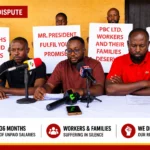
JUSAG Strike Begins as Ghana’s Supreme Court and Other Courts Face Closures
JUSAG's indefinite strike began on 2 November 2026, with reported closures at the Supreme Court, Court of Appeal and other courts. The salary dispute remains unresolved.



JUSAG’s indefinite strike began on 2 November, with reported closures at several major courts. The salary dispute remains unresolved.
UPDATE — 2 November 2026: JUSAG’s indefinite strike has begun. Citi Newsroom reported from court premises that the Supreme Court, Court of Appeal, Accra Circuit Court and some District Court offices were locked, with security personnel restricting access. These observations confirm disruption at the locations reported, but do not establish that every court nationwide is closed.
The walkout follows JUSAG’s 30 October declaration over delayed approval of its 2026 salary review and arrears. The Judicial Service has said it is engaging government officials to resolve the dispute, but no final salary agreement or suspension of the strike has been verified. Read the Judicial Service position reported by Citi Newsroom.
What the closures mean for court users
Access restrictions at the affected courts could interrupt hearings, filings and registry services. The number of adjourned hearings and the position of individual courts outside the reported locations have not been independently established. Anyone due in court should contact their lawyer or the relevant court through official channels; do not assume a legal deadline has been extended.
Reporting distinction: The strike’s commencement and closures at named locations are confirmed through on-site reporting. A complete nationwide shutdown, the number of cases delayed and any negotiated settlement remain unverified.
ACCRA, Ghana — Ghana’s courts face potentially widespread disruption from Monday, November 2, after the Judicial Service Staff Association of Ghana (JUSAG) declared an indefinite nationwide strike over unresolved salary and allowance demands.
The association announced its decision on Friday, October 30, directing Judicial Service employees to withdraw their services unless the government approves revised 2026 salaries and arranges payment of outstanding arrears.
JUSAG General Secretary Abdulai Yakubu said the association had exhausted efforts to resolve the dispute through engagements with the Judicial Council, government ministries and other authorities. The National Labour Commission (NLC) has intervened, asking JUSAG to suspend its planned action while negotiations continue.
On November 1, Yakubu maintained that JUSAG would not abandon its demands merely because discussions had been scheduled. The union indicated it would participate in a meeting with the Ministry of Employment and Labour Relations on Monday while maintaining its position.
As of 2 November, the strike has begun and closures at named courts have been reported; the full nationwide impact remains unverified.
Why is JUSAG going on strike?
The dispute centres on the review of salaries and allowances for Judicial Service employees. JUSAG says the Judicial Council assessed proposed 2026 salary arrangements and forwarded recommendations for presidential approval. The association says that process has not produced the approval and payments its members expected.
- Approval of the Judicial Council’s recommendations on the 2026 salary review.
- Payment of revised salaries in November 2026.
- Settlement of salary arrears covering January to October 2026.
- A credible resolution of outstanding salary and allowance demands.
What did JUSAG announce?
At a press conference at the Supreme Court on October 30, Yakubu declared an indefinite nationwide strike beginning November 2. The association instructed staff not to report for normal duties, including court registry work, while security personnel were directed to continue safeguarding Judicial Service property.
A strike declaration is not the same as a verified nationwide shutdown. Whether individual courts operate, and what arrangements exist for urgent matters require confirmation from the Judicial Service.
What is the National Labour Commission’s position?
The NLC intervened after receiving JUSAG’s notice of industrial action. In a letter dated October 26, it asked the minister responsible for employment and labour relations to engage the parties and advised JUSAG to suspend the intended strike, citing Section 161 of the Labour Act, 2003 (Act 651). It requested a report on the engagement by November 6.
JUSAG criticised the timing of the intervention and questioned whether negotiations could deliver a resolution without officials empowered to approve the salary recommendations. The NLC’s advice does not establish that the strike has been cancelled, nor does the union’s position settle any legal question about the action.
Which courts have been reported closed?
Citi Newsroom reported locked premises at the Supreme Court, Court of Appeal, Accra Circuit Court and some District Court offices on 2 November. The position of every court has not been confirmed. Judicial Service staff maintain records, process filings, manage case documents and support hearings. A substantial withdrawal could delay hearings, restrict registry services and complicate administrative processing.
Disruption has been reported at the named courts, but these consequences are not confirmed outcomes at every court. No independently verified nationwide list of affected courts or emergency arrangements was available in the sources reviewed.
Could 4,000 cases be affected daily?
JUSAG’s General Secretary warned that approximately 4,000 cases and 8,000 party involvements could be affected daily if court operations were disrupted nationwide. JUSAG’s illustrative estimate assumes more than 400 courts handling an average of 10 cases each day, with at least two parties per case.
These are illustrative figures, not independently audited statistics of hearings actually scheduled or postponed. Actual caseloads vary, some cases involve more than two parties, and not every matter would necessarily be affected equally.
Why does the dispute matter beyond Judicial Service workers?
Delays can affect criminal proceedings, family disputes, civil litigation and business cases. Litigants may face additional travel expenses, uncertainty and legal costs if hearings are postponed. The broader public-interest issue is whether the justice system can maintain essential services while a remuneration dispute remains unresolved.
What does the law say?
JUSAG has referred to Article 149 of Ghana’s 1992 Constitution and the Judicial Service (Terms and Conditions of Service) Regulations, 2025 (C.I. 141) in discussing the salary review. The framework for determining remuneration and the legality of a particular strike are separate legal questions. Neither the union’s interpretation nor the NLC’s intervention should be presented as a final judicial determination.
Why have negotiations not resolved the matter?
Yakubu criticised a Ministry of Finance proposal to pay arrears in three instalments without a specified timetable. This is JUSAG’s account; the sources reviewed do not establish a final government-approved payment agreement. On November 1, JUSAG indicated it intended to attend a meeting on November 2 while maintaining its core demands.
Timeline of the dispute
- December 2025: JUSAG says it began pursuing the 2026 salary review.
- January 19, 2026: Association seeks progress through correspondence.
- September 10: Further reminder sent.
- October 23: Formal notice of intended industrial action submitted to NLC.
- October 26: NLC calls for negotiations.
- October 30: JUSAG publicly declares indefinite nationwide strike.
- November 1: JUSAG reiterates demands while planning to attend talks.
- November 2: Strike begins; Citi Newsroom reports closures at several major courts.
- November 6: Deadline for report to NLC.
What should people with court cases do?
People with scheduled hearings should seek confirmation through their lawyers or the relevant court’s official channels where possible. They should neither assume that every hearing has been cancelled nor that normal registry services will be available. Those facing urgent matters or procedural deadlines should seek appropriate legal advice.
What happens next?
The immediate questions are whether the government approves the salary recommendations, whether negotiations produce an agreement, and whether the Judicial Service announces arrangements for courts and litigants. The strike has commenced and specific court closures have been reported, but a complete nationwide shutdown and any final settlement have not been established.
Related posts:
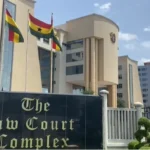 Ghana judicial workers’ strike: Labour Commission intervenes ahead of November 2 deadline
 Reports say Sedina Tamakloe-Attionu begins prison sentence at Nsawam
 Court Sets July 10 Hearing After Former NAFCO CEO’s Airport Arrest
 TikToker Camilla Alhassan jailed for one year over false claims about President Mahama
 Ghana Anti-Galamsey Operations Hand Over 141 Seized Firearms for Destruction