Minority Walks Out Over Tribunal Bill, Accuses Majority of Pushing ‘Kangaroo Court’ System

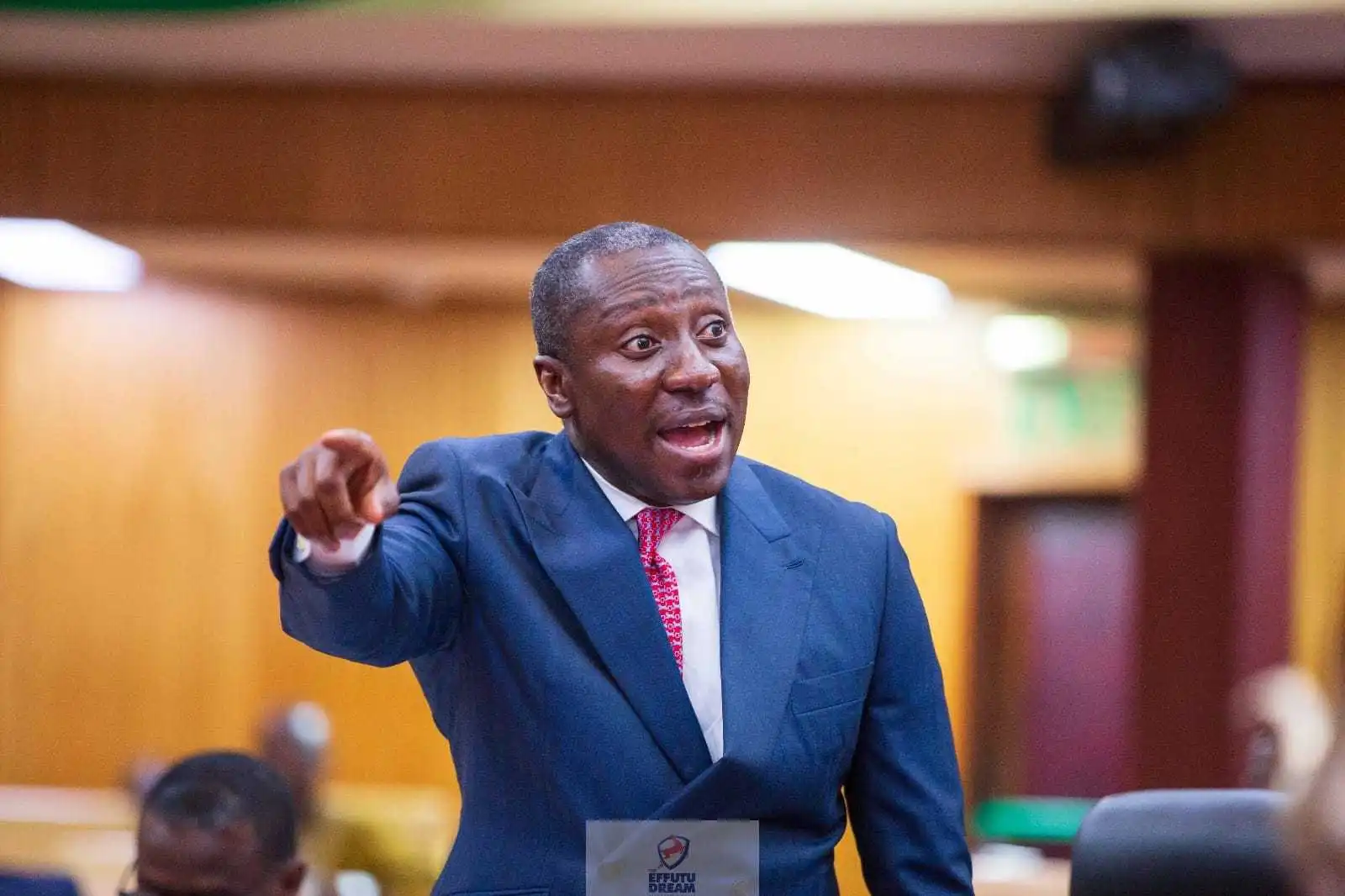

The Minority in Parliament has staged a dramatic walkout during deliberations on the Tribunal Bill, accusing the Majority Caucus of attempting to establish what it described as a “kangaroo court” system that is inconsistent with Ghana’s Constitution.
Led by Minority Leader Alexander Afenyo-Markin, the New Patriotic Party (NPP) lawmakers left Parliament during the clause-by-clause consideration of the bill, arguing that the proposed legislation would create a parallel judicial system capable of undermining due process and fair trial rights.
Minority Rejects Proposed Tribunal Bill
Addressing journalists shortly after the walkout on Thursday, Alexander Afenyo-Markin said the Tribunal Bill seeks to establish an adjudicating body that is not recognized under Ghana’s constitutional framework.
According to him, the proposed tribunal would duplicate the work of existing courts instead of strengthening the country’s justice system.
“Our contention as Minority is that this bill seeks to create a parallel system, an analogous system unknown to the Constitution, if we read all provisions of the Constitution as a whole,” he said.
The Minority maintained that rather than creating new tribunals, government should invest in improving the existing judicial system by providing more resources, infrastructure and personnel.
Clause 4 Sparks Major Concern
One of the Minority’s strongest objections concerns Clause 4 of the Tribunal Bill.
Under the proposed provision, the tribunal would be chaired by a qualified lawyer, while the remaining two members would not necessarily be legal practitioners.
Afenyo-Markin argued that allowing non-lawyers to adjudicate criminal matters raises serious constitutional and legal concerns.
“They are going to preside over criminal matters. If there are issues with the system, the way to go is to reform and retool it—not create a parallel system with coordinate jurisdiction.”
The Minority fears such an arrangement could compromise fairness and weaken confidence in Ghana’s judicial process.
Warning Against “Kangaroo Court”
The Minority described the proposed tribunal as resembling a “kangaroo court,” warning that individuals could be found guilty without adequate legal safeguards.
According to Afenyo-Markin, the legislation does not clearly establish sufficient procedures to guarantee fair hearings and due process.
He reminded Attorney General Dr. Dominic Ayine of arguments he previously made in the Republic v. Tagoe and Issah Abbas case, where he emphasized that justice should not be influenced by public opinion or media attention.
“Justice is not about media headlines. It is not about public perception,” the Minority Leader said, citing the Attorney General’s earlier legal position.
Why the Minority Walked Out
The Minority said it chose to leave the chamber after Majority Leader Mahama Ayariga reportedly indicated that the bill would be passed regardless of objections raised by the opposition.
According to Afenyo-Markin, meaningful parliamentary debate requires compromise and dialogue.
“In Parliament we believe that in all situations of disagreement there must be a window to discuss. But once the Majority Leader makes a strong pronouncement that whatever the case, they will not listen and will use their numbers to pass the bill, then there is no point again.”
The Minority therefore withdrew from proceedings in protest.
Minority Questions Parliamentary Numbers
The opposition also challenged the Majority’s claim regarding the number of Members of Parliament present during voting.
Following what Afenyo-Markin described as a five-hour suspension to mobilize lawmakers, he alleged that only 113 Majority MPs were present despite claims that more than 150 members were in attendance.
He urged journalists to independently verify the figures.
“We tell you the truth. We will not say anything outside of the truth.”
Organized Labour Also Opposes Tribunal Bill
The Minority argued that opposition to the Tribunal Bill extends beyond Parliament.
According to Afenyo-Markin, organized labour groups, including the Trades Union Congress (TUC), have publicly expressed concerns about reviving a tribunal system.
He said these groups believe Ghana’s existing courts are sufficient to handle criminal and civil matters without creating additional judicial structures.
Minority Recalls Ghana’s Tribunal History
Afenyo-Markin also drew historical comparisons to the Provisional National Defence Council (PNDC) era, alleging that tribunal systems during that period were sometimes used to target individuals and confiscate property.
“We know what happened in the PNDC era, where people were targeted, assets were seized, and those people who claimed they were tribunal members enriched themselves.”
He warned against introducing a system that could revive similar concerns.
Existing Courts Should Be Strengthened
Rather than creating a new tribunal structure, the Minority believes government should strengthen existing judicial institutions, including:
- High Courts
- Courts of Appeal
- Commercial Courts
- Financial Crime Courts
- Matrimonial Courts
According to the opposition, improving these institutions would better serve justice while preserving constitutional safeguards.
Majority Continues Consideration of Tribunal Bill
Despite the Minority’s walkout, the Majority Caucus continued with the clause-by-clause consideration of the Tribunal Bill in Parliament.
The outcome of the legislative process is expected to determine whether the controversial bill proceeds to the next stage before becoming law.
Source: GNA
Related posts:
 NPP Demands Answers After Dennis Miracles Aboagye Arrested by EOCO
  Dennis Miracles Aboagye Released After Meeting GH¢50 Million EOCO Bail Conditions
  Dennis Miracles Aboagye, thanks Accra supporters after EOCO bail, says, ‘We are now family.’
  NDC Renames Headquarters ‘Jerry Rawlings House’ on Founder’s 79th Birthday. EOCO under pressure to explain detention of Dennis Miracles Aboagye as NPP supporters protest