
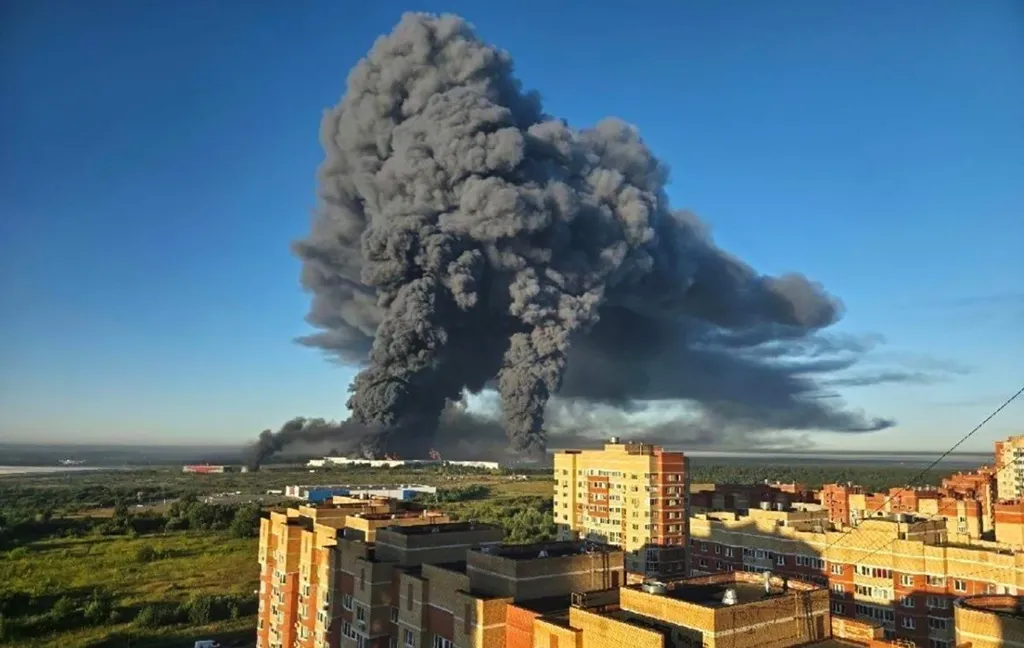
Ukraine Strikes Major Russian Logistics Hub Near Moscow as Massive Warehouse Fire Sends Smoke Across Region
Ukraine struck one of Russia's largest logistics hubs near Moscow, igniting a massive warehouse fire that disrupted operations and highlighted Kyiv's expanding long-range drone campaign.


Follow Nukunya
Get the latest breaking news and updates from Nukunya.
A Ukrainian drone strike has hit one of Russia’s largest logistics facilities east of Moscow, triggering a huge fire visible for kilometres and disrupting operations at a major warehouse complex. The attack marks one of Kyiv’s most significant long-range strikes against Russian commercial infrastructure during the war.
MOSCOW, Russia — Ukraine has struck one of Russia’s largest logistics hubs east of Moscow, igniting a huge warehouse fire that sent thick black smoke across the region and underscored Kyiv’s growing ability to target critical infrastructure far inside Russian territory.
Russian regional authorities confirmed that drones targeted the Moscow region overnight, while local officials reported casualties and damage at multiple sites. Images circulating on social media and verified by international news agencies showed a vast warehouse complex engulfed in flames, with towering smoke plumes visible from several kilometres away.
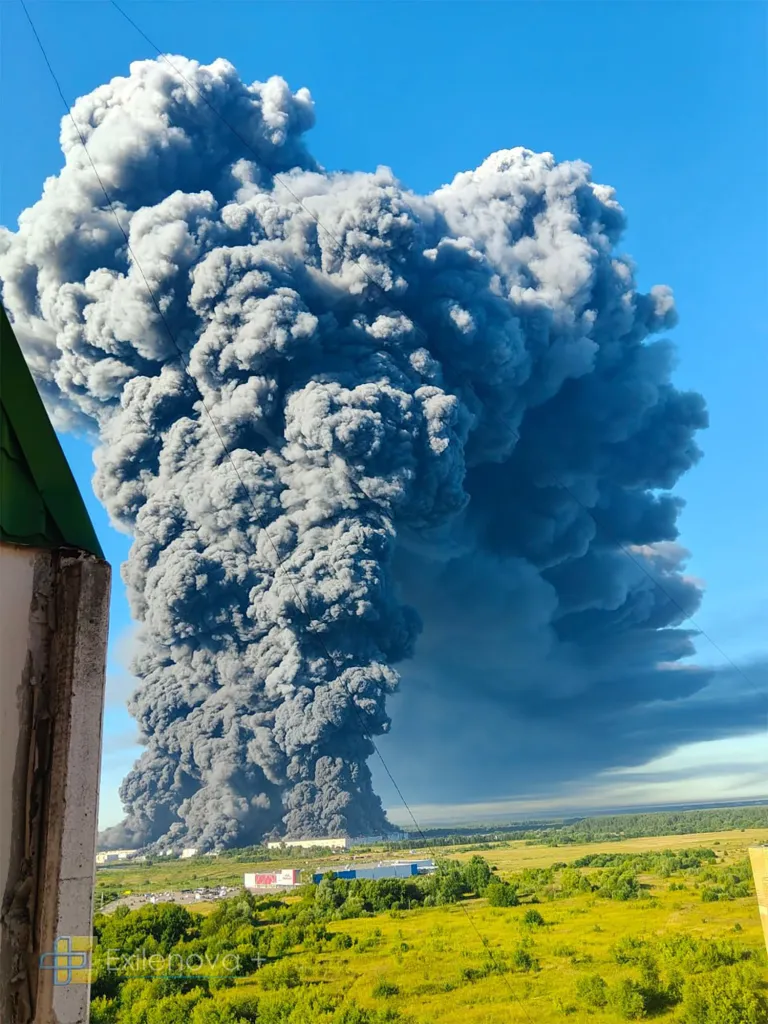
The largest blaze occurred at a logistics centre operated by Wildberries, Russia‘s biggest online retailer, in Elektrostal, around 60 kilometres east of the Kremlin. Emergency crews spent hours battling the fire as sections of the warehouse collapsed.
Russian officials said several people were injured in attacks across different regions, while authorities in the Tambov region also reported casualties following a separate strike on another warehouse facility.
Ukraine has not officially commented on every reported strike, consistent with its policy on long-range operations inside Russia. However, Kyiv has repeatedly said that military and logistical infrastructure supporting Russia’s invasion are legitimate military objectives.
The latest attacks appear to form part of Ukraine’s broader campaign to disrupt Russia’s military supply chains by targeting warehouses, fuel depots, ammunition sites, airfields and transport infrastructure deep behind the front line.
Military analysts say logistics centres have become increasingly important targets because they store equipment, commercial goods and transport assets that can support both civilian and military supply networks. Although facilities such as the Wildberries complex are commercial operations, large distribution hubs can play a significant role in maintaining national supply chains during wartime.
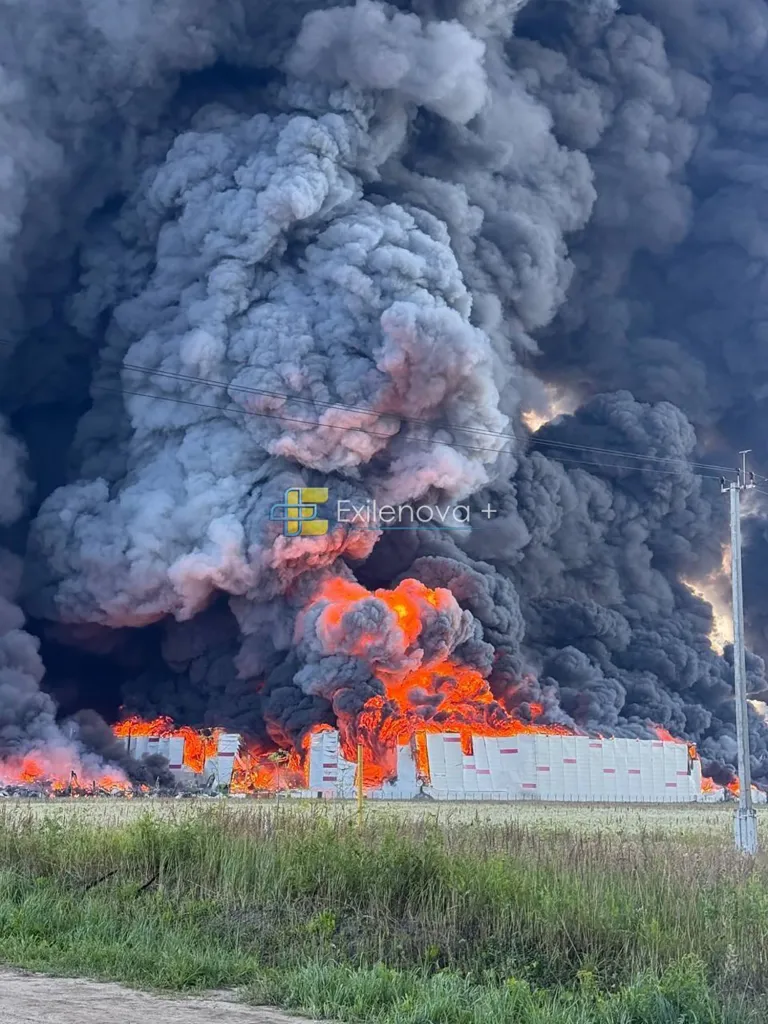
The attack comes as both sides have expanded long-range drone operations. Russia has continued launching large-scale missile and drone attacks against Ukrainian cities and infrastructure, while Ukraine has steadily increased the range and sophistication of domestically produced drones capable of reaching targets hundreds of kilometres inside Russian territory.
Residents across parts of the Moscow region reported hearing explosions before dawn, with videos posted online showing enormous smoke clouds rising above the warehouse complex. Some nearby buildings sustained damage from blast waves, while emergency services temporarily restricted access to surrounding areas.
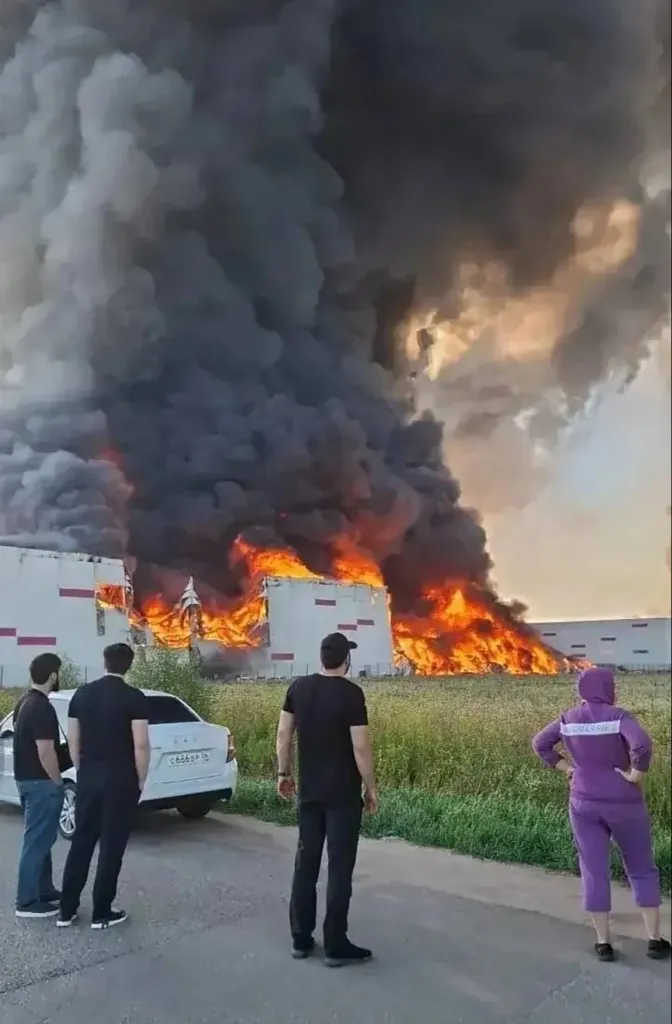
The fire also prompted concerns over air quality as thick smoke drifted across nearby communities. Authorities advised residents in affected areas to remain indoors where necessary while firefighters worked to contain the blaze.
The strike represents another challenge for Russian air defences around the capital. Although Russia regularly reports intercepting large numbers of Ukrainian drones, recent attacks have demonstrated that some continue to penetrate heavily defended areas around Moscow and other strategic locations.
For Ukraine, operations against logistics infrastructure serve both military and psychological purposes. Beyond disrupting supply networks, successful strikes illustrate Kyiv’s ability to impose costs well beyond the battlefield despite Russia’s larger military resources.
The attacks also reflect the evolving character of the war, where relatively inexpensive unmanned aircraft are increasingly being used to threaten strategic infrastructure located far from active combat zones.
As the conflict enters another prolonged phase, analysts expect long-range drone warfare to remain a central feature of military operations, with logistics facilities, energy infrastructure and transport hubs continuing to rank among the highest-priority targets for both sides.

Nukunya Security Analysis
Why This Matters
The strike highlights a significant shift in modern warfare: military pressure is increasingly being applied far beyond conventional frontline positions.
Rather than focusing solely on troops and battlefield defences, Russia and Ukraine are increasingly targeting infrastructure that supports military logistics, manufacturing and transportation.
Warehouses, railway facilities, fuel depots, industrial plants and distribution centres can all become strategically important because they help sustain military operations.
Such attacks can disrupt supply chains, increase economic costs and affect civilian commerce even when they occur hundreds of kilometres from active fighting.
From Frontline Combat to Infrastructure Warfare
Military Logistics
Strikes on warehouses and transport hubs can interfere with the movement of equipment, ammunition, fuel and supplies.
Industrial Capacity
Manufacturing and storage facilities may support both civilian commerce and defence-related production.
Economic Pressure
Damage to major businesses can increase reconstruction costs, interrupt employment and weaken regional trade.
Psychological Reach
Attacks deep inside national territory demonstrate that locations far from the frontline may still be vulnerable.
What Is Reported
Ukraine reportedly targeted a major logistics facility east of Moscow.
A large facility operated by Wildberries was reported to have caught fire.
Thick smoke was reportedly visible across parts of the Moscow region.
Russian authorities reported casualties during multiple overnight incidents.
Operational significance
Why Logistics Hubs Matter in War
Modern armed forces depend on complex supply networks. A military unit cannot operate effectively without fuel, food, spare parts, communications equipment, ammunition and reliable transport.
1 Production Equipment and supplies
→ 2 Storage Warehouses and depots
→ 3 Transport Road, rail and air networks
→ 4 Deployment Delivery to operational units
Why Commercial Infrastructure Creates a Legal and Humanitarian Dilemma
Large warehouses and logistics centres may serve primarily civilian markets while also forming part of wider transport or supply networks. This dual-use character can make their status difficult to assess.
Damage to such facilities can affect workers, customers, suppliers and nearby communities. Fires may also generate environmental hazards and place additional pressure on emergency services.
Under international humanitarian law, parties to a conflict must distinguish between civilian objects and military objectives and take feasible precautions to minimise civilian harm.
What Is Reported and What Remains Unclear
Reported Developments
- A major logistics facility east of Moscow was struck.
- A large warehouse complex caught fire.
- Smoke was visible across parts of the region.
- Russian authorities reported casualties in overnight attacks.
- The incident formed part of a wider long-range drone campaign.
Questions Still Unresolved
- The precise intended target of the strike.
- The extent of any military use of the facility.
- The complete number and status of casualties.
- The full scale of commercial disruption.
- The long-term effect on Russian logistics operations.
Key Takeaways
- 01
Ukraine reportedly struck a major logistics hub east of Moscow.
- 02
A large warehouse complex operated by Wildberries caught fire.
- 03
Thick smoke was visible across parts of the Moscow region.
- 04
Russian authorities reported casualties during multiple overnight attacks.
- 05
The incident forms part of Ukraine’s expanding long-range drone campaign.
- 06
The strike illustrates how logistics and commercial infrastructure are becoming increasingly significant in modern warfare.
Related posts:
 Elon Musk vs Sam Altman: what the jury will decide
  Iran and Israel Halt Attacks After Trump Intervention, but Ceasefire Remains Fragile
  British TikTok influencer charged with murder in Dubai could face death penalty if convicted
  China and African railway experts deepen cooperation through Qinghai–Xizang exchange
  Strait of Hormuz Crisis Deepens as Iran Declares Closure, Raising Fears Over Global Oil Supplies