
Ghana Partners Google for Education to Expand AI and Digital Skills in Schools


Follow Nukunya
Get the latest breaking news and updates from Nukunya.
Ghana has signed a partnership agreement with Google for Education aimed at expanding AI-enabled learning, digital literacy and technology training in schools as governments across Africa accelerate efforts to prepare students for increasingly digital economies.
ACCRA, Ghana —
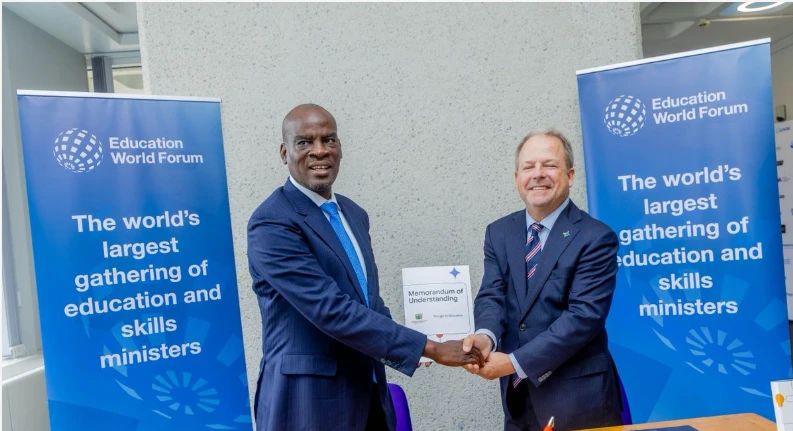
Ghana has signed a partnership agreement with Google for Education aimed at expanding artificial intelligence learning, digital literacy and classroom technology training across the country’s education system as governments worldwide race to prepare students for increasingly digital economies. The Memorandum of Understanding, signed during the Education World Forum 2026 in London, forms part of Ghana’s broader effort to modernise teaching and learning through AI-enabled educational tools and digital innovation.
Education Minister Haruna Iddrisu signed the agreement on behalf of Ghana, while Google for Education Global Managing Director Kelvin Kells signed for the company. Officials said the partnership would focus on improving digital learning capacity for teachers, strengthening classroom innovation and equipping students with technology skills needed for a rapidly changing labour market.
Ghana accelerates AI-driven education reforms
In a statement released by the Ministry of Education, officials described the agreement as a major step in Ghana’s efforts to integrate advanced AI technologies into teaching and learning nationwide.
Mr Iddrisu said the initiative would help prepare Ghanaian students for future employment demands while improving digital literacy and innovation within schools. “The agreement seeks to affirm a strategic collaboration aimed at integrating advanced Artificial Intelligence technologies into Ghana’s education system,” the minister said.
He added that the partnership would help educators build skills in modern technology while supporting students with “the critical skills needed for the future of work in an increasingly technology-driven world”. The government also said the initiative aligned with broader efforts to ensure no Ghanaian child was left behind in the global digital transition.
The digital divide remains major challenge
The agreement reflects a wider global shift toward integrating AI tools, coding, digital literacy and online learning systems into national education policies. Across Africa, governments have increasingly prioritised technology education as employers place greater emphasis on digital competence, AI literacy and data-driven skills.
According to UNESCO, many African education systems continue to face major gaps in internet access, teacher training and classroom technology infrastructure, particularly in rural communities. The International Telecommunication Union estimates that internet penetration across sub-Saharan Africa remains significantly below global averages, highlighting the scale of the digital divide facing many education systems.
In Ghana, education specialists say unequal internet access, electricity reliability and limited device availability could slow implementation of AI-enabled learning tools in some public schools, particularly outside major urban centres. Many schools in rural communities still face limited connectivity and shortages of digital learning devices, raising questions about how quickly advanced classroom technologies can be deployed nationwide.
Teachers expected to play central role
Education experts say teacher preparedness will be critical to determining whether technology partnerships translate into measurable improvements in learning outcomes. Supporters of the initiative argue that integrating digital learning tools into classrooms could help personalise education, improve access to educational resources and strengthen critical thinking and problem-solving skills among students. However, analysts caution that large-scale digital reforms will require sustained investment in infrastructure, teacher support and curriculum adaptation if implementation is to succeed over the long term. Google for Education has not yet released detailed timelines or implementation targets linked to the Ghana partnership.
Ghana expands technology and workforce agenda
The agreement comes as Ghana increases efforts to position technology, innovation and digital skills more centrally within workforce development and public policy strategies. Recent government initiatives have focused on expanding STEM education, improving ICT training and strengthening digital public services as part of broader economic transformation plans.
Analysts say partnerships involving major technology firms are likely to become increasingly important as African countries compete to build digitally skilled workforces capable of participating in emerging AI-driven industries. Officials said further implementation details, including teacher training programmes and classroom rollout plans, are expected to be announced in the coming months.
Sources: Ghana News Agency · Ministry of Education Ghana · UNESCO · International Telecommunication Union · Education World Forum 2026. Additional reporting and analysis by Nukunya News Desk.
Related posts:
 Ghana’s inflation slows for third consecutive month as food prices ease
  Weija Paediatric Hospital delay linked to procurement dispute, Health Ministry confirms
  Dr Ofori Sarpong donates 600-bed dormitory to PRESEC Legon to ease student congestion
  Ghana Pushes Border Cooperation as Sahel Insecurity Raises Regional Security Risks
  Nearly 300 Ghanaians evacuated from South Africa arrive in Accra amid anti-immigration protests