Ghana President Calls for Fairer Debt Restructuring Amid African Economic Crisis in 2026


Follow Nukunya
Get the latest breaking news and updates from Nukunya.
Ghana President Urges Global Reform of Debt Restructuring Systems
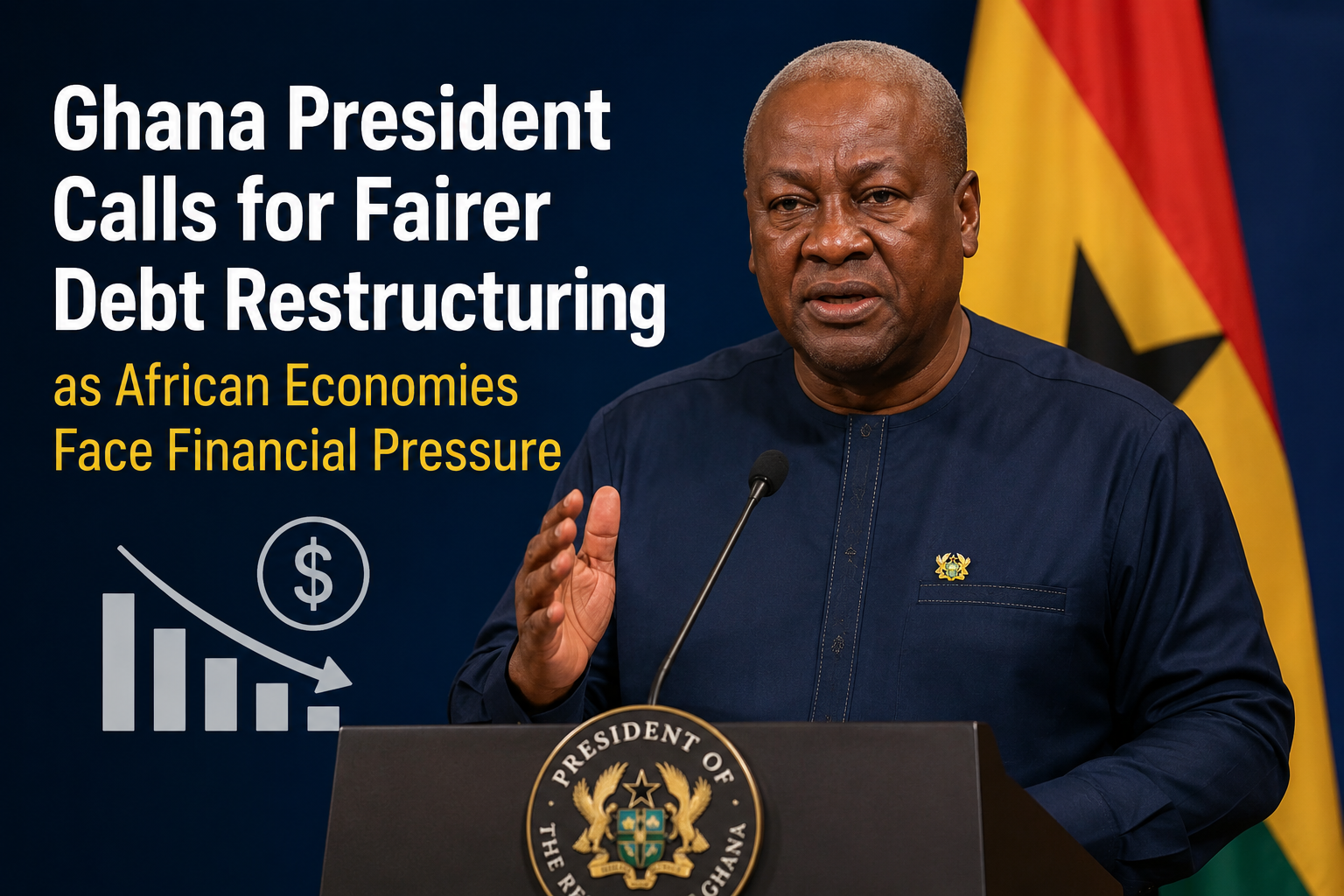
President John Dramani Mahama has called for fairer global debt restructuring systems, warning that many African countries remain trapped in worsening financial crises due to slow and ineffective international debt solutions.
Speaking at an international economic forum, Mahama said developing nations, particularly in Africa, continue to suffer under rising debt burdens, high inflation, and weak economic growth while existing restructuring frameworks fail to deliver timely relief.
The Ghanaian president urged international lenders, creditor nations, and financial institutions to reform sovereign debt restructuring mechanisms to better support struggling economies.
Ghana’s Debt Crisis Remains a Major Concern
Ghana has faced one of the most severe economic crises in its recent history after defaulting on most of its external debt obligations. The country secured a $3 billion bailout programme from the International Monetary Fund in 2023 to stabilise its economy and restore investor confidence.
Despite ongoing reforms, Ghana continues negotiations with bilateral creditors, private bondholders, and multilateral institutions as part of its debt restructuring programme. Mahama stated that current debt restructuring procedures are often too slow and place excessive pressure on ordinary citizens.
“Africa should not remain trapped in endless cycles of debt distress,” he said, calling for a faster, fairer, and more transparent system that reflects the realities faced by developing economies.
African Economies Under Growing Financial Pressure
Several African countries are currently struggling with rising borrowing costs, weakening currencies, and reduced government revenues. Economists warn that prolonged debt crises could increase poverty, reduce investment, and damage public services such as healthcare and education.
Ghana’s economic difficulties were worsened by the impact of the COVID-19 pandemic, global inflation, and declining investor confidence. The Ghanaian cedi also experienced significant depreciation against major international currencies during the crisis. Analysts say Ghana has become an important test case for future sovereign debt restructuring reforms across Africa and other emerging markets.
Calls for More Transparent Global Debt Solutions
Mahama also urged global financial institutions to improve coordination between lenders and reduce delays in negotiations that can worsen economic instability. Financial experts have increasingly called for reforms to the international debt system as more developing nations seek emergency assistance and debt relief. The debate over sovereign debt restructuring has gained global attention in recent years as governments attempt to balance economic recovery with mounting repayment obligations.
Why Ghana’s Debt Restructuring Matters Globally
Experts believe Ghana’s experience could influence how international institutions handle future debt crises in developing countries. Faster restructuring agreements could help nations recover more quickly while protecting economic growth and social stability. The issue is expected to remain central in international financial discussions as African economies continue seeking sustainable solutions to growing debt challenges.
Related posts:
 Ghana Pushes Border Cooperation as Sahel Insecurity Raises Regional Security Risks
  Only one Ghanaian reports for South Africa evacuation flight amid xenophobia fears
  First group of Ghanaians repatriated from South Africa after migrant protests
  Ghana exits IMF programme as government shifts focus to jobs and growth
  Ghana’s Debt Climbs to GH₵674bn Despite IMF Recovery Gains