Ghana Expands Play-Based Learning Nationwide as Kindergarten Reform Scales Up


Follow Nukunya
Get the latest breaking news and updates from Nukunya.
The Ministry of Education is expanding play-based learning across public kindergartens, training 30,000 teachers and encouraging greater parental involvement to strengthen early childhood education outcomes.
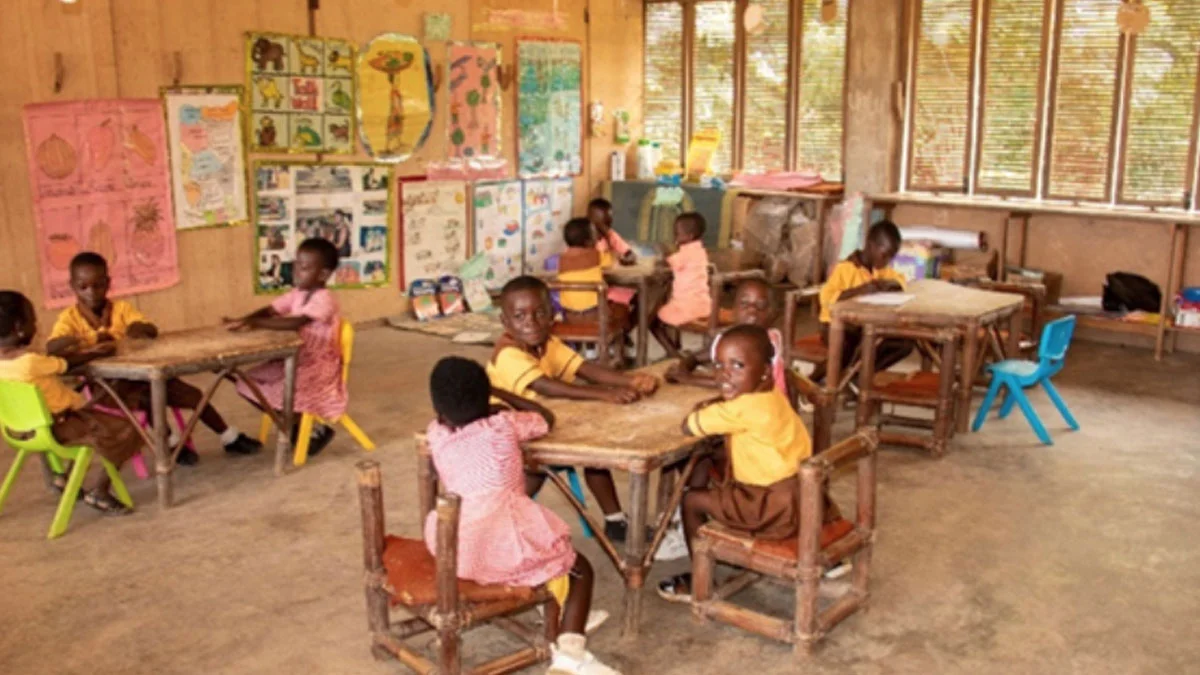
ACCRA — Ghana is expanding play-based learning across public kindergartens nationwide as part of a major effort to strengthen early childhood education, improve learning outcomes and equip children with foundational skills for future success.
The Ministry of Education, working with development partners including Sabre Education, Lively Minds and Right To Play, reaffirmed its commitment to the approach ahead of the International Day of Play on 11 June. Officials said play should not be viewed as separate from learning but as a core part of how children develop during their formative years. According to the ministry, play-based learning is being scaled up across all public kindergartens to improve teaching and learning outcomes. The approach encourages exploration, storytelling, games, movement, creativity and interaction rather than relying primarily on rote memorisation.
Education officials say the model helps children build early literacy, numeracy, communication, creativity and problem-solving skills while also developing confidence, curiosity, resilience and teamwork. Research cited by the ministry suggests that play-based approaches improve both academic performance and overall child development.
30,000 Teachers to Deliver the Programme
As part of the nationwide rollout, Ghana is training approximately 30,000 kindergarten teachers to deliver play-based lessons aligned with the national curriculum. The initiative aims to ensure that children across the country, regardless of location, have access to engaging and inclusive learning environments. The ministry described early childhood development as a national priority, noting that brain development is most rapid during the early years and that quality early education remains critical to long-term learning success.
Reform Builds on Earlier Successes
The national expansion builds on several years of implementation and testing. Earlier versions of the GES-Lively Minds programme were introduced in multiple districts across Ghana and were designed to strengthen learning through play-based activities and parental participation. Independent evaluations cited by programme partners reported improvements in school enrolment, attendance and child development outcomes, contributing to the Ministry of Education’s decision to integrate the approach into national early childhood education policy. The programme has already reached thousands of schools and children across the country and is increasingly viewed as a key component of Ghana’s efforts to improve foundational learning.
Parents and Communities Have a Role
A central feature of the initiative is its focus on learning beyond the classroom. The Ministry of Education said it is expanding a parental engagement model aimed at strengthening learning at home. Parents and carers are being encouraged to support children’s development through everyday activities such as storytelling, singing, counting objects, drawing and conversation. Officials say these simple activities can improve language development, confidence and school readiness while reinforcing classroom learning in practical and accessible ways.
International Day of Play Campaign
Caption:
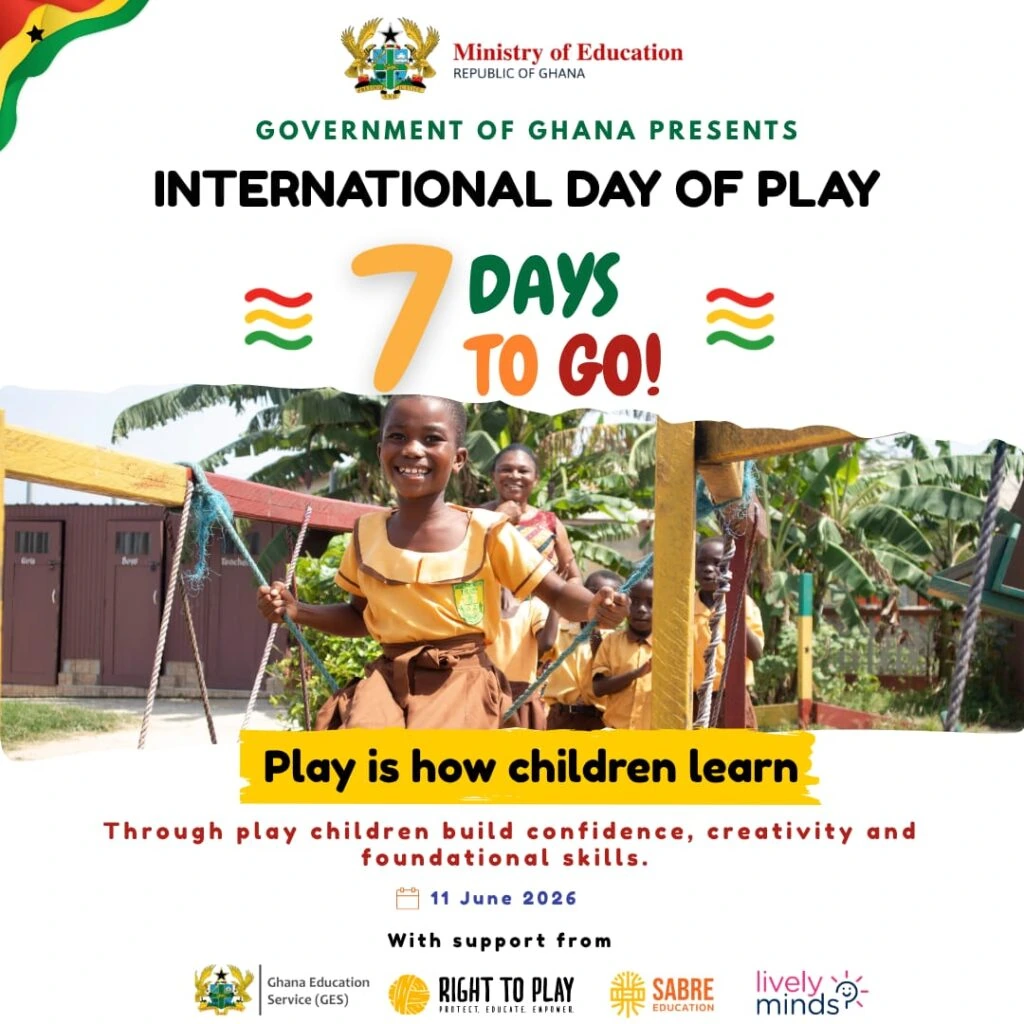
The Ministry of Education and development partners are promoting play-based learning as part of activities marking the International Day of Play.
Communities are also being encouraged to support schools through low-cost learning materials such as bottle tops, cardboard, fabric, sticks, containers and other locally available resources that can be repurposed for classroom activities.
Investing in Ghana’s Future Learners
Education experts increasingly view early childhood education as one of the most effective investments countries can make in long-term human capital development. By embedding play at the centre of learning, Ghana hopes to strengthen foundational skills during the years when children’s cognitive, social and emotional development is most rapid.
The ministry said successful implementation will depend on continued collaboration among government, schools, teachers, parents and communities. As Ghana joins countries around the world in marking the International Day of Play, officials say the objective extends beyond recreation. The broader goal is to ensure that every child receives a strong educational foundation through joyful, inclusive and evidence-based learning approaches that prepare them for lifelong success.
Related posts:
 Ghana Rejects $109m US Health Deal Over Data-Sharing Concerns
 Dr Ofori Sarpong donates 600-bed dormitory to PRESEC Legon to ease student congestion
 President Mahama Signs Legal Education Reform Bill 2026 Into Law
 Ayawaso East desks donation: MP Baba Jamal gives 1,000 desks to schools
 Ghana Partners Google for Education to Expand AI and Digital Skills in Schools