
OpenAI Lockdown Mode ChatGPT Security


OpenAI Lockdown Mode to Strengthen ChatGPT Security Against AI Attacks
OpenAI Introduces Lockdown Mode and New Security Warnings to Protect Users from AI Threats
OpenAI has announced the rollout of Lockdown Mode, a new security-focused feature designed to provide stronger protection for users working with sensitive information in ChatGPT.
The feature, which was first introduced for enterprise customers, is now being expanded to personal ChatGPT accounts and self-service ChatGPT Business users. According to OpenAI, Lockdown Mode is intended for people and organizations with elevated security needs, including executives, security teams, researchers, and individuals handling confidential information.
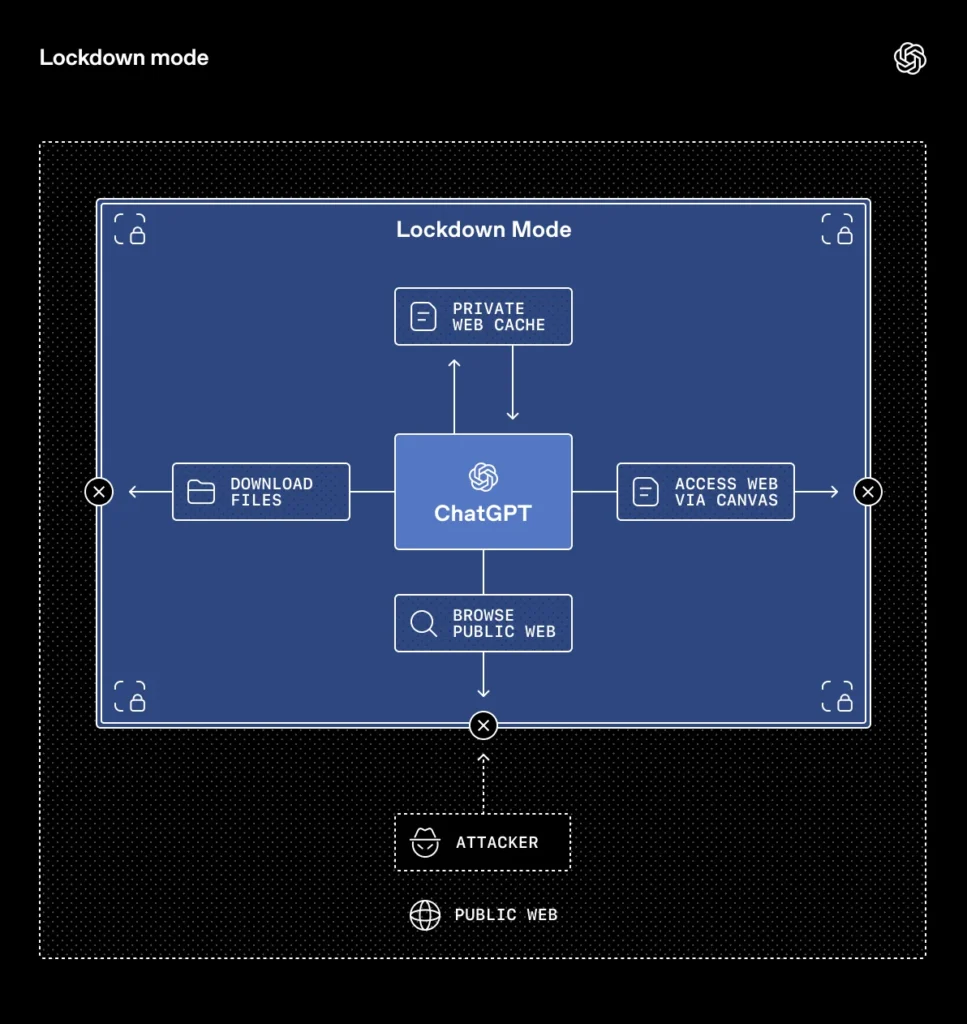
The move comes as artificial intelligence systems become increasingly connected to the web and external services, creating new opportunities for cyberattacks such as prompt injection attacks. These attacks attempt to trick AI systems into revealing sensitive information or performing unintended actions.
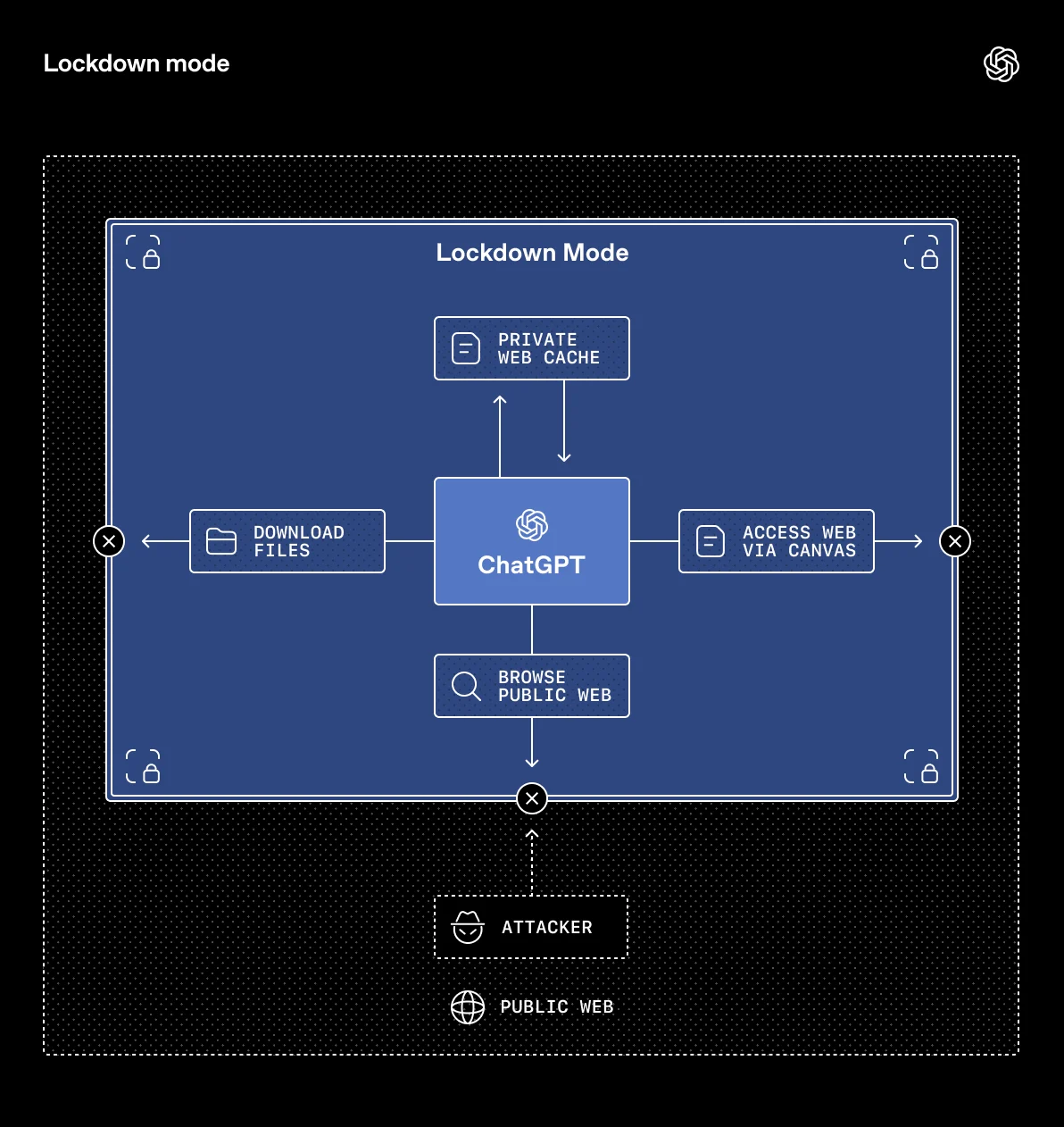
When Lockdown Mode is enabled, ChatGPT limits or disables several connected features that could potentially be exploited by attackers. These restrictions include live web browsing, image support in responses, Deep Research tools, shopping research capabilities, Agent Mode, Canvas networking, live connectors, and file downloads.
OpenAI said the feature is designed to reduce the risk of sensitive information being shared outside a conversation through malicious prompts or external instructions.
“Lockdown Mode is designed for users with higher security needs, or for moments when users are willing to trade elements of product functionality for stricter product guardrails,” the company explained.
One notable change is that web browsing in Lockdown Mode relies on cached content rather than making live internet requests. This approach is intended to prevent data from leaving OpenAI’s controlled environment during browsing sessions.
In addition to Lockdown Mode, OpenAI is introducing “Elevated Risk” labels across ChatGPT, ChatGPT Atlas, and Codex. These labels will identify features that may expose users to additional security risks due to their ability to access external networks, websites, or applications.
The company says the labels are designed to help users make informed decisions about when and how to use advanced AI capabilities.
For enterprise customers, administrators can create specialized roles that enable Lockdown Mode for selected users. The feature works alongside existing security tools such as role-based access controls, audit logs, and compliance monitoring systems.
OpenAI emphasized that Lockdown Mode is not necessary for most users but is intended for individuals and organizations facing a higher risk of targeted cyberattacks.
The announcement reflects a broader industry effort to address emerging security challenges as AI systems become more capable and integrated into everyday workflows. As AI assistants gain access to external applications, documents, and online resources, technology companies are increasingly focused on balancing convenience with stronger security protections.
OpenAI said it will continue refining its security measures and plans to remove Elevated Risk labels from features once sufficient safeguards have been developed and tested.
The rollout of OpenAI Lockdown Mode marks another step in the company’s efforts to strengthen trust and security as AI tools become a larger part of both personal and professional life.
Read more from Tech Category