
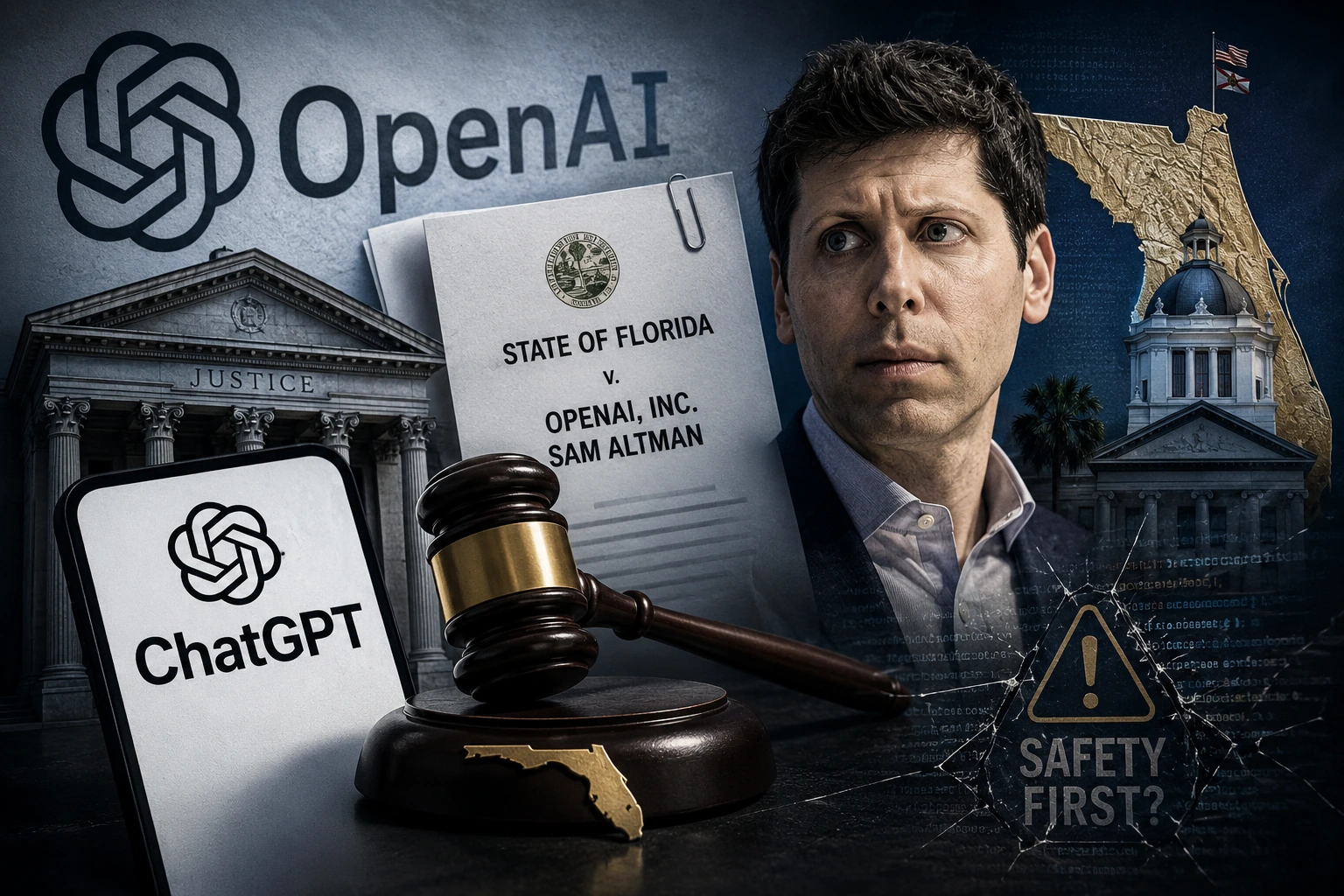
Florida Becomes First US State to Sue OpenAI Over ChatGPT Safety Allegations


Follow Nukunya
Get the latest breaking news and updates from Nukunya.
Florida has launched a landmark lawsuit against OpenAI and chief executive Sam Altman, alleging the company prioritised growth over safety while marketing ChatGPT to the public. The case could shape the future of AI regulation in the United States

Landmark lawsuit accuses OpenAI of prioritising growth over user safety as debate over AI regulation intensifies
TALLAHASSEE, Florida — The US state of Florida has filed a lawsuit against OpenAI and its chief executive, Sam Altman, alleging the company knowingly released and aggressively marketed ChatGPT despite being aware of potential risks to users, including children.
The lawsuit, announced by Florida Attorney General James Uthmeier on Monday, marks the first state-led legal action against OpenAI over the design, marketing and safety of its artificial intelligence products. The case is expected to become a closely watched test of how existing consumer protection and product liability laws apply to rapidly evolving AI technologies.
Florida alleges that OpenAI prioritised speed, growth and market dominance over user safety, while downplaying known risks associated with ChatGPT. The state claims the company engaged in deceptive trade practices and failed to adequately protect users from potential harms.
OpenAI has rejected similar allegations in previous legal proceedings and maintains that it designs its systems with safety safeguards intended to reduce harmful outcomes. The company says it continuously improves ChatGPT’s ability to recognise sensitive situations, de-escalate concerning conversations and guide users towards appropriate support resources.
Allegations Focus on Children and Public Safety
The complaint places particular emphasis on minors and vulnerable users. Florida alleges that ChatGPT lacks sufficient parental controls and age-verification mechanisms and claims the platform can encourage excessive dependence among younger users. The lawsuit also accuses OpenAI of collecting information from minors without meaningful parental oversight.
Attorney General Uthmeier said the state believes OpenAI failed to act on warnings regarding potential risks associated with its products.
“OpenAI and Altman ignored internal and external safety warnings,” Uthmeier said while announcing the lawsuit. Florida argues that the company placed commercial interests ahead of public safety.
The lawsuit seeks civil penalties, damages and court-ordered changes to OpenAI’s business practices. It also attempts to hold Altman personally liable, a move that legal experts say could significantly raise the stakes of the case if courts allow the claims to proceed.
Connection to Earlier Investigations
The legal action follows a separate investigation opened by Florida authorities earlier this year into whether ChatGPT played any role in the actions of a gunman involved in a deadly shooting at Florida State University. State officials allege the suspect had extensive interactions with ChatGPT before the attack, including discussions relating to weapons and mass shootings. OpenAI has consistently denied that ChatGPT encouraged or facilitated criminal activity.
In statements previously provided to media organisations, OpenAI said the chatbot supplied factual information that could be found through public sources and did not encourage or promote illegal or harmful conduct.
The company has argued that while the incident was tragic, responsibility for the crime rests with the individual involved rather than the AI system.
Wider Questions About AI Accountability
The Florida lawsuit arrives amid growing global scrutiny of artificial intelligence companies and increasing debate over how AI systems should be regulated.
Governments across Europe, North America and Asia are introducing or considering new rules governing AI development, transparency, safety testing and data protection. Policymakers have expressed concern about issues ranging from misinformation and privacy risks to the potential psychological impact of increasingly human-like AI systems.
Several technology companies developing conversational AI products have already faced lawsuits alleging that their systems contributed to self-harm, emotional distress or harmful behaviour. While many of those claims remain unresolved, they have intensified calls for stronger safeguards and oversight.
The Florida case goes further than many previous legal challenges by attempting to frame an AI chatbot as a potentially defective product under consumer protection and product liability laws. Legal analysts say the outcome could influence future lawsuits against AI developers and shape how courts assess responsibility for harms linked to artificial intelligence.
Why the Case Matters
The lawsuit highlights a broader question facing governments worldwide: how to balance technological innovation with public safety.
Artificial intelligence systems such as ChatGPT are increasingly used in education, healthcare, customer service, software development and everyday decision-making. As adoption grows, regulators are under pressure to determine what legal responsibilities AI developers should bear when their products influence human behaviour. The case is unlikely to be resolved quickly, but it is already being viewed as one of the most significant legal challenges yet to confront the generative AI industry.
For OpenAI, the lawsuit represents another major regulatory test at a time when governments and courts around the world are examining how AI systems should be governed. For policymakers, it could become an important precedent in defining where innovation ends and accountability begins.
Reporting by Kofi Foli
Additional sourcing and verification: AP, CNN, NBC, FT
Related posts:
 Elon Musk vs Sam Altman: what the jury will decide
  Pope Leo XIV Urges AI ‘Disarmament’ in Major Vatican Warning on Technology Risks
  Who decides what AI tells you? Ex‑Meta news chief Campbell Brown weighs in
  Nvidia ramps up Taiwan spending to $150bn a year as AI race intensifies
  Temu Hit With €200 Million EU Fine Over Illegal Products on Platform