Ghana flood death toll rises to 12 as health officials step up disease surveillance


Follow Nukunya
Get the latest breaking news and updates from Nukunya.
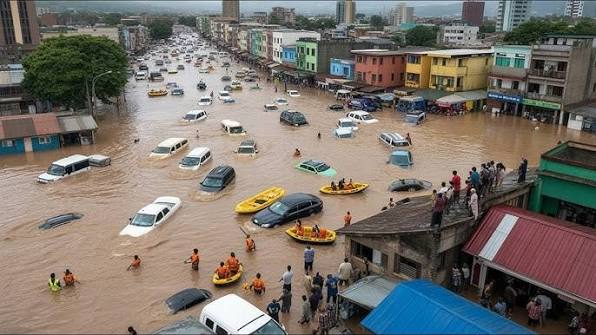
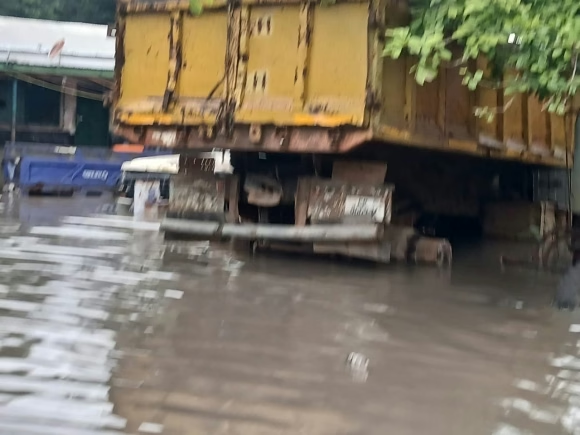
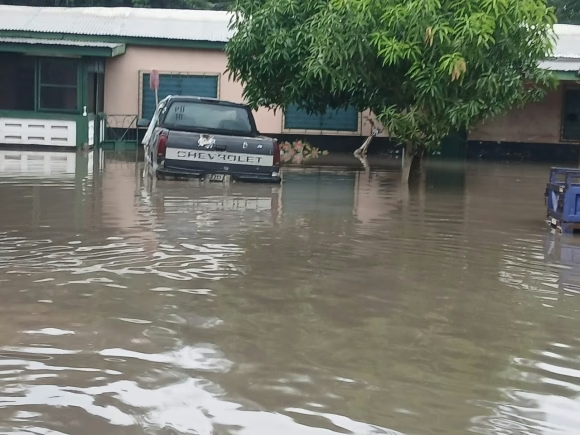
GHANA FLOOD: At least 12 people have died and nearly 500 others have been rescued after days of severe flooding across parts of Ghana as health authorities intensify disease surveillance and the government expands relief efforts while communities continue recovery operations.
ACCRA, Ghana — Ghana’s flood emergency has entered a new phase after the Ghana National Fire Service (GNFS) confirmed that at least 12 people have died while nearly 500 people have been rescued following days of severe flooding across the Greater Accra Region, prompting the Ministry of Health to intensify disease surveillance to prevent outbreaks in affected communities.
The updated casualty figures represent the latest official operational assessment from the GNFS as emergency crews continue search, rescue and recovery operations following heavy rainfall that inundated homes, businesses and major transport routes across parts of southern Ghana.
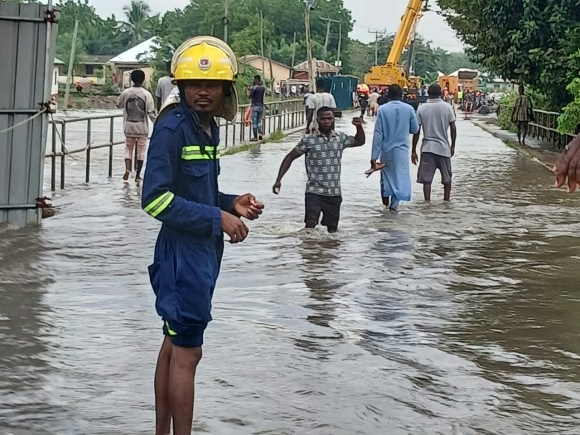
Speaking on Joy FM’s Midday News, GNFS Public Relations Officer Alex King Nartey said firefighters and rescue personnel had worked around the clock since the flooding began, rescuing nearly 500 people between Sunday and Monday alone. He cautioned that the death toll could rise further as recovery teams continue searching affected communities and verifying reports from partner emergency agencies.
The GNFS said it rescued about 105 people from Tse Addo and evacuated about 300 others from the Odawna area in the wake of the Ghana flood. Rescue operations were also carried out in Dome, Kwabenya, Adenta, Anyaa and Ablekuma, where emergency teams assisted residents trapped by rising floodwaters.
Mr Nartey said the confirmed fatalities included two people recovered from Alogboshie, including a mother and child, one person in Achimota, two in Alajo, four in Odawna and two in Tema Newtown. He said at least one elderly person remained missing in Tema Newtown, while those who sustained injuries were treated and discharged.
Health authorities shift to disease prevention
As floodwaters begin to recede in some communities, health authorities are turning their attention to preventing outbreaks of waterborne and communicable diseases.
The Ministry of Health announced that it had intensified disease surveillance and public health interventions across flood-affected districts after concerns that contaminated water sources and poor sanitation could increase the risk of illness.
Health Minister Kwabena Mintah Akandoh visited several flood-hit communities, including Circle VIP, Nii Boi Town Station and the Achimota-Alajo-Alogboshie corridor, where he assessed conditions and directed the Ghana Health Service to strengthen disease surveillance and expand public health education.
The Ministry said environmental health officers, local authorities, the Ghana Health Service, the National Health Insurance Authority and other agencies had begun coordinated interventions focusing on sanitation, clean water and disease prevention. It urged residents to wash their hands regularly with soap and clean water, drink safe water, eat well-cooked food and seek prompt medical attention if they develop symptoms of illness.
Officials also advised Metropolitan, Municipal and District Assemblies to intensify environmental sanitation, clear blocked drains and enforce food hygiene standards to reduce the risk of outbreaks in the aftermath of the flooding.
Government relief expands
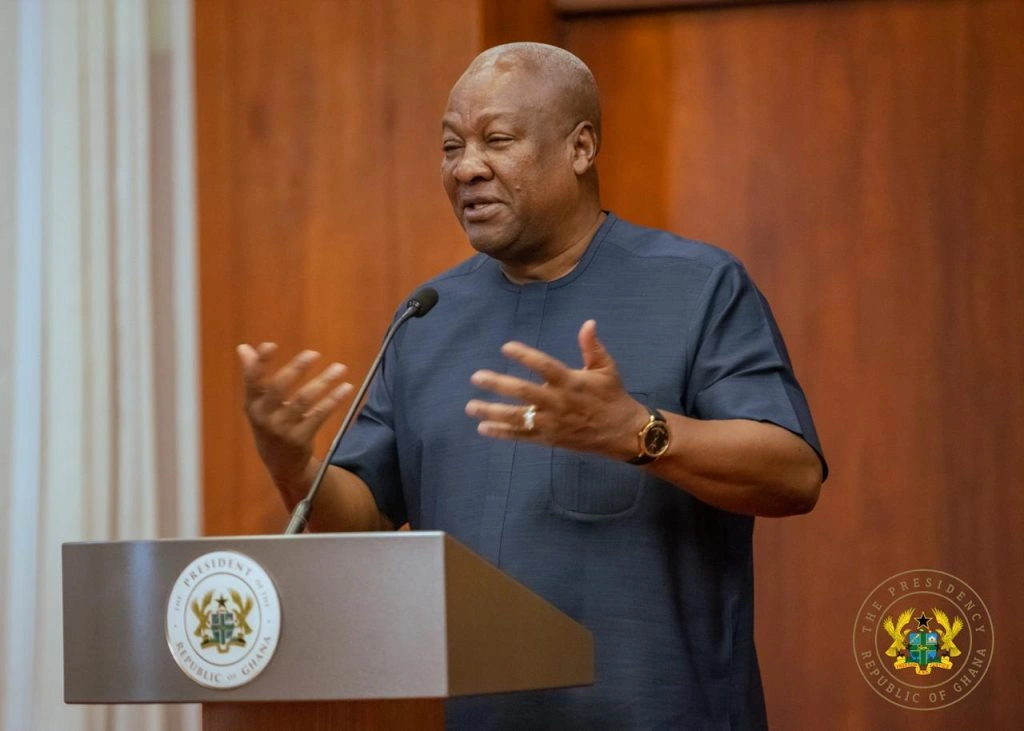
President John Dramani Mahama has directed the release of resources from the government’s Contingency Fund to finance emergency relief for affected households. Relief operations are being coordinated through the National Disaster Management Organisation (NADMO), while the Presidency has urged residents in flood-prone areas to avoid travelling through floodwaters, move to higher ground where necessary and follow official emergency guidance.
Flooding spreads beyond Accra
The impact of the heavy rainfall has extended beyond Greater Accra.
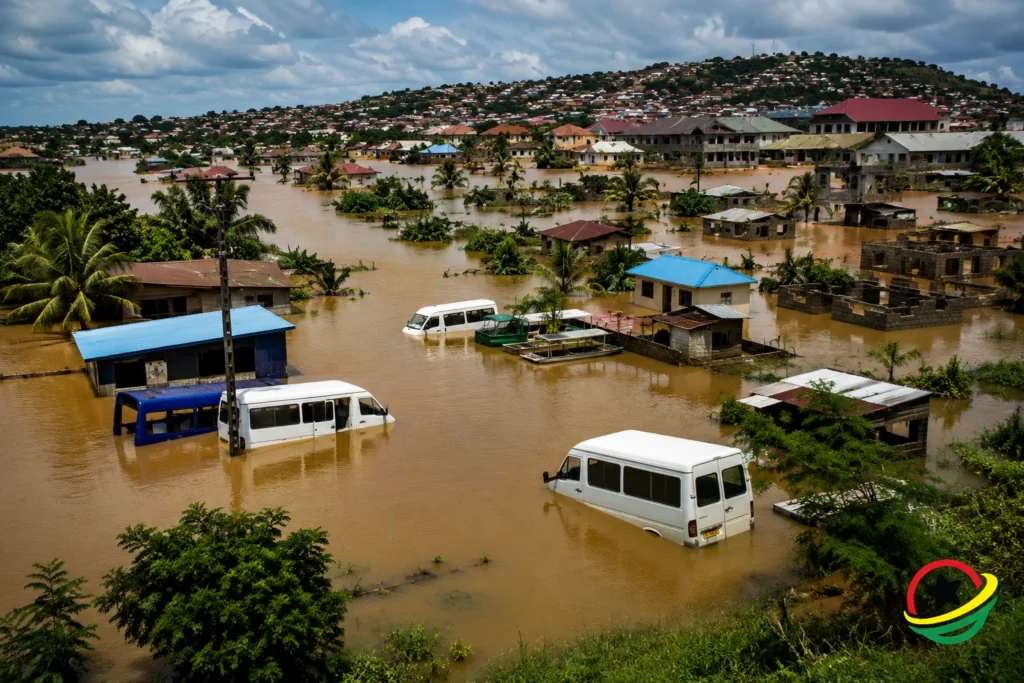
In the Volta Region, the swollen Tordze River submerged the Kpetoe Bridge on the Ho–Denu Highway, forcing the suspension of traffic and displacing about 500 residents, according to the Agotime Ziope District Director of NADMO, Courage Agba. While homes, farms and livestock were affected, no deaths had been reported there at the time of publication. Rescue teams from the Ghana National Fire Service were deployed to support affected communities.
Calls for long-term solutions
The latest disaster has renewed debate over Ghana’s recurring flood crisis.
Urban planners have consistently linked repeated flooding in Accra to inadequate drainage infrastructure, blocked waterways, rapid urban expansion, poor waste management and construction on natural watercourses. The opposition New Patriotic Party has called for a single national authority to coordinate flood management, while the government has pledged immediate humanitarian assistance alongside longer-term flood mitigation measures.
Although emergency operations remain focused on saving lives and supporting displaced families, the Ministry of Health’s decision to intensify disease surveillance signals that authorities are preparing for the next phase of the response as communities begin recovery.
Flood Emergency at a Glance
12 Confirmed deaths
500 People rescued
1+ Missing persons
Major rescue locations Tse Addo, Odawna, Dome, Kwabenya, Adenta, Anyaa and Ablekuma
Health response Disease surveillance intensified
Government action Emergency relief funding through NADMO
Volta Region Kpetoe Bridge submerged; about 500 people displaced
Why this matters
The emergency has evolved beyond rescue operations into a broader humanitarian and public health response. Alongside the rising death toll, authorities are now working to prevent disease outbreaks, restore essential services and support displaced communities across multiple regions. The combination of rescue operations, health interventions and infrastructure disruption highlights the growing challenge of managing extreme rainfall in rapidly urbanising parts of Ghana.

Related posts:
 Accra floods: GNFS rescues 479 as five die and one remains missing
  Mahama orders emergency flood relief as NPP demands overhaul of Accra flood response
  Ghana floods displace families as heavy rains hit Cape Coast
  GMA Backs KATH Doctors’ Strike, Demands CEO’s Reinstatement Within Three Days
  Avenor Building Collapse Kills Two as Officials Demand Tougher Enforcement of Building Regulations