Accra floods: GNFS rescues 479 as five die and one remains missing
GNFS rescued 479 people during flood and fire emergencies across Accra and Tema as five people died, one remained missing and the government announced emergency relief.


Follow Nukunya
Get the latest breaking news and updates from Nukunya.
The Ghana National Fire Service (GNFS) says it rescued or safely evacuated 479 people during three days of flood, fire and rescue operations across Greater Accra and Tema, as President John Dramani Mahama announced emergency relief and authorities continued recovery efforts.
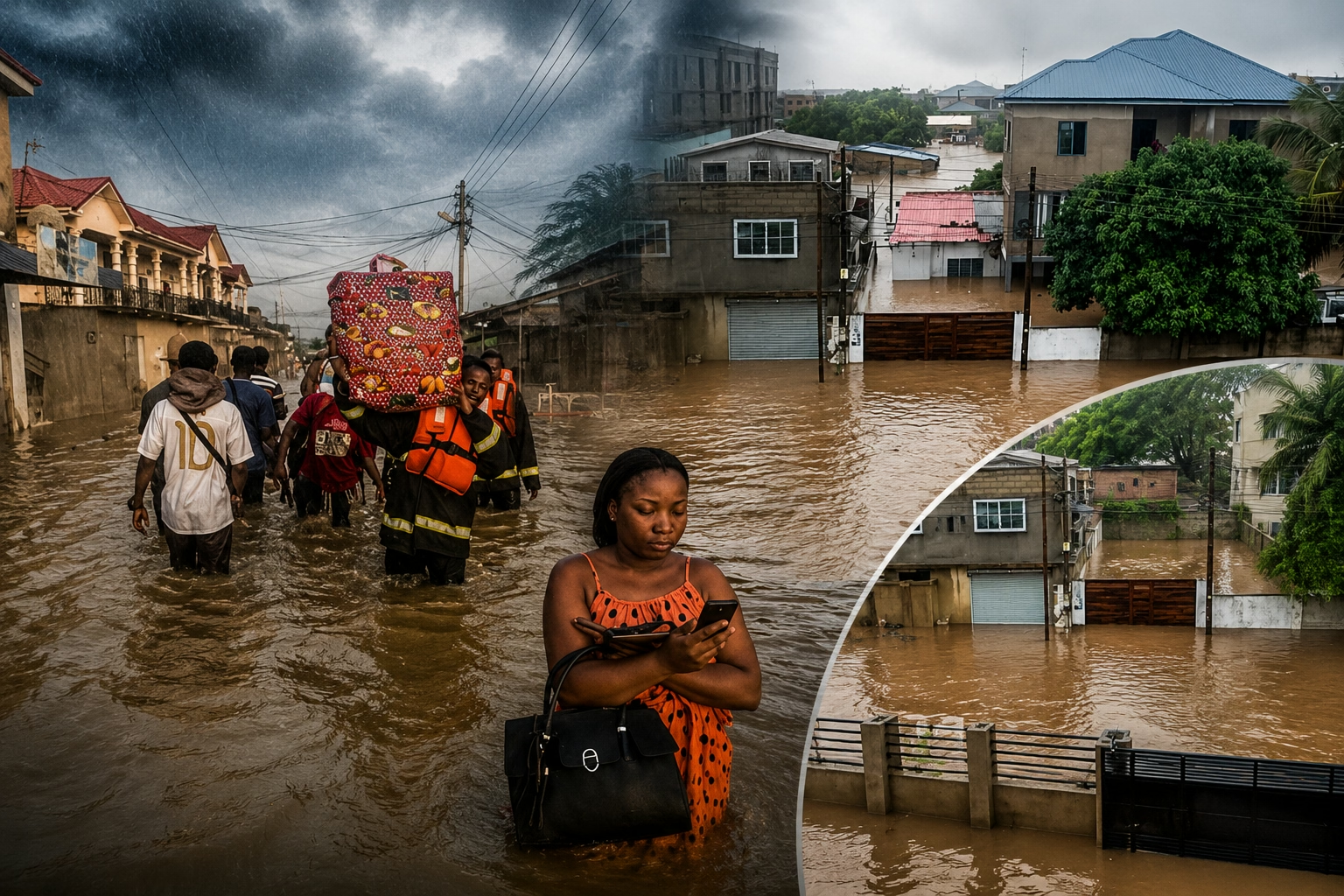
ACCRA, Ghana — The Ghana National Fire Service (GNFS) says it rescued or safely evacuated 479 people during a three-day emergency response after severe flooding, fires and related incidents swept across parts of Greater Accra and Tema, leaving five people dead, one injured and another still missing.
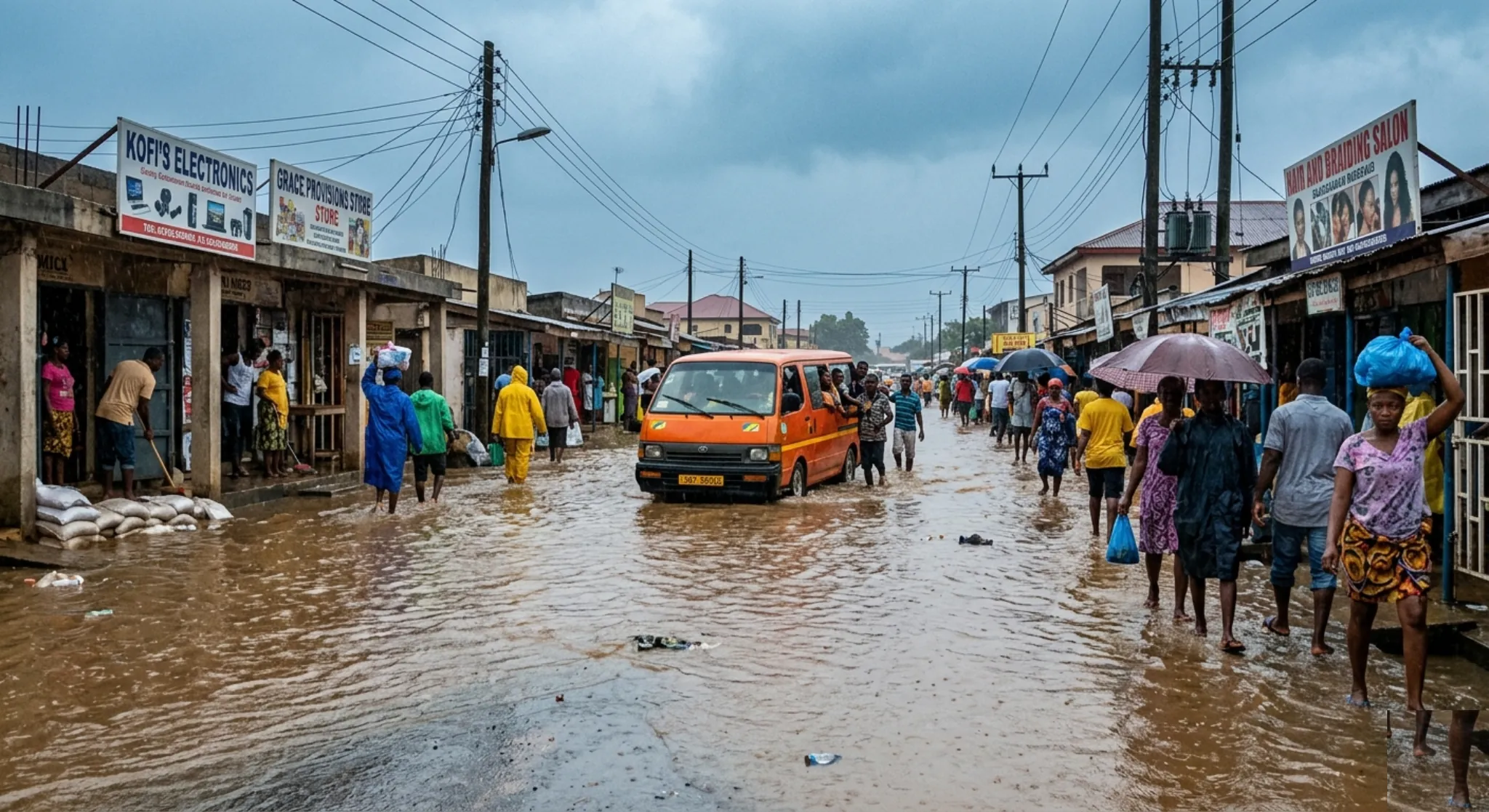
Heavy rainfall triggered widespread flooding across the capital and neighbouring communities, submerging homes, businesses and major roads, while emergency responders also battled multiple fires and structural incidents. International reporting described residents stranded in floodwaters as emergency services worked to reach affected communities.
The GNFS, Ghana’s principal agency responsible for firefighting, rescue operations and emergency response, said firefighters remained on high alert from Sunday, 28 June, through Tuesday, 30 June, responding to dozens of emergencies across the Greater Accra Region and Tema. Rescue operations were conducted alongside the Ghana Police Service, the National Disaster Management Organisation (NADMO), the Ghana Armed Forces and other emergency agencies.
At Tse-Addo Last Stop, joint rescue teams evacuated 105 people trapped by rising floodwaters, including women and children. In Tema, firefighters responded to 23 emergency incidents, while more than 300 additional people were rescued from floodwaters in the Adabraka–Odawna corridor, one of the areas worst affected by the flooding.
The emergency response extended beyond flooding. Firefighters tackled six separate fire outbreaks, including a major blaze at the Odawna Rubber Market, responded to a burning fuel tanker, and managed structural emergencies, including the collapse of a four-storey building after occupants had been safely evacuated.
According to the GNFS operational update, five flood-related deaths were recorded during the reporting period. One person sustained injuries, while another remained missing after reportedly being swept away by floodwaters near Tema Community One Market.
Following aerial and ground assessments of flood-hit communities, President John Dramani Mahama directed the Minister for Finance to immediately release resources from the government’s Contingency Fund to support emergency relief operations. The assistance is expected to be coordinated through NADMO and include temporary shelter, food and other humanitarian assistance for affected residents.
The Presidency also issued a nationwide public safety advisory urging residents in flood-prone areas to remain indoors where safe, avoid attempting to cross floodwaters and move immediately to higher ground if their homes become inundated. Motorists were advised to avoid known flood-prone routes, including the Mallam–Kasoa Road, Alajo and Graphic Road, while the public was warned to stay away from damaged electrical infrastructure and follow official emergency updates.
As recovery operations continued, the opposition New Patriotic Party (NPP) criticised the government’s handling of the floods and called for a single lead authority to coordinate flood management. The party argued that responsibilities remain fragmented across several institutions and urged stronger collaboration between national agencies, local authorities and technical experts. The criticism followed the government’s announcement of emergency relief funding and public safety measures.
Accra has experienced repeated flooding during periods of heavy rainfall for decades. Urban planners and disaster management specialists have consistently linked the city’s vulnerability to inadequate drainage infrastructure, blocked waterways, rapid urbanisation, construction on natural watercourses and poor waste management. Successive governments have announced programmes to improve drainage and strengthen flood resilience, but severe flooding continues to affect parts of the capital during intense rainfall.
Emergency assessments and recovery operations were continuing on Tuesday as authorities worked to restore access to affected communities, assess damage and provide humanitarian support to displaced residents. Attention is expected to shift from immediate rescue operations to long-term recovery and renewed efforts to reduce the impact of future flooding.
Accra Floods at a Glance
479 People rescued or evacuated
5 Confirmed flood-related deaths
1 Missing person
1 Injured person
Lead emergency agency Ghana National Fire Service
Supporting agencies Police, NADMO and Ghana Armed Forces
Government action Emergency relief funding ordered
Public advice Stay indoors where safe; avoid floodwaters
Why this matters
The GNFS operational figures provide the clearest official picture of the scale of the emergency response, showing that the disaster extended beyond flooding to include fires, structural emergencies and large-scale rescue operations. The flooding has also renewed debate over the resilience of Accra’s drainage infrastructure and the need for sustained investment in flood prevention as climate variability and rapid urban growth increase pressure on the city’s infrastructure.

Related posts:
 Mahama orders emergency flood relief as NPP demands overhaul of Accra flood response
  Avenor Building Collapse Kills Two as Officials Demand Tougher Enforcement of Building Regulations
  Interior Ministry urges Ghanaians to stay where they are as floods disrupt Accra
  GRIDCo and ECG shut down Mallam and Achimota substations as Accra floods threaten power infrastructure
  Avenor Building Collapse Death Toll Rises to Three as Safety Concerns Intensify