Can the $25bn Nigeria–Morocco Gas Pipeline Deliver?
West Africa has backed a $25bn Nigeria–Morocco gas pipeline. We examine financing, Ghana’s potential gains, competing routes and climate risks


ACCRA / ABUJA — Analysis
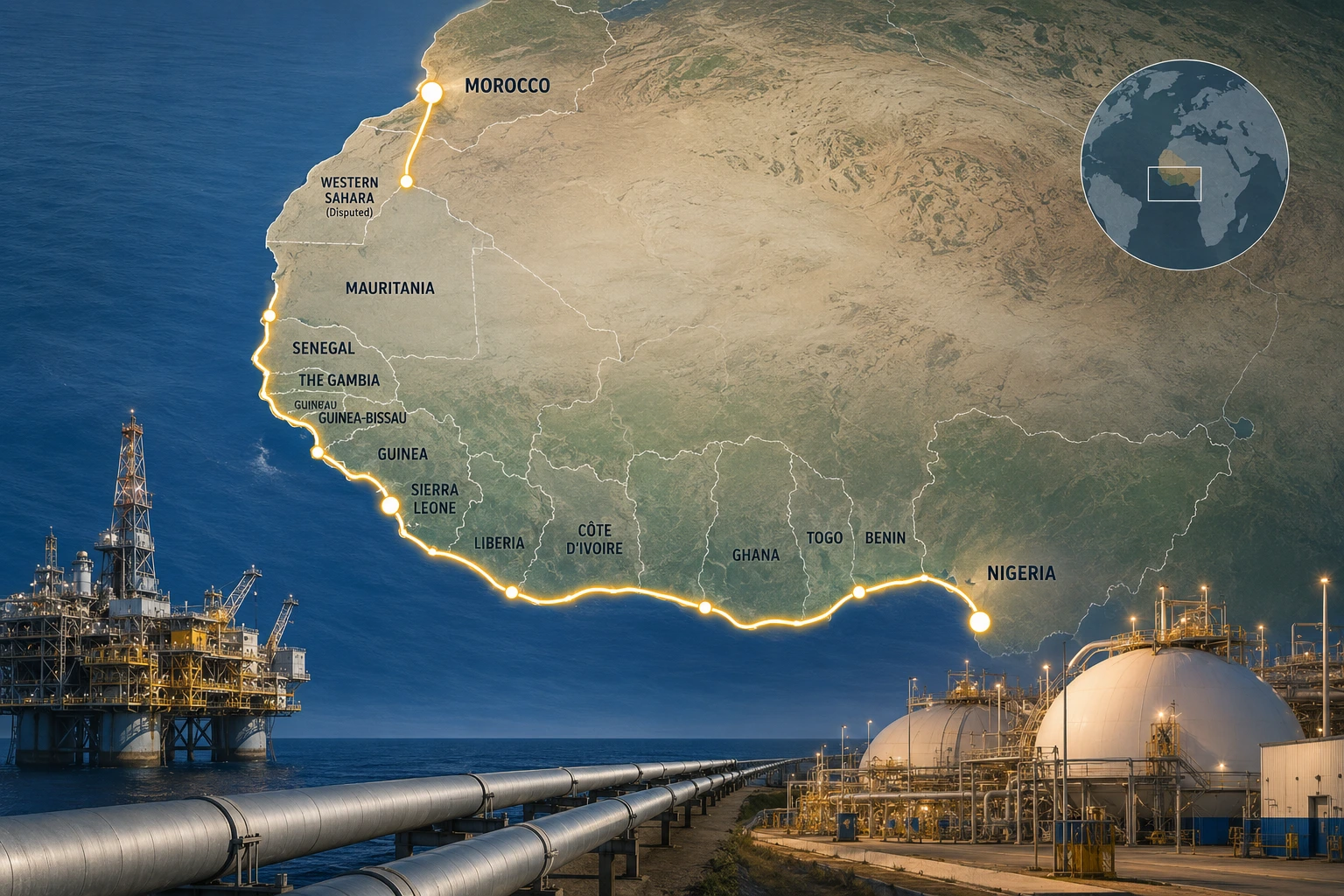
West African governments have taken an important political step towards building one of the world’s longest proposed gas pipelines. They have not yet made it inevitable. ECOWAS member states signed an intergovernmental agreement in Freetown backing the Nigeria–Morocco Atlantic Gas Pipeline, a proposed energy corridor intended to move Nigerian and West African gas through coastal states to Morocco and potentially onwards to Europe.
The agreement creates a legal and governance framework for the project. It is not a final investment decision, does not mean all financing has been secured and does not guarantee that construction will begin on schedule.
That distinction is central to understanding the project.
The pipeline is designed to transport up to 30 billion cubic metres of gas annually along a hybrid offshore and onshore route extending about 6,900 kilometres. Of that capacity, around 15 billion cubic metres a year could be supplied to Moroccan and European markets through existing infrastructure connecting Morocco with Spain, according to a joint Nigerian-Moroccan statement reported by Reuters.
Project sponsors say the corridor could also serve West African electricity, fertiliser, petrochemical, mining and manufacturing markets. The promise is substantial. So are the risks.
What was actually agreed?
The Freetown agreement marks the project’s transition from years of bilateral and technical preparation towards a broader regional implementation framework. Earlier cooperation involved Nigeria, Morocco and ECOWAS. The latest agreement brings participating governments more formally into the structure intended to govern the pipeline.
The project has completed feasibility and front-end engineering design work, according to Reuters. Its next stages include further institutional agreements, the creation of a project company in Casablanca, a higher pipeline authority in Abuja, investor engagement and preparations for a final investment decision.
One reported timetable envisages construction beginning in 2028 and first deliveries in 2031. Those dates should be treated as indicative. Projects of this scale frequently face delays arising from finance, procurement, permitting, engineering and political coordination.
The Project in Numbers
The figures below summarise the current proposal for the planned Nigeria–Morocco gas pipeline and should be read as indicative rather than guaranteed.
Approximately €23 billion
Hybrid offshore and onshore corridor
Up to 30 billion cubic metres annually
- Potential supply to Morocco and Europe
- About 15 bcm annually
- Route
- Hybrid offshore and onshore corridor
- Countries involved
- 13 West African states along the route to Morocco
- Indicative construction start
- Indicative first gas
A Cross-Border Energy Corridor
Why West Africa wants the pipeline
The project’s strongest development case is not necessarily its European export potential. Much of West Africa continues to face unreliable electricity, expensive fuel imports and limited industrial gas infrastructure. A regional network could help connect gas-producing countries with power plants, fertiliser producers, mines, factories and urban markets.
Nigeria’s government says the pipeline could help the country move from being primarily gas-rich to becoming more deeply gas-powered, while supporting industrial development across participating states.
Nigeria’s Minister of State for Petroleum Resources, Ekperikpe Ekpo, has cited approximately 215.19 trillion cubic feet of proven natural gas reserves, describing gas as a central pillar of Nigeria’s industrialisation and energy-security strategy. He said the pipeline could support power generation, fertiliser, petrochemicals, manufacturing and other gas-based industries.
Those ambitions are significant, but they remain policy objectives. Whether they are realised will depend on how gas is priced, where branch connections are built, which customers sign long-term contracts and whether domestic users receive priority alongside export markets.
Nigeria has the reserves, but can it guarantee supply?
Large reserves do not automatically translate into dependable pipeline supply. Nigeria must still produce, process and transport enough gas to support domestic demand, regional customers, liquefied natural gas exports and any future European commitments.
That will require substantial upstream investment, more gathering and processing infrastructure, lower losses and stronger protection of energy assets. The commercial question is not simply whether Nigeria has gas. It is whether enough marketable gas can be committed under long-term contracts at prices that consumers can afford and investors can finance.
Any serious project assessment must therefore examine:
- long-term production capacity;
- upstream investment commitments;
- processing and compression infrastructure;
- domestic gas obligations;
- security of supply;
- commercial pricing;
- the ability of buyers to honour payment contracts.
Without credible answers, pipeline capacity could exist without sufficient dependable throughput.
What Ghana Could Gain — and What Must Happen First
Ghana sits on the proposed Atlantic corridor and could benefit from stronger regional gas integration.
Potential gains include additional supply options for electricity generation, greater resilience during domestic production interruptions and new opportunities for fertiliser, manufacturing and other gas-intensive industries.
The project could also complement the existing West African Gas Pipeline, which already links Nigeria with Benin, Togo and Ghana.
Where Ghana Could Benefit
Electricity Supply
Additional gas access could improve fuel availability for thermal generation and reduce exposure to interruptions in domestic supply.
Energy Resilience
A broader regional network could provide alternative supply options during production, maintenance or transmission disruptions.
Industrial Development
Fertiliser, manufacturing, petrochemicals and other gas-intensive sectors could benefit from reliable long-term access.
Regional Trade
Ghana could strengthen its position in a wider West African energy market as a consumer, transit state or both.
Ghana’s Benefits Are Not Automatic
The pipeline’s presence in Ghanaian territory would not, by itself, guarantee affordable or reliable gas for domestic users.
Benefits would depend on financing, infrastructure, contract design, pricing and the ability of the power and industrial sectors to pay for delivered gas.
- 01 The Ghana section must be financed and completed
Regional political endorsement must translate into construction, commissioning and operational readiness.
- 02 Domestic connection points must be commercially useful
The location and capacity of interconnection facilities will determine which consumers can access the gas.
- 03 Existing infrastructure must be integrated
New supply must connect effectively with transmission systems, power plants and industrial distribution networks.
- 04 Imported gas must be competitively priced
High transport, financing or transit costs could make the gas less attractive than domestic alternatives.
- 05 Buyers must sign credible long-term contracts
Lenders will expect bankable purchase agreements with counterparties capable of meeting payment obligations.
- 06 Power-sector payment discipline must improve
Persistent arrears and weak utility finances could undermine gas purchases and investor confidence.
- 07 Ghana must define its role
Policymakers must decide whether Ghana will act mainly as a consumer, transit country, regional trading hub or a combination of these.
A Pipeline Cannot Solve Every Energy-Sector Weakness
New infrastructure can improve access to gas, but it cannot by itself correct structural weaknesses in Ghana’s electricity and energy markets.
Supply security also depends on financially viable utilities, effective regulation, adequate transmission infrastructure and institutions able to enforce commercial agreements.
The central question is therefore not merely whether the pipeline passes through Ghana, but whether Ghana negotiates reliable and commercially useful access to it.
Can the Project Raise US$25 Billion?
Political endorsement is only one step towards bankability.
A pipeline of this scale would probably require a combination of sponsor equity, commercial debt, development finance, export-credit support, sovereign guarantees and long-term customer contracts.
Investors will assess whether revenues are predictable, construction risks are allocated clearly and participating governments can honour their commitments.
How a Project of This Scale Could Be Financed
Sponsor Equity
Project sponsors and participating entities may contribute upfront capital and absorb early-stage development risk.
Commercial Debt
Banks and institutional lenders may provide long-term financing where revenues and guarantees are considered credible.
Development Finance
Multilateral and regional development institutions may support commercially viable sections with regional-development benefits.
Export-Credit Support
Export-credit agencies may help finance equipment, engineering and construction contracts sourced from participating countries.
Sovereign Guarantees
Governments may be asked to support payment obligations, political risks or the performance of state-owned buyers.
Long-Term Offtake Contracts
Binding purchase agreements can provide the predictable revenue needed to service project debt.
What Investors Will Want to Know
Before committing capital, investors and lenders will expect clear answers to major commercial, political and environmental questions.
Why the Final Cost Could Rise
The reported US$25 billion estimate should be treated as an indicative figure rather than a fixed final price.
Offshore construction, inflation, interest costs, route changes, environmental conditions and security requirements could materially increase the final bill.
- Offshore engineering Deepwater construction and subsea maintenance complexity
- Inflation Higher steel, equipment, labour and logistics costs
- Interest rates More expensive long-term project debt
- Route revisions Engineering or political changes to the corridor
- Environmental compliance Impact mitigation, monitoring and restoration requirements
- Security measures Protection of infrastructure across multiple jurisdictions
Could a Phased Approach Make the Project More Manageable?
Develop Commercially Viable Sections First
A phased approach could reduce the immediate capital requirement and allow sections with stronger demand or simpler engineering to proceed earlier.
Early Sections May Lack Full Network Benefits
Partial development could leave individual sections operating below optimal scale if the full regional corridor is delayed or never completed.
Key Takeaways
- 01
Ghana could benefit from additional gas supply, stronger energy resilience and new industrial opportunities.
- 02
Those gains depend on financing, domestic connections, competitive pricing and credible long-term purchase agreements.
- 03
The pipeline cannot by itself resolve Ghana’s utility debt, transmission and regulatory weaknesses.
- 04
Raising US$25 billion will require a complex combination of equity, debt, guarantees and customer contracts.
- 05
The project’s final cost could exceed the current estimate because of offshore construction, financing and security risks.
- 06
Phased development may reduce initial financing pressure but could weaken network benefits if later sections are delayed.
Europe may not be the market it once was.
Europe’s search for alternatives to Russian gas gave African supply projects new strategic attention after the invasion of Ukraine. But the pipeline’s timetable creates a difficult commercial question.
If construction begins around 2028 and first gas arrives after 2030, the project would enter service as European governments deepen renewable-energy deployment, efficiency programmes, electrification and decarbonisation.
Natural gas may remain important in some industrial and power markets. Yet future European demand is uncertain, particularly for infrastructure designed to operate for several decades. The risk is that a pipeline planned during a period of heightened concern about gas security reaches commercial operation after the strongest demand has passed.
This makes West African and North African demand increasingly important. The project may be more defensible if its commercial foundation rests on regional electricity and industrial use, with Europe as an additional market rather than the sole economic justification.
Atlantic route versus Trans-Saharan route
The Atlantic project competes strategically with the older Trans-Saharan Gas Pipeline proposal, which would carry Nigerian gas north through Niger to Algeria.
The Trans-Saharan route is shorter and could connect with Algeria’s established export infrastructure. Supporters argue that this could reduce construction costs and provide a more direct route to Europe.
Its weaknesses are equally substantial. The route would cross areas affected by political instability and armed violence in Niger and the wider Sahel. Recent tensions within West Africa have also complicated regional diplomatic coordination.
The Atlantic route avoids some Sahel security risks and potentially serves more coastal markets. But it is longer, technically complex and likely to be more expensive because of extensive offshore construction. The comparison is therefore not a simple contest between a cheap route and an expensive one.
The Trans-Saharan option faces acute security and political risk. The Atlantic option faces greater engineering, financing and route-management complexity. Both remain difficult.
Morocco’s strategic interest
For Morocco, the pipeline is about more than energy supply. The project could strengthen the country’s position as an energy bridge between West Africa and Europe. It also supports Rabat’s broader diplomatic and commercial engagement across Africa.
The proposal gained additional significance after Algeria ended gas flows through the Maghreb–Europe pipeline following the breakdown of diplomatic relations with Morocco. That infrastructure had previously carried Algerian gas to Spain through Moroccan territory.
A Nigerian supply route could therefore help Morocco rebuild its role within regional gas trade while reducing dependence on Algerian flows. That strategic value helps explain why Rabat has invested sustained diplomatic attention in the project since it was first proposed in 2016.
The Western Sahara Complication
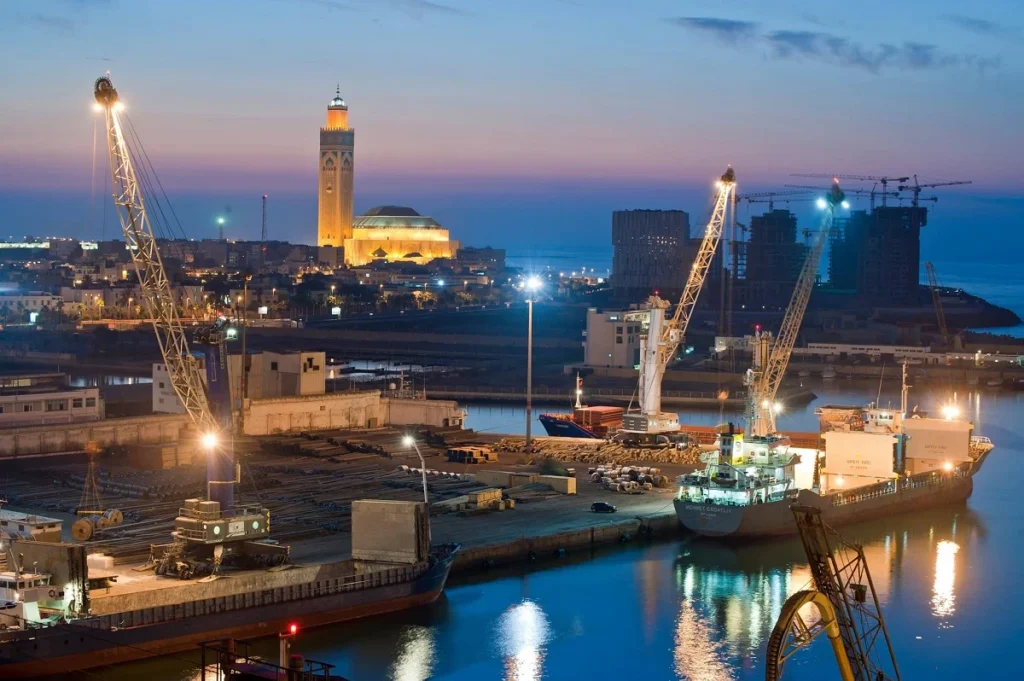
The northern section of the proposed route carries an additional layer of legal, diplomatic and investor sensitivity.
Western Sahara remains a disputed territory. Any pipeline crossing, landing in or operating alongside it may face scrutiny over territorial consent, applicable law, environmental approvals and the treatment of local communities.
The project’s official descriptions frequently emphasise regional integration. Investors, lenders and insurers will nevertheless require a clear assessment of territorial and legal exposure before committing capital.
This issue does not necessarily prevent construction, but it adds another significant layer of complexity to an already demanding cross-border infrastructure project.
Where the Dispute Could Affect the Project
Territorial uncertainty can influence both the physical design of the pipeline and the commercial framework supporting it.
Route Planning
Engineers may need to consider alternative corridors, landing points or offshore alignments.
Project Finance
Lenders may demand stronger legal opinions, guarantees or risk protections.
Insurance
Political-risk and construction insurance may become more expensive or restrictive.
Environmental Approval
Questions may arise over which authorities can validly approve affected sections.
European Legal Review
European institutions and courts may examine territorial consent and trade implications.
Regional Diplomacy
The project could intersect with wider tensions involving Morocco, Algeria and neighbouring states.
Polisario Objections
The Polisario Front and its supporters may challenge parts of the project diplomatically or legally.
Security Goes Beyond Guarding the Pipe
The route would cross or serve more than a dozen jurisdictions, making security a regional governance challenge rather than a single-country policing task.
Protecting the corridor would require coordination among national security agencies, port and maritime authorities, energy regulators, local governments, pipeline operators and host communities.
Security cannot be treated solely as a military or law-enforcement problem. Long-term protection will also depend on local legitimacy, reliable payments, environmental safeguards and visible benefits for communities along the route.
Projects perceived as bypassing local populations can face protests, delays, theft, sabotage and political resistance.
Principal Security and Operational Risks
Deliberate damage to pipelines, terminals, compressors or support infrastructure.
Unauthorised extraction, diversion or interference with gas and equipment.
Risks involving shipping activity, fishing, anchors, subsea works or hostile interference.
Attempts to disrupt control systems, monitoring platforms or operational communications.
Changes of government, instability, protests or disruption of cross-border commitments.
Challenges involving ownership, compensation, customary rights or unresolved boundaries.
Opposition linked to jobs, environmental impacts, compensation or uneven benefit sharing.
Failure by utilities, governments or customers to meet payment obligations.
Inadequate cross-border arrangements for leaks, explosions, outages or maritime emergencies.
Climate Risk and the Gas-Transition Argument
Supporters describe natural gas as a transition fuel capable of replacing more polluting diesel, fuel oil and traditional biomass while supporting industrial development.
Critics argue that investing tens of billions of dollars in long-lived fossil-fuel infrastructure could lock countries into carbon-intensive systems and divert finance from renewable energy.
Both positions require qualification.
Gas can reduce some local pollution and emissions where it genuinely replaces heavier fuels. Its climate advantage is weakened where methane leakage is high or where gas infrastructure delays investment in cleaner alternatives.
- replace diesel and fuel oil;
- improve electricity reliability;
- support fertiliser and industry;
- reduce reliance on traditional biomass.
- increase fossil-fuel dependence;
- divert capital from renewables;
- create stranded-asset risk;
- produce significant methane emissions.
What Climate Credibility Would Require
- 01 Strict methane monitoring
Independent measurement across production, processing, transmission and delivery.
- 02 Low-leakage infrastructure
Modern equipment, maintenance and rapid detection of fugitive emissions.
- 03 Transparent emissions reporting
Public disclosure using consistent and independently verifiable standards.
- 04 Clear domestic-access commitments
Evidence that African consumers and industries will receive meaningful benefits.
- 05 Alignment with national transition plans
Gas policy should complement rather than displace credible renewable energy strategies.
- 06 Evidence of genuine fuel substitution
The project should replace higher-emission fuels rather than simply add new fossil-fuel consumption.
Can the Project Deliver Development Without Creating a Stranded Asset?
The real question is not whether gas is universally good or bad. It is whether the pipeline can deliver measurable development benefits, strengthen African energy access and remain commercially viable without delaying cleaner energy systems.
The Real Test
The Nigeria–Morocco Atlantic Gas Pipeline offers a compelling regional vision.
It could connect energy markets, support power generation, stimulate industry and give participating states a larger role in global gas trade.
But major pipelines are not built by political declarations alone.
They require reliable gas, solvent buyers, disciplined governance, stable transit arrangements, affordable finance and confidence that demand will exist when construction is complete.
The Freetown agreement is meaningful because it establishes a stronger regional framework. The project’s future will be decided by whether governments and sponsors can convert that framework into a financeable commercial system serving African markets first and export ambitions second.
Key Takeaways
- 01
ECOWAS governments have endorsed an implementation framework, but no final investment decision has been announced.
- 02
The pipeline is designed to carry up to 30 bcm of gas annually over roughly 6,900 kilometres.
- 03
Around half of the proposed capacity could serve Morocco and European markets.
- 04
Nigeria’s reserves are substantial, but dependable production and processing capacity must still be secured.
- 05
Ghana could benefit only if pricing, domestic connections and purchase agreements are commercially viable.
- 06
Financing, European demand, security, territorial exposure and climate risk remain major obstacles.
- 07
The competing Trans-Saharan route is shorter but faces serious Sahel security and political risks.
- 08
Reported targets of construction in 2028 and first gas in 2031 remain provisional rather than guaranteed.
Five Questions Readers Are Asking
Has the pipeline been fully approved?
Governments have endorsed an intergovernmental and governance framework. Financing, detailed approvals and a final investment decision are still required.
How much will the pipeline cost?
The current indicative estimate is about US$25 billion, although the eventual cost could rise because of financing, engineering, inflation, environmental and security requirements.
When could construction begin?
Project sources have indicated 2028, with possible first gas in 2031. These are target dates rather than guaranteed deadlines.
What could Ghana gain?
Ghana could improve gas-supply options, power-sector resilience and industrial connectivity. The benefits would depend on pricing, domestic infrastructure and credible long-term purchase agreements.
Will the gas mainly go to Europe?
The design allows substantial exports towards Morocco and Europe, but regional African demand may ultimately be more important to the project’s long-term commercial case.
Related posts:
 ECOWAS backs Ghana’s anti-xenophobia push as West African ministers endorse AU petition and reparatory justice framework
  Ghana Parliament Passes Human Sexual Rights and Family Values Bill
  Four Sentenced to Death Over Nigeria’s Deadly Owo Church Attack
  Ghana intensifies fight against money laundering amid major corruption investigations in 2026
  Nigeria seeks compensation from South Africa over migrant property losses