
Nigeria Imposes Curfew After 37 Suspected Miners Die in Custody



MINNA, Nigeria — September 19, 2026: Authorities in Nigeria have imposed a 24-hour curfew in the central city of Minna following protests over the deaths of 37 people suspected of illegal mining while in the custody of the Nigeria Security and Civil Defence Corps (NSCDC).
The deaths have triggered public anger, clashes between protesters and security forces and a government investigation into what happened inside the detention facility.
President Bola Ahmed Tinubu has ordered a full investigation, while senior NSCDC officials in Niger State have been suspended pending the inquiry. The precise cause of death has not yet been established.
The incident has become one of Nigeria’s most closely watched breaking news stories after relatives and survivors raised questions about the conditions in which the detainees were held.
What happened in Minna?
The victims were among dozens of people arrested during operations targeting suspected illegal gold mining in Niger State.
The NSCDC said the arrests took place during raids around the Wushishi-Lukoto area west of Minna on September 15 and 16.
The detainees were subsequently held at an NSCDC facility in Minna.
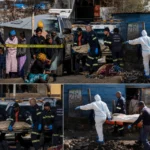
On Thursday, authorities discovered that dozens of those being held had died.
Niger State Governor Mohammed Umaru Bago later confirmed that 37 detainees had died and announced three days of mourning.
The NSCDC initially referred to a suspected disease outbreak as a possible explanation for the deaths.
However, the agency later said the cause had not been established and would need to be determined through medical investigations.
That distinction is important because claims about what caused the deaths remain unresolved.
A survivor, Dauda Shehu, told journalists that detainees had been packed into a poorly ventilated cell and struggled to breathe.
His account has raised the possibility that overcrowding and inadequate ventilation may have contributed to the deaths, but this has not been established as the official cause.
Protests erupt in Minna
The deaths quickly triggered protests in Minna.
Hundreds of people took to the streets, with demonstrators demanding answers and accountability over the deaths of those who had been detained.
Reuters reported that security forces fired during the protests, although it was initially unclear whether live ammunition or anti-riot rounds were used. A Reuters witness saw one body on the ground.
The demonstrations also resulted in damage to property, with reports of protesters attacking businesses and public facilities.
Security forces used tear gas to disperse crowds as tensions increased.
In response, the Niger State government imposed a 24-hour curfew across Minna, ordering residents to remain indoors while authorities worked to restore order.
The government also suspended mining activities in the state as part of its response to the crisis, according to local reporting.
President Tinubu orders investigation
President Tinubu has ordered an investigation into the deaths.
The federal government has also suspended senior NSCDC personnel, including the agency’s Niger State commandant, Suberu Siyaka Aniviye.
Tinubu said disciplinary suspensions would not be enough if wrongdoing was established and called for accountability for officials found responsible.
The president has also maintained that the government will continue its efforts to tackle illegal mining, while stressing that enforcement operations must be conducted within the law.
The investigation is expected to examine how many people were detained, the conditions inside the facility, the medical care available to detainees and what happened in the period immediately before the deaths.
The precise circumstances remain under investigation.
Cause of deaths remains unclear
Determining the cause of death is likely to be one of the most important aspects of the investigation.
The NSCDC initially cited a possible disease outbreak, but the organisation later said that the cause had not been confirmed.
Survivors have provided a different account.
Shehu said approximately 65 people had been held in the cell and described severe overcrowding and poor ventilation.
He said detainees struggled to breathe and attempted to attract the attention of guards.
Those allegations have not been independently established.
The Nigerian authorities have said medical investigations are required before conclusions can be drawn about the cause of death.
The bodies were buried according to Islamic tradition, according to Reuters reporting, which has raised additional questions about how forensic examinations can now be conducted.
Children among those who died
Niger State officials have said that many of the people who died were young.
Governor Bago said some were aged between 14 and 18, raising concerns about children working at informal mining sites instead of attending school.
The issue has added another dimension to the wider debate over illegal mining in Nigeria.
Artisanal and informal mining provides income for many communities, but authorities have also linked unregulated mining to environmental damage, insecurity and the activities of criminal groups.
Niger State is rich in mineral resources and has attracted large numbers of small-scale miners.
The government has been attempting to restrict unauthorised mining while dealing with wider security problems in parts of the state.
Why illegal mining is a major issue in Nigeria
Nigeria has substantial deposits of gold and other minerals, but much of the country’s mining sector remains informal.
Government authorities have argued that illegal mining deprives the state of revenue and can contribute to environmental degradation.
In parts of northern and central Nigeria, officials and security analysts have also raised concerns about links between informal mining and armed criminal groups.
Niger State has experienced security problems involving kidnapping and armed groups, making control of mining areas an additional challenge for authorities.
The deaths in Minna have therefore placed renewed attention on how Nigeria conducts enforcement operations against illegal mining.
The government now faces pressure to establish what happened without compromising its broader campaign against unauthorised mining.
Curfew changes life in Minna
The 24-hour curfew has significantly changed activity in Minna as authorities attempt to prevent further clashes.
The state government has urged residents to comply with security directives and remain indoors.
An All Progressives Congress rally scheduled for Minna was also cancelled as authorities responded to the unrest, according to local reports.
The government has said the measures are intended to prevent further violence while investigations continue.
For families of the victims, however, the immediate priority remains understanding how their relatives died.
Relatives have gathered at Minna General Hospital, where the bodies were taken following the incident.
Questions facing Nigerian authorities
The investigation will need to address several key questions.
How many people were detained during the mining raids?
Authorities arrested dozens of people during operations on September 15 and 16.
What were the conditions inside the detention facility?
Survivors have alleged serious overcrowding and inadequate ventilation. These claims remain subject to investigation.
What caused the deaths?
The definitive medical cause has not yet been established.
Were proper detention procedures followed?
The investigation is expected to examine how the detainees were treated and whether established procedures were followed.
Who will be held responsible?
President Tinubu has said that officials found responsible should face accountability.
Nigeria’s government under pressure for answers
The Minna deaths have created a significant test for Nigeria’s authorities as they attempt to balance the fight against illegal mining with their responsibility towards people held in state custody.
The government has already taken several immediate steps, including suspending senior NSCDC officials, launching an investigation and imposing a curfew after protests.
But the central question remains unanswered: what caused the deaths of the 37 detainees?
Until medical and investigative findings are released, competing explanations remain allegations rather than established facts.
For families of those who died, the investigation is expected to provide answers about what happened during their final hours in custody.
The events have also renewed questions about the conditions faced by informal miners and the risks associated with Nigeria’s illegal mining economy.
As Minna remains under curfew, attention will now turn to the government’s investigation and whether it can establish the circumstances surrounding the deaths.
The case is likely to remain a major national issue as authorities investigate the detention facility, the mining raids and the events that led to the deaths.
Related posts:
 Gabon’s social media clampdown draws rights concerns after platform suspensions and phone seizures
  Kenya’s Ex-Chief Justice David Maraga Arrested During Nairobi National Park Protest
  Manhunt Under Way in South Africa After 12 Killed in Mass Shooting Near Johannesburg
  DR Congo Ebola outbreak becomes country’s deadliest with 2,325 deaths
  Ibrahim Gusau Resigns as NFF President