Duane ‘Keffe D’ Davis found guilty of Tupac Shakur’s 1996 murder
A Las Vegas jury has convicted Duane 'Keffe D' Davis of orchestrating Tupac Shakur's 1996 murder, delivering the first conviction in the case nearly 30 years after the rapper was fatally



Follow Nukunya
Get the latest breaking news and updates from Nukunya.
A Las Vegas jury has convicted Duane “Keffe D” Davis of orchestrating the murder of Tupac Shakur, delivering the first conviction nearly 30 years after the rapper was fatally shot and closing one chapter of a case that became one of music’s most enduring mysteries.
LAS VEGAS, United States – Duane “Keffe D” Davis has been found guilty of orchestrating the 1996 murder of Tupac Shakur, nearly three decades after the influential rapper was shot in a drive-by attack in Las Vegas.
A 12-person jury in Clark County, Nevada, convicted Davis, 63, of first-degree murder with a deadly weapon on Monday after deliberating for nearly three hours.
Davis had pleaded not guilty.
He faces a maximum sentence of life in prison without the possibility of parole when he is sentenced on October 13 and has told the court that he intends to appeal. The verdict is the first murder conviction arising from Shakur’s killing, which remained unresolved for almost 30 years.
But there is an important distinction.
Prosecutors did not establish that Davis personally fired the shots that killed Tupac.
Their case was that he organised and facilitated the retaliatory attack, including obtaining the gun used by the group. Under Nevada law, that was sufficient for prosecutors to pursue a murder conviction even without proving Davis was the gunman.
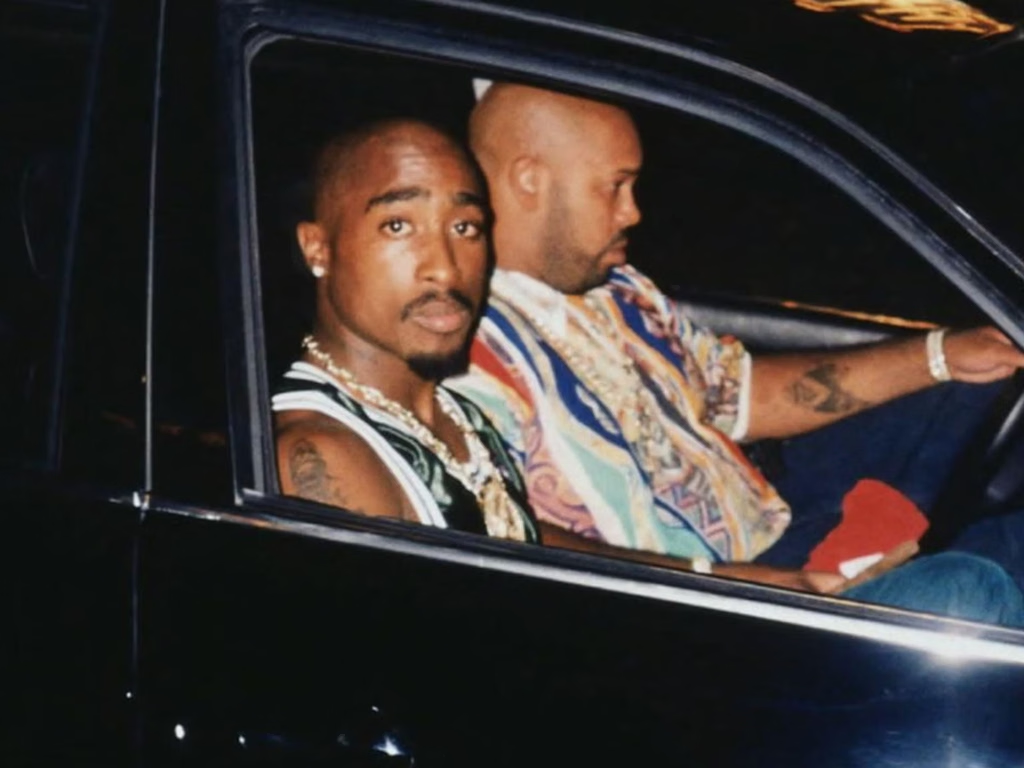
What happened the night Tupac was shot?
Shakur was 25 and at the height of his fame when he was shot near the Las Vegas Strip on 7 September 1996.
Earlier that evening, he had attended a Mike Tyson boxing match at the MGM Grand.
After the fight, Shakur and members of his entourage became involved in an altercation involving Orlando Anderson, Davis’s nephew.
Prosecutors said that confrontation became the trigger for the attack that followed.
Davis was a leader of the South Side Compton Crips, which was in conflict with the Mob Piru gang associated with Shakur and Death Row Records.
Hours after the MGM Grand confrontation, Shakur was travelling in a BMW driven by Death Row Records co-founder Marion “Suge” Knight.
A white Cadillac pulled alongside their vehicle at a traffic light.
Gunfire erupted.
Shakur was hit multiple times and died six days later, on 13 September 1996.
Knight survived.
Prosecutors said Davis helped organise retaliation
The prosecution’s case did not depend on establishing that Davis pulled the trigger.
Instead, prosecutors portrayed him as a senior gang figure who helped turn the earlier confrontation into a revenge attack.
Chief Deputy District Attorney Binu Palal told jurors that Davis obtained a firearm, assembled the group and went looking for Shakur and Knight after his nephew had been beaten.
Davis had previously told investigators that he was travelling in the Cadillac with three other men, including Anderson.
He said he passed a gun towards the back of the vehicle before someone opened fire when they found the BMW carrying Shakur and Knight.
The prosecution has not established through this verdict which man fired the fatal shots.
The three other men who were travelling in the Cadillac have since died.
That distinction matters because the verdict answers one major legal question without necessarily resolving every factual question surrounding the shooting.
Davis has been convicted of murder for his role in organising the attack.
The verdict does not amount to a judicial finding that he was the gunman.
How Keffe D’s own words became evidence
One of the most remarkable features of the case is how it eventually moved from decades of suspicion to prosecution.
Police had long suspected Davis of involvement but lacked sufficient evidence to charge him.
Over the years, however, Davis increasingly spoke publicly about what happened.
He discussed the killing in interviews and media appearances and co-authored the 2019 memoir Compton Street Legend.
Investigators also had recordings of meetings between Davis and law-enforcement officers.
Those statements eventually became central to the prosecution’s case.
During the trial, prosecutors played jurors clips from previous Davis interviews and recorded jail calls.
In one jail call following his 2023 arrest, Davis complained about authorities using his own statements against him.
The prosecution argued that those accounts, considered alongside other evidence, established his responsibility for organising the attack.
Defence told jurors not to believe Davis’s accounts
The defence confronted an unusual problem.
Rather than arguing simply that Davis had never claimed involvement, his lawyer challenged the reliability of Davis’s own previous stories.
Attorney Michael Sanft argued that Davis had exaggerated or fabricated elements of his accounts to make money from the enduring fascination surrounding Tupac’s death.
The defence also attacked the level of independent corroboration supporting those statements.
That challenge was not insignificant.
A former Las Vegas homicide detective who interviewed Davis in 2009 testified during the trial that although he believed Davis’s account, he had been unable to independently verify it at the time.
Davis did not testify in his own defence.
The jury ultimately rejected the defence case and returned a unanimous guilty verdict.
Why did the Tupac murder case take almost 30 years?
Shakur was killed in 1996.
Davis was not arrested until 2023.
The trial did not begin until August 2026.
For years, investigators had suspicions about the people travelling in the white Cadillac but did not have a case they believed could support a prosecution.
Davis’s increasingly public accounts eventually changed the evidential landscape.
When authorities arrested him in September 2023, prosecutors characterised him as a leading figure in the revenge plot that followed the MGM Grand confrontation.
Prosecutors ultimately called 24 witnesses, while Davis’s past statements formed a substantial part of their case.
Monday’s verdict came after an 11-day trial and less than three hours of jury deliberations.
What the Tupac verdict establishes, and what it does not
The conviction provides a degree of legal resolution to a case surrounded for decades by speculation, competing theories and conspiracy claims.
But precision remains important.
The verdict establishes that a jury found Davis guilty beyond a reasonable doubt of first-degree murder for his role in the killing.
It does not establish that Davis personally shot Shakur.
Prosecutors have not identified the gunman through this conviction.
Nor does the verdict validate every theory that has circulated about Shakur’s death during the past three decades.
The conviction concerns the case prosecutors actually presented in court: that Davis helped organise a retaliatory attack after the confrontation involving his nephew.
That narrower distinction is important when reporting a case whose long unresolved history generated enormous speculation.
A verdict just before the 30th anniversary
30
Shakur died on 13 September 1996.
Davis was convicted less than two weeks before the 30th anniversary of his death.
Shakur’s recording career was brief, but his influence extended well beyond the music released during his lifetime.
His death became one of the defining events of 1990s hip-hop and intensified attention on violence surrounding sections of the rap industry during the era.
The absence of a conviction also helped transform the shooting into a cultural mystery.
For decades, discussions about Shakur’s death often mixed established evidence, allegations, rumours and conspiracy theories.
A criminal conviction fundamentally changes that landscape.
It does not answer every question.
But for the first time since Shakur was shot in 1996, someone has been convicted of his murder.
What happens to Keffe D now?
Davis remains in custody following the verdict.
He is due to be sentenced on 13 October and faces a maximum sentence of life imprisonment without parole.
He has already indicated that he intends to appeal.
That means the legal process is not necessarily finished.
An appeal could challenge aspects of the conviction or trial proceedings, but unless and until a court overturns the verdict, Davis stands convicted of first-degree murder.
There is another procedural development worth distinguishing from the conviction itself.
Prosecutors said they would dismiss the gang-enhancement portion of the charge because of witness logistics. That does not reverse the jury’s first-degree murder verdict.
Tupac’s murder has a conviction, but not every answer
For almost three decades, Tupac Shakur’s murder occupied an unusual space between criminal investigation and popular mythology.
There were suspects.
There were theories.
There were documentaries, interviews, books and countless claims about who was responsible.
What was missing was a conviction.
That changed on Monday.
But the significance of the verdict is more precise than saying the mystery has simply been “solved”.
A jury has found Duane Davis criminally responsible for orchestrating the attack that killed Shakur.
It has not established that Davis fired the gun.
Prosecutors themselves have not identified the shooter through this case.
That difference is important.
It separates what has now been established in a courtroom from the wider mythology surrounding one of music’s most scrutinised deaths.
There is another striking feature.
Davis’s own decision to speak publicly about the killing became part of the pathway that eventually led to his prosecution.
His defence argued those accounts were exaggerated and unreliable.
There was enough uncertainty for a former detective to acknowledge at trial that he had been unable to corroborate Davis’s account when interviewing him years earlier.
The jury nevertheless concluded, after hearing the full case, that the evidence established Davis’s guilt beyond a reasonable doubt.
That produces an unusual ending to a decades-old cold case.
The man convicted of orchestrating the killing was not uncovered through a sudden forensic breakthrough almost 30 years later.
His own words became a major part of the evidence used against him.
Davis intends to appeal, so the legal process continues.
And the identity of the person who actually fired the fatal shots has not been judicially established by Monday’s verdict.
Those qualifications matter.
They do not diminish the significance of the conviction.
They explain precisely what it means.
Thirty years after Tupac Shakur was shot, his murder finally has a conviction. The case has more legal certainty than it had before Monday, but it still does not have every answer.
Related posts:
 British TikTok influencer charged with murder in Dubai could face death penalty if convicted
  Elon Musk vs Sam Altman: what the jury will decide
  “I’m Marrying Who I Love, Christian or Muslim” — Black Sherif
  Mexico’s Missing Persons Crisis Cast Into World Cup Spotlight as Activists Demand Action
  Iran and Israel Halt Attacks After Trump Intervention, but Ceasefire Remains Fragile