
GH¢1.7bn GoldBod “Loss” Mostly Revenue, Not Real Loss – IEA



IEA: GH¢1.7bn GoldBod “Loss” Is Mostly Revenue and FX Accounting, Not a Real Loss
There’s been a lot of talk about a GH¢1.7 billion “loss” tied to the Bank of Ghana’s Domestic Gold Purchase Programme but according to the Institute of Economic Affairs (IEA), that framing gets the story wrong.
The Institute is pushing back on claims that the Ghana Gold Board (GoldBod) is responsible for the figure. Its argument: most of that GH¢1.7 billion isn’t a loss at all. It’s largely revenue and foreign-exchange valuation differences dressed up as red ink.
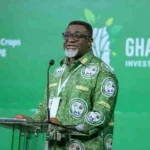
Professor Alexander Bilson Darku, the IEA’s Director of Research, walked through what’s really inside that figure. It’s made up of service fees, assaying fees, and FX valuation differences tied to GoldBod’s gold-buying and export operations.
Here’s the part that matters: those service and assaying fees are payments the Bank of Ghana makes to GoldBod for work done on its behalf. That means the fees count as revenue for GoldBod not a loss.
I don’t understand why somebody would call revenue as a loss, Darku said.
He made these comments at the IEA’s assessment of the 2026 mid-year budget review, held under the theme “From Stabilisation to Transformation: An Assessment of Ghana’s 2026 Mid-Year Budget Review.”
According to Darku, roughly 90 percent of the GH¢1.7 billion figure comes down to an exchange-rate valuation issue, not actual cash going missing.
Here’s how it works. GoldBod buys gold on behalf of the Bank of Ghana, then converts the proceeds from US dollars into cedis using the Central Bank’s reference exchange rate. If the rate used at the point of purchase differs from the rate used later to value those proceeds, that gap can show up as a “loss” in the BoG’s books even though no actual national wealth has disappeared.
It is merely a book accounting issue, and not a significant loss to the nation, Darku said.
Darku made a broader point about how these transactions should be read. Since GoldBod and the Bank of Ghana are both public institutions, a cost recorded on one side can show up as revenue on the other.
To the Government, its monetary authority, which is the Central Bank, has made that loss. To the Government, its Gold Board has made that gain, he explained, noting the two figures could effectively cancel each other out when viewed from the perspective of central government as a whole.
That said, Darku isn’t giving GoldBod a free pass. He noted the institution’s finances still deserve close scrutiny, especially as it transitions away from BoG financing toward private-sector funding for its gold-purchasing activities. Done right, he said, this shift could actually help deepen Ghana’s capital markets but it will demand real transparency, sound financial management, and strong oversight to get there.
He also gave credit where it’s due, pointing to GoldBod’s role in boosting gold exports, foreign-exchange inflows, and reserve accumulation all of which have helped support the cedi’s stability. That stability, in turn, has ripple effects: lower import costs, easing inflation, better debt-to-GDP positioning, and improved capacity to manage foreign-denominated debt.
Still, he cautioned against leaning too heavily on gold alone for exchange-rate stability. His advice: pursue broader export promotion, import substitution, tighter FX market regulation, and greater local ownership across the sector.
Zooming out, Darku commended government for reaching a decent level of macroeconomic stability, noting that most indicators have moved in the right direction over a relatively short period.
But he framed the real challenge as what comes next. The IEA thinks that the Government has done well to achieve some reasonable macroeconomic stability, and most of the macro-indicators have moved in the right direction within a relatively short period of time, he said. The question is whether we have the courage to consolidate those gains into lasting economic transformation that includes the lives of every Ghanaian.
To get there, he called for heavier investment in agriculture, employment-driven growth strategies, more local processing of natural resources, reforms to the natural-resource regime, and a shift in GoldBod’s role from simple gold trader to strategic asset manager. He also pushed for stronger enforcement powers for the Fiscal Council, along with measures to ensure cuts in the monetary policy rate actually translate into lower lending rates for businesses and the private sector.
Related posts:
 BoG Should Focus on Price Stability, Says IMF
  Police Probe Shooting That Injured Adwoa Safo Amid Kristo Asafo Leadership Dispute
  Ghana moves nearly 900 citizens to safe havens ahead of South Africa protests
  18 Years On, Juaboso DCE Seeks Funds to Complete Assembly Complex
  250,000 Jobs Through Govt’s Oil Palm Plan