Ibrahim Gusau Resigns as NFF President


Follow Nukunya
Get the latest breaking news and updates from Nukunya.
Ibrahim Gusau Resigns as NFF President, Executive Committee Follows
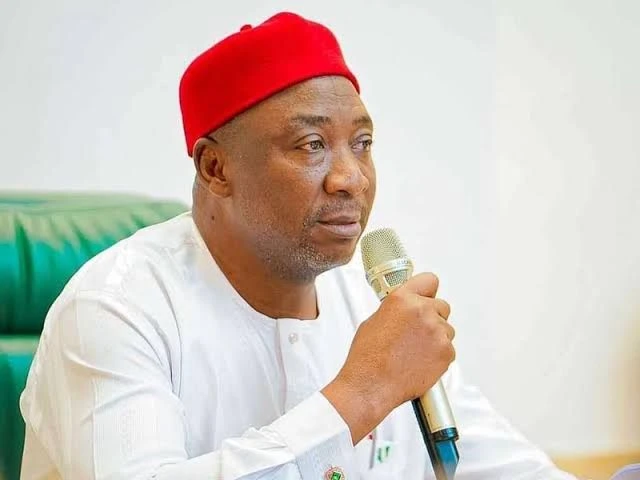
Nigerian football just got thrown into fresh turmoil. Nigeria Football Federation (NFF) President Ibrahim Musa Gusau resigned from office on Thursday, August 27, and he didn’t go alone the entire NFF Executive Committee and the General Secretary stepped down with him.
Gusau made the announcement himself, addressing the press in Abuja. The timing couldn’t be more difficult. Nigerian football is currently working through one of its toughest stretches in years, and this mass exit leaves the federation without clear leadership at exactly the wrong moment.
It’s not hard to see what led here. Several of Nigeria’s national teams have struggled badly of late, and each setback added more weight to an already shaky situation.
The Super Falcons’ campaign for the 2027 FIFA Women’s World Cup came apart in painful fashion a 1-0 quarter-final loss to Cameroon at the 2026 Women’s Africa Cup of Nations, followed by a 2-1 defeat to South Africa in the World Cup play-off that finally ended their hopes.
The Super Eagles fared no better on the men’s side, missing out on the 2026 FIFA World Cup after falling to DR Congo on penalties in the African play-off. And the disappointment didn’t stop with the senior teams the Golden Eaglets also failed to qualify for the 2026 FIFA U-17 World Cup, deepening worries about the pipeline of talent coming through Nigerian football.
Results on the pitch were only part of the story. The federation’s finances have also come under serious scrutiny.
Both the Economic and Financial Crimes Commission (EFCC) and the Independent Corrupt Practices and Other Related Offences Commission (ICPC) have been investigating how a N12 billion Federal Government intervention fund, released in 2024 to clear outstanding wages, bonuses, and allowances, was actually used. The NFF has confirmed it handed over relevant documents to both anti-corruption agencies as part of that process.
A separate fact-finding committee, chaired by Ambassador Fanny I. Amun, added to the pressure. Its report, submitted on August 21 after reviewing the Super Falcons’ WAFCON campaign, called for tighter financial controls, a clearer split between administrative and technical responsibilities, and more transparency around how players are selected.
For all the controversy, Gusau’s time in charge wasn’t without genuine achievement. Nigeria reached the final of the 2023 Africa Cup of Nations under his watch, and the Super Falcons made it back to the Olympics at Paris 2024, ending a 16-year absence from the Games.
The NFF had already set September 27 as the date for its next elective congress, to be held in Lafia, Nasarawa State. Whether that timeline holds is now an open question, with this resignation likely to reshape the process and stretch out the period of uncertainty facing Nigerian football.
For fans, the hope now is that this crisis becomes a turning point rather than just another setback a chance for the federation to rebuild around stronger financial accountability, better administration, and renewed investment in the national teams, so Nigeria can work its way back to being one of Africa’s true football powerhouses.
Related posts:
 Kenya to Charge Eight Students With Murder Over Deadly School Dormitory Fire
  China and African railway experts deepen cooperation through Qinghai–Xizang exchange
  West Africa Battles Devastating Floods as Climate and Urban Growth Increase Risks
  Sudan War Crimes Investigation Reaches New Stage as ICC Says Evidence Mounts in Darfur
  VP Opoku-Agyemang to Represent Mahama at Africa Forum in Kigali