
Africa’s inflation pressures deepen cost-of-living crisis

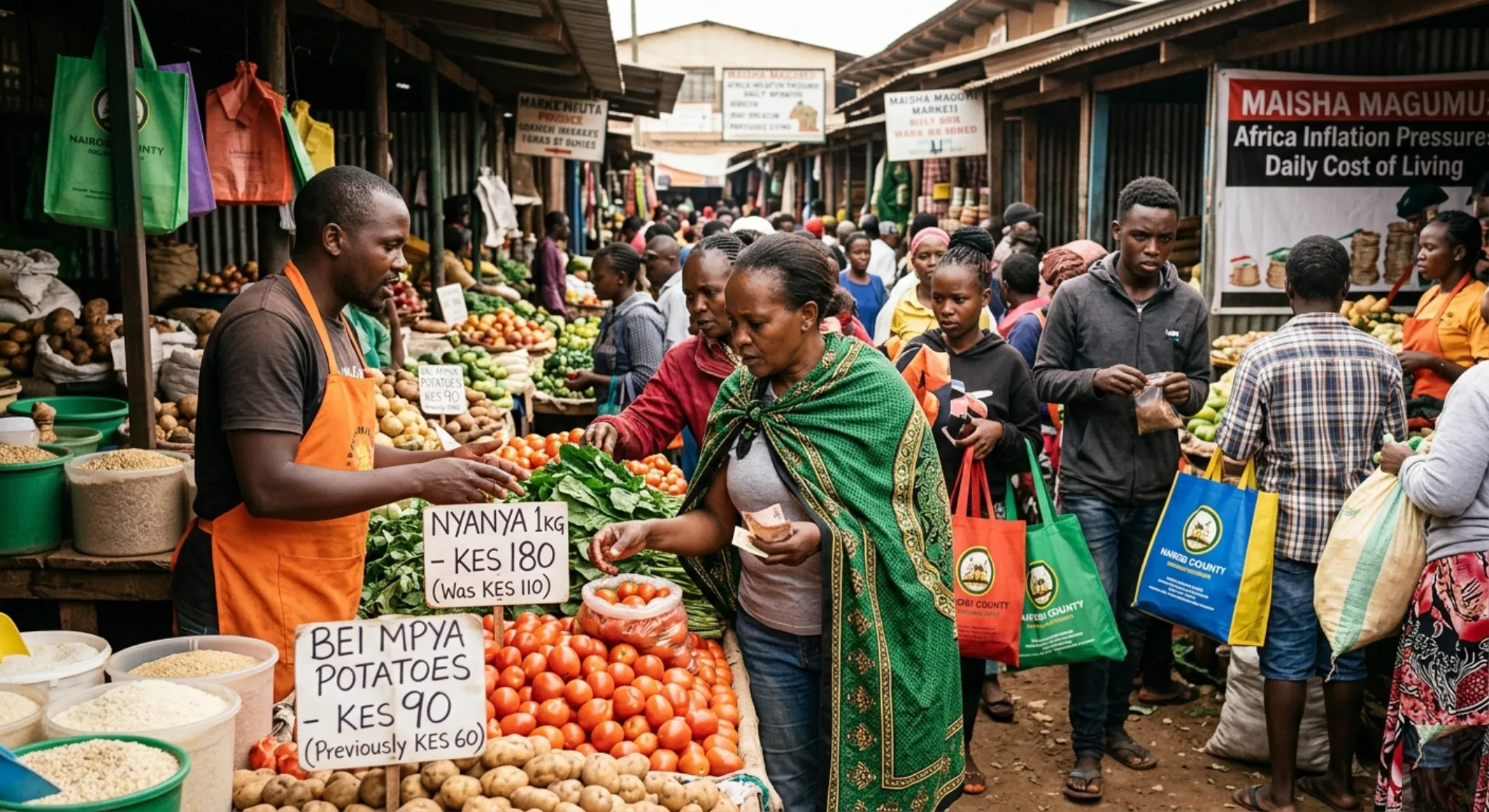

Rising prices across multiple African economies are tightening household budgets and forcing governments to balance policy stability with social pressure.
NAIROBI, Kenya — 4 May 2026
African central banks and policymakers are confronting intensifying Africa’s inflation pressures as rising food, fuel, and transport costs continue to strain households across the continent. Prices remain elevated in several major African economies despite efforts to stabilise currencies and tighten monetary policy, with households reporting reduced purchasing power and shifting consumption patterns. The persistence of inflation has forced governments to balance fiscal discipline with growing social demands, particularly in urban centres where cost-of-living concerns are most acute.
Africa’s inflation pressures drive policy dilemmas
Policymakers across African economies face a complex challenge as Africa’s inflation pressures remain stubborn despite interest rate increases and currency interventions. Central banks in countries including Kenya, Nigeria, and Ghana have raised benchmark rates in recent months, aiming to contain inflation and stabilise exchange rates. However, tighter monetary conditions have also increased borrowing costs for businesses and households. Economic analysts note that while these measures may slow inflation over time, they risk suppressing growth and limiting access to credit, particularly for small and medium-sized enterprises.
“Monetary tightening alone cannot resolve structural inflation drivers such as supply constraints and external shocks,” said Joseph Mwangi, an economist based in Nairobi. “The risk is that policy responses begin to weigh on economic recovery.” External factors, including global energy prices and currency volatility, continue to shape domestic inflation dynamics. Many African currencies have faced downward pressure against the US dollar, raising import costs and feeding into consumer prices.
Food prices and currency shifts intensify the crisis.
Food price increases remain a central driver of the cost of living crisis in Africa, with staple goods becoming increasingly unaffordable for lower-income households. Agricultural supply disruptions, climate variability, and higher transportation costs have compounded price pressures. In some regions, households report reducing meal frequency or substituting cheaper, less nutritious options.
Currency depreciation has further intensified the situation, particularly in import-dependent economies. As local currencies weaken, the cost of imported goods, including fuel and fertiliser, rises sharply. “Currency movements are feeding directly into domestic inflation,” said Amina Diallo, a regional policy analyst. “Even where local production exists, input costs remain linked to global markets.” Governments have attempted to cushion the impact through targeted subsidies and price controls, though these measures have raised concerns about fiscal sustainability.
Households adapt under sustained pressure
For many households, Africa’s inflation pressures translate into daily financial adjustments rather than abstract economic indicators. Urban residents in cities such as Lagos, Accra, and Nairobi report cutting discretionary spending, delaying major purchases, and prioritising essential goods such as food, transport, and rent. Small business owners, particularly in informal sectors, face reduced customer demand as consumers scale back spending. This has led to declining revenues and, in some cases, job losses.
Kwame Mensah, a trader operating in Accra’s Makola Market, said customer behaviour has shifted noticeably. “People are buying less. They ask for smaller quantities or cheaper alternatives. It affects our income directly,” he said. The cumulative effect has been a tightening economic environment at the household level, even in countries where headline inflation is showing signs of stabilisation.
Calls for coordinated regional response
Economists and policy institutions have emphasised the necessity of coordinated responses to address the broader drivers of inflation across Africa. Regional bodies have highlighted the importance of improving supply chains, investing in local production, and strengthening trade integration to reduce dependency on imports. “There is a need to address both demand and supply factors simultaneously,” said an official at a regional financial institution. “Inflation management must go beyond interest rates to include structural reforms.”
Governments are also pressured to expand social protection programmes to shield vulnerable populations from the worst effects of rising prices. However, fiscal constraints limit the scale of such interventions, particularly in countries already managing high debt levels.
Outlook remains uncertain
The trajectory of Africa’s inflation pressures will depend on both domestic policy decisions and global economic conditions, including commodity prices and exchange rate stability. While some analysts expect gradual easing in inflation rates, the pace and consistency of this decline remain uncertain. For now, the cost of living crisis continues to shape economic behaviour across the continent, influencing both policy decisions and public sentiment.
Sources: IMF · African Development Bank · National statistics agencies.
Additional reporting by Nukunya News Desk.
Related posts:
 Ghana exits IMF programme as government shifts focus to jobs and growth
  IMF PCI to Strengthen Bank of Ghana’s Balance Sheet
  Ghana Cocoa Farmers Warn of Harvest Risks as Payment Delays Deepen
  Ghana Pushes Border Cooperation as Sahel Insecurity Raises Regional Security Risks
  Appeal Court reverses GN Savings licence revocation in major BoG setback