
840,000 Deaths a Year: Why the Future of Work Has Become a Public Health Crisis

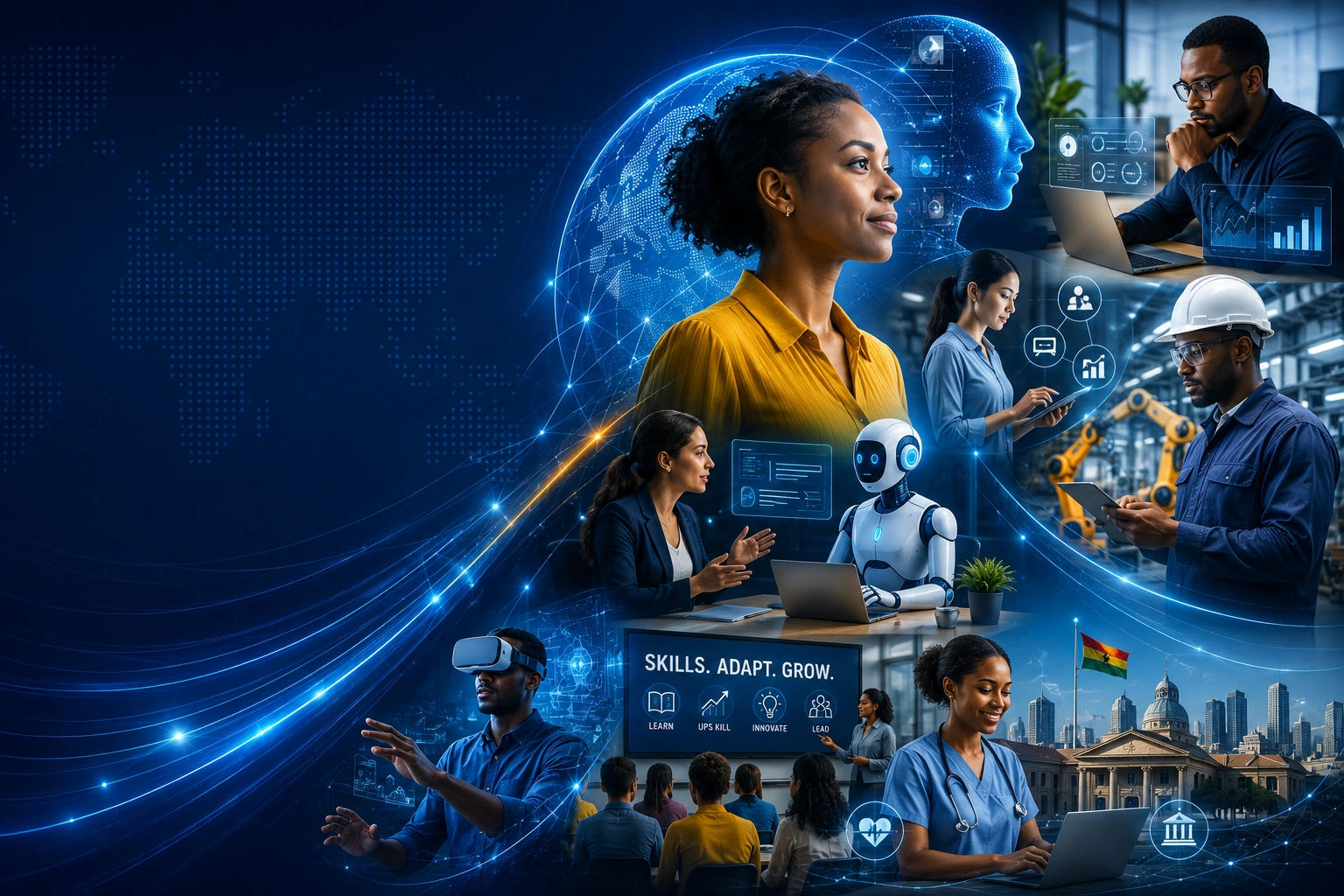

More than 840,000 people die each year from health conditions linked to workplace stress, long working hours, bullying and job insecurity, according to the International Labour Organization. The findings raise a fundamental question for governments and employers alike: is job creation enough if work itself is making people ill?
For decades, governments have measured labour-market success using a relatively simple set of indicators: employment rates, productivity growth and economic output.
These metrics matter.
Jobs remain one of the most effective tools for reducing poverty, supporting families and driving economic development. But a growing body of evidence suggests that counting jobs alone is no longer enough. According to the International Labour Organization (ILO), more than 840,000 people die every year from health conditions linked to psychosocial risks at work, including long working hours, job insecurity, workplace bullying, harassment and excessive workloads.
That figure should force policymakers, employers and workers to rethink a basic assumption: that any job is automatically better than no job. The future of work is not simply about creating employment. It is about ensuring that work itself does not damage health, well-being and human dignity.
The Hidden Workplace Epidemic
When people think about occupational safety, they often picture construction accidents, industrial injuries or exposure to dangerous substances. Those risks remain important.
Yet many of today’s most significant workplace threats are less visible. The ILO defines psychosocial workplace risks broadly. They include excessive workloads, poor job design, long working hours, job insecurity, inadequate organisational support, workplace conflict, bullying, harassment and imbalances between effort and reward. Unlike physical hazards, psychosocial risks often develop gradually.
Their consequences do not.
The ILO estimates that workplace psychosocial risks contribute to nearly 45 million disability-adjusted life years lost annually. The economic cost is estimated at approximately 1.37% of global GDP.
This is not simply a human resources issue.
It is a public health issue.
It is also an economic issue.
Poor workplace wellbeing contributes to lower productivity, higher staff turnover, increased healthcare costs and reduced organisational performance. The evidence increasingly suggests that unhealthy workplaces are not only harming workers. They are undermining economies.
Why Africa Should Pay Attention
The debate is especially relevant across Africa.
Much of the continent’s economic conversation understandably focuses on job creation. With one of the world’s youngest populations and millions entering labour markets every year, employment remains a critical policy objective.
Yet job quantity and job quality are not the same thing.
A labour market cannot be considered successful if large numbers of workers experience conditions that undermine their health and wellbeing.
Across Africa, healthcare workers face increasing workloads. Teachers often work in overcrowded classrooms with limited resources. Public servants are frequently expected to deliver more services with constrained capacity. Informal workers operate with limited protections and significant economic uncertainty. In Ghana, these pressures are visible across hospitals, schools, customer-service environments, public institutions and parts of the growing digital economy.
The challenge is not unique to Africa.
But it highlights a broader reality: employment statistics alone do not tell the full story of worker wellbeing.
The AI Challenge Nobody Is Talking About
Much of the public debate around artificial intelligence focuses on whether technology will replace jobs.
That question matters.
A less discussed issue is how AI may change the experience of work itself.
The ILO warns that digitalisation, artificial intelligence, remote work and emerging employment models are reshaping workplace psychosocial risks. Technology can create flexibility and improve efficiency.
But it can also intensify pressure.
The modern workplace is increasingly shaped by a contradiction: technology promises flexibility, yet many workers experience it as permanent availability. Employees receive messages late into the evening. Remote working blurs boundaries between professional and personal life. Performance monitoring tools generate unprecedented amounts of data about workers.
In some organisations, technology has enhanced productivity. In others, it has enabled cultures of constant monitoring, heightened performance pressure and continuous connectivity.
The ability to work anywhere increasingly risks becoming an expectation to work everywhere. The challenge for employers is ensuring that technology strengthens human capability rather than creating new forms of stress and psychological harm.
Work Is a Public Health Issue
Perhaps the most important lesson from the ILO report is that workplace wellbeing should no longer be viewed as a secondary human resources concern. When long working hours contribute to cardiovascular disease, when workplace bullying affects mental health, or when chronic job insecurity drives stress-related illness, the consequences extend far beyond the workplace.
They affect families.
They affect communities.
They affect healthcare systems.
They affect national economies.
Public health policy cannot ignore what happens inside workplaces.
Labour policy cannot ignore what happens to people’s health.
The two are increasingly inseparable.
What Should Change?
None of this means work should be free of pressure. Successful organisations require accountability, targets and performance standards.
The issue is not whether pressure exists. The issue is whether workplaces are designed in ways that make chronic harm predictable. Governments should begin treating psychosocial workplace risks as seriously as physical safety hazards.
This means strengthening occupational health frameworks, integrating psychosocial risk assessments into workplace safety systems and improving access to mental health support services. Employers should invest in healthier management practices, stronger anti-harassment procedures, better workload management and clearer expectations around digital availability.
As Ghana modernises its economy and embraces digital transformation, policymakers have an opportunity to address psychosocial workplace risks before unhealthy work cultures become deeply entrenched.
Rethinking Success
The future of work debate has focused for years on how many jobs economies can create. The next challenge is more difficult.
It is ensuring those jobs allow people to live healthy, productive and dignified lives. Economic progress should not be measured solely by employment figures, productivity growth or output statistics.
It should also be measured by whether people can earn a living without sacrificing their health in the process. The ILO’s warning is ultimately about more than workplace stress.
It is a reminder that economic success should improve human wellbeing rather than diminish it. Work can provide purpose, opportunity and security. But work that damages health is not progress.
It is a warning sign that the world of work needs reform.
As artificial intelligence, digital transformation and changing labour markets reshape economies around the world, one principle should remain constant:
Work should help people live better lives. It should never cost them their health.
Kofi Foli is a researcher in artificial intelligence, digital ethics and consumer behaviour. This analysis draws on findings from the International Labour Organization’s report The Psychosocial Working Environment: Global Developments and Pathways for Action and related United Nations occupational health research.
Related posts:
 Social media linked to higher loneliness, as study highlights limits of online friendships
  EXPLAINER: Why Florida’s Lawsuit Against OpenAI Could Change AI Rules Worldwide
  Who decides what AI tells you? Ex‑Meta news chief Campbell Brown weighs in
  Elon Musk vs Sam Altman: what the jury will decide
  Pope Leo XIV Urges AI ‘Disarmament’ in Major Vatican Warning on Technology Risks