Ghana Repatriates Nearly 300 Citizens From South Africa Amid Migrant Tensions
Nearly 300 Ghanaians have returned from South Africa under a voluntary government repatriation programme as anti-immigration tensions raise concerns about migrant safety and reintegration.

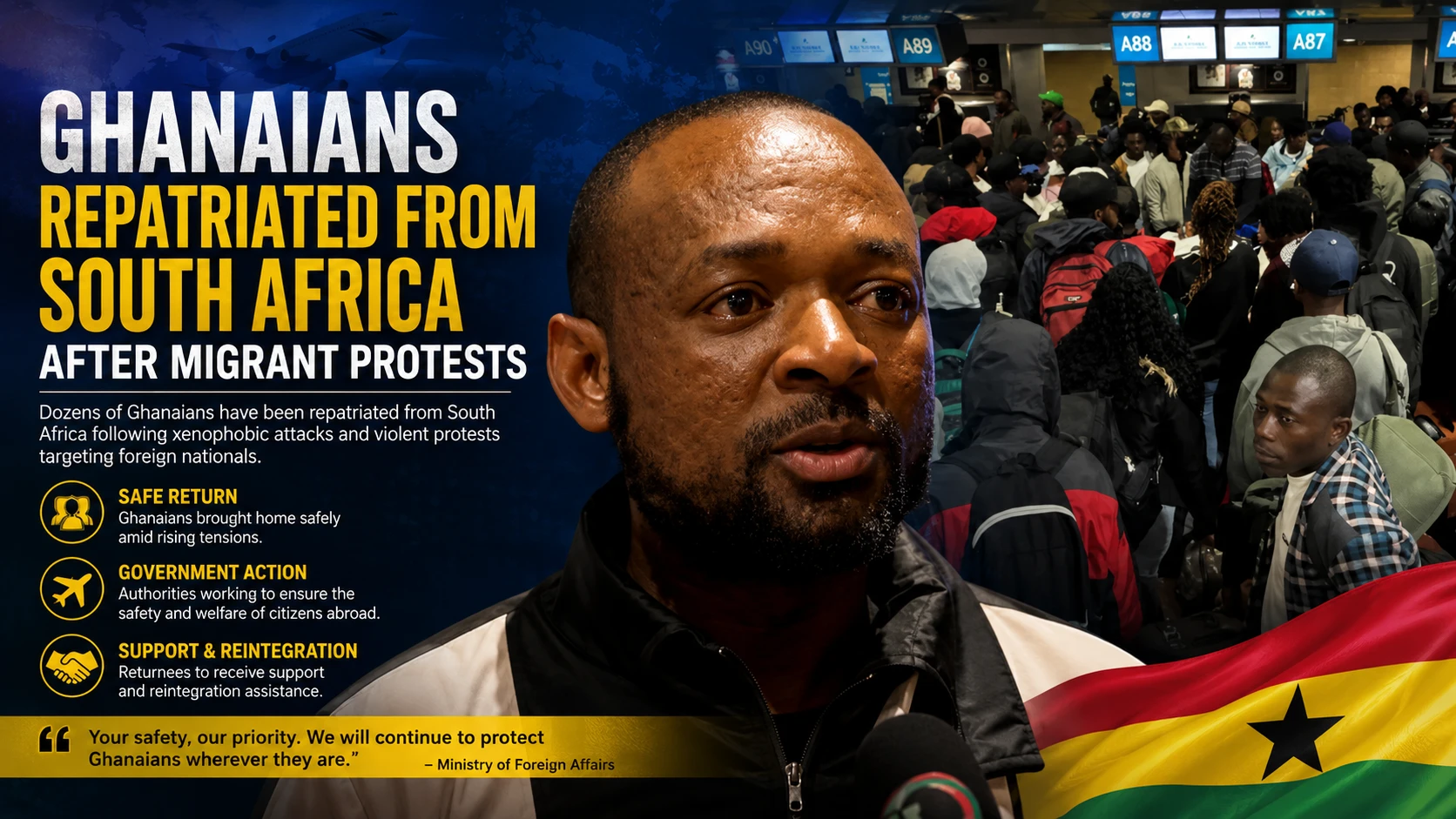

Nearly 300 Ghanaians have returned from South Africa under a government-organised voluntary repatriation programme after anti-immigration protests heightened concerns over the safety of foreign nationals. More than 800 had registered to return, with Ghana promising reintegration support.
ACCRA/JOHANNESBURG – Nearly 300 Ghanaian nationals have returned home from South Africa in the first major phase of a government-organised voluntary repatriation programme prompted by rising anti-immigration tensions.
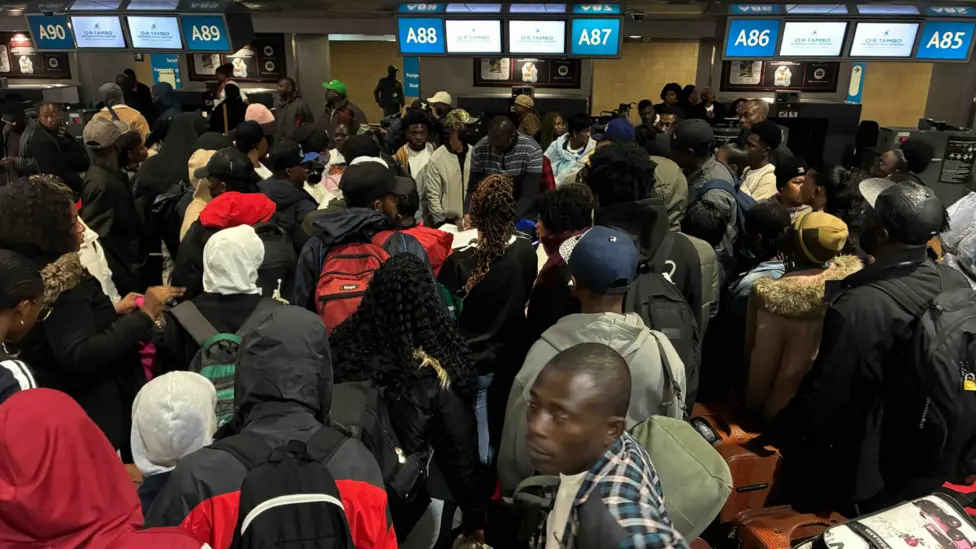
The group, which included women and children, departed Johannesburg’s OR Tambo International Airport on Wednesday and arrived in Accra after Ghanaian and South African authorities completed immigration and security procedures. More than 800 Ghanaians had registered with Ghana’s High Commission in Pretoria seeking assistance to return home, according to Ghanaian officials.
The operation puts Ghana among African governments confronting the consequences of renewed anti-migrant mobilisation in South Africa, where political and civic pressure over undocumented immigration has intensified. It also presents Accra with a second challenge: helping returnees rebuild their lives after leaving jobs, businesses and communities in one of Africa’s largest economies.
Ghana says the return was voluntary.
Ghanaian officials have stressed that the operation is voluntary rather than a deportation programme. Ghana’s High Commissioner to South Africa, Benjamin Quashie, said the government had responded after citizens reported feeling increasingly unwelcome and concerned about their safety.
Before the first flight, the Foreign Ministry said more than 800 people had registered with the High Commission following renewed tensions. The operation had initially been scheduled for 21 May but was postponed as authorities dealt with mandatory passenger screening, flight permits and coordination involving several institutions.
President John Dramani Mahama approved the evacuation exercise following requests for assistance from affected Ghanaian nationals, according to the Ghana News Agency, citing the Foreign Ministry.
Quashie said more than 16,000 Ghanaians were living in South Africa and maintained that most members of the wider community were law-abiding residents. The number seeking repatriation therefore represents only a fraction of Ghana’s community in the country.

South African authorities raise immigration-status questions.
The operation also exposed a significant disagreement over the immigration circumstances of some returnees. South African immigration officials said that only 10 of about 300 people presented for processing were found to have legal immigration status.
Stephen van Neel, an immigration and law-enforcement official, said authorities had identified immigration violations and indicated that applicable procedures would have to be followed.
That finding requires an important distinction.
The Ghanaian government’s decision to help citizens who wanted to leave because they felt unsafe is separate from South Africa’s authority to enforce its immigration laws. At the same time, immigration status does not remove the state’s responsibility to protect people from violence or unlawful targeting.
South African authorities have condemned violence against foreign nationals while maintaining that immigration laws must be enforced through official institutions.
Why Ghanaians are leaving
South Africa has long been a major destination for migrants from elsewhere on the continent because of its comparatively large and diversified economy.
But immigration has become an increasingly contentious domestic issue against a backdrop of unemployment, inequality, pressure on public services and concerns about border management.
Campaign groups have organised demonstrations demanding tougher enforcement against undocumented migrants. Some Ghanaian nationals told reporters before their departure that they were returning because the political atmosphere had made them feel insecure, even where they had not personally been attacked.
Quashie said the government’s responsibility was to assist citizens who no longer felt safe remaining in the country. South Africa has experienced previous episodes of deadly violence targeting migrants and foreign-owned businesses, making renewed anti-immigrant mobilisation particularly sensitive.
The country’s authorities nevertheless face a difficult policy distinction between enforcing immigration law and preventing lawful political campaigning from becoming intimidation or violence against foreigners.
What happens to the returnees in Ghana?
For Ghana, bringing citizens home is only the first part of the operation.
The Foreign Ministry has said the government is developing reintegration assistance for returnees, including financial support, transport, counselling and access to employment opportunities.
Foreign Minister Samuel Okudzeto Ablakwa has described the welfare and safety of Ghanaian citizens abroad as a government priority. The effectiveness of that support could determine whether returnees can establish sustainable livelihoods after leaving South Africa.
Some may have spent years building businesses, professional networks and family lives there. Their return therefore carries economic as well as humanitarian implications. That makes the programme more than an emergency transport operation. It is also a test of Ghana’s capacity to support citizens returning unexpectedly from a major destination country.
Ghana and South Africa must manage a wider diplomatic issue.
The repatriation is taking place against a broader relationship between two influential African states.
Ghanaian officials have sought to distinguish concerns about the safety of individual citizens from relations with the South African government. Quashie has said Ghana maintains good relations with South Africa, while officials from both countries have cooperated on screening and travel arrangements.
That diplomatic distinction matters.
Ghana needs to protect its nationals without presenting the repatriation as a breakdown in relations with Pretoria. South Africa, meanwhile, faces pressure to enforce immigration laws while demonstrating that African migrants, irrespective of their immigration status, will not be subjected to unlawful violence.
Why this story matters
This is not simply a story about a flight carrying several hundred people.
It intersects with diaspora protection, African migration, immigration enforcement, employment, diplomatic relations and Ghana’s responsibility towards citizens abroad.
The distinction between undocumented migration and xenophobic targeting is particularly important. South Africa has a legitimate right to enforce its immigration laws, while migrants and foreign nationals remain entitled to protection from unlawful violence and intimidation.
For Ghana, the effectiveness of reintegration assistance will also determine whether voluntary repatriation provides returnees with a viable path to rebuilding their lives.
The deeper question is what happens after the airport photographs: whether returning citizens can rebuild livelihoods, access support and reintegrate successfully once the immediate operation is over.
Hundreds of Ghanaians had registered for assistance, meaning further departures were expected as immigration checks and travel arrangements were completed.
How many people will leave?
The first test is how many registered citizens ultimately choose to proceed with repatriation.
What immigration checks remain?
Departure will depend on the completion of immigration procedures and individual travel arrangements.
What happens after arrival?
Attention will shift to whether Ghana’s promised reintegration programme provides meaningful support.
Is this a wider migration trend?
The longer-term issue is whether pressures facing some Ghanaians in South Africa ease or become more persistent.
For Ghanaian families across South Africa and relatives at home, the answer may matter long after the first repatriation flights have landed.
Related posts:
 Ghana moves nearly 900 citizens to safe havens ahead of South Africa protests
  Ghana Challenges South Africa Over Xenophobic Attacks, Rejects Crime Allegations Against Ghanaians
  Ghana Evacuates 345 More Citizens from South Africa as Other African States Study Rescue Plan
  Ghana Offers Jobs and Compensation as South Africa Evacuation Reaches 637 Citizens
  South Africa anti-migrant protests: Thousands flee as Ramaphosa calls for calm ahead of unofficial deadline