
Volta Region Gets Six New Metro Mass Buses to Ease Comuter Pressure

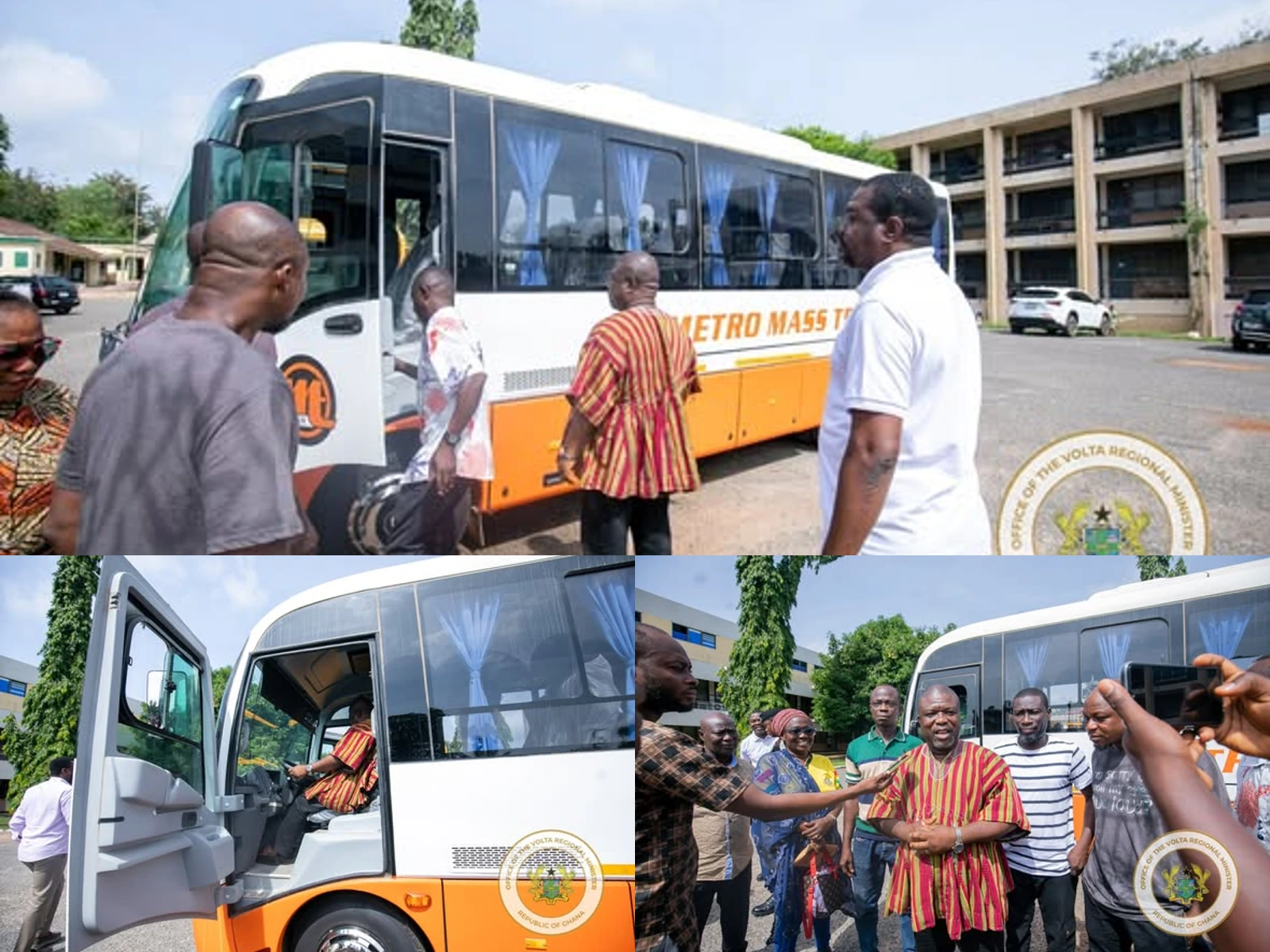

The Volta Region has received six new Metro Mass Transit buses in a move aimed at improving public transport services, easing pressure on commuters and supporting economic activity across the region. While residents have welcomed the allocation, many say the long-term success of the initiative will depend on maintenance and service reliability.
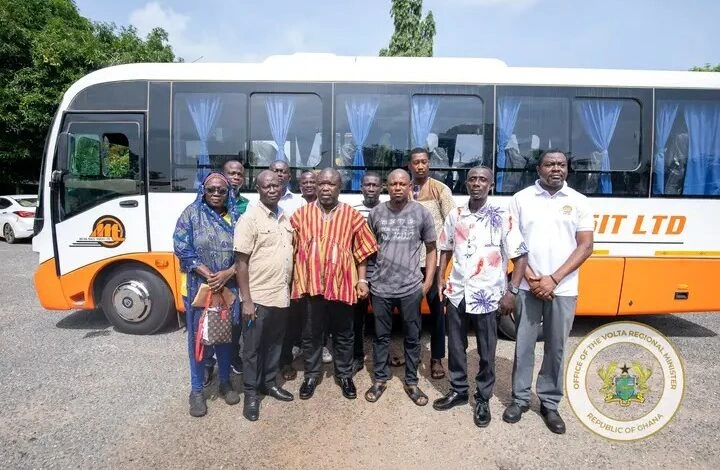
HO, Ghana — The Volta Region has received six new Metro Mass Transit buses in a move aimed at improving public transportation, strengthening regional connectivity and easing pressure on commuters across some of the region’s busiest routes. Officials say the additional vehicles will help expand transport services and improve mobility for passengers travelling between key communities.
For thousands of residents across the Volta Region, public transport is more than a convenience. It is how traders reach markets, students travel to school, workers commute to jobs and families access healthcare. Authorities believe the new buses could help ease long-standing transport challenges on some of the region’s busiest corridors.
The buses were formally handed over to the Volta Regional Coordinating Council by Metro Mass Transit Limited during a ceremony in Ho led by the company’s Regional Manager, Prince Sherif Ibrahim Ahunya. The vehicles are expected to strengthen services on routes experiencing increasing passenger demand, including connections involving Ho and Aflao.
Volta Regional Minister James Gunu described the allocation as a significant boost for public transportation and regional development. Speaking during the handover ceremony, he said improved transport infrastructure remained critical to economic growth and mobility, particularly as the region continues to attract investment and development projects.
Mr Gunu said the buses reflected confidence in the region’s economic prospects and described the Volta Region as an increasingly attractive destination for investment.
Improving Mobility Across the Region
The Volta Region’s economy depends heavily on trade, agriculture, tourism and inter-district movement. Reliable transport links remain essential for connecting communities from the regional capital, Ho, to border and coastal areas, including Aflao.
Officials say improved fleet capacity could help address longstanding concerns about unreliable schedules, limited vehicle availability and overcrowding on some routes.
The deployment is expected to benefit traders transporting goods, students travelling to schools and tertiary institutions, workers commuting daily between communities and residents accessing public services. While six buses will not solve every transport challenge facing the region, officials say the additional vehicles are expected to strengthen services on high-demand routes where passenger numbers frequently exceed available capacity.
That makes the significance of the new buses broader than a routine fleet expansion. For many residents, transport reliability directly affects economic opportunity, educational access and daily quality of life.
Safety Remains a Priority
While welcoming the buses, Mr Gunu also urged drivers and transport operators to prioritise road safety.
The Regional Minister noted that major road construction projects are ongoing across the Volta Region and called on motorists to comply with traffic regulations and exercise caution. “As we speak, the Volta Region has become a construction site,” he said, referring to ongoing infrastructure works. He urged drivers to observe safety rules and remain vigilant while travelling through work zones.
He also called on contractors and consultants to ensure adequate road signs and safety indicators are installed to protect motorists and reduce accident risks.
Residents Welcome Buses but Raise Maintenance Concerns
While many residents welcomed the allocation, public reaction has focused largely on whether the buses will be properly maintained and deployed on routes where demand is greatest. Comments posted on social media following the handover reflected broad support for improved transport services but also highlighted concerns about the long-term maintenance culture of state-owned transport operators.
Several residents argued that the success of the initiative would depend not only on receiving new buses but also on ensuring that the vehicles remain roadworthy, reliable and available to passengers years from now.
Others questioned whether six buses would be enough to meet demand across a region as large and economically active as Volta. Responding to some of those concerns, Mr Gunu noted that the allocation forms part of a broader national rollout after government took delivery of the first 100 buses from a larger order of 300 vehicles.
The discussion highlights a wider challenge facing public transport systems across Ghana, where fleet expansion is often welcomed but long-term service delivery remains the standard by which passengers judge success.
A Wider Transport Challenge
The arrival of the buses also highlights broader questions about the future of public transport in Ghana. Demand for affordable and reliable transport continues to grow as cities expand and economic activity increases.
Metro Mass Transit, one of Ghana’s largest public transport operators, has faced ongoing pressure to modernise its fleet, improve operational efficiency and expand services while managing rising passenger demand. Transport sector analysts have repeatedly argued that fleet renewal alone is not enough. Sustainable success depends on maintenance systems, route planning, spare parts availability, operational discipline and customer service. Recent transport policy discussions have also emphasised the importance of strengthening public transport networks as part of Ghana’s wider economic development strategy.
What It Means for the Volta Region
For many residents, public transport is not simply about moving between towns. It determines whether traders reach markets on time, whether students can attend school consistently and whether workers can commute affordably to their jobs. The six new buses will not solve every transport challenge facing the Volta Region.
However, they could ease pressure on some routes and improve access to reliable transport if deployed effectively. The larger question is whether the buses remain operational in the years ahead. Public transport projects in Ghana have often struggled with maintenance, ageing fleets and operational challenges. That reality explains why many residents are welcoming the buses while simultaneously calling for stronger maintenance systems and better service management.
For commuters, success will not be measured by the handover ceremony. It will be measured by shorter waiting times, dependable schedules and safer journeys. That is the true test of whether this investment delivers lasting value to the travelling public.
What Happens Next?
The buses are expected to enter service on selected routes across the region in the coming months. Attention will now shift from procurement to implementation. Passengers, transport operators and local authorities will be watching closely to see whether the additional vehicles translate into better service reliability, improved connectivity and a stronger public transport experience for communities across the Volta Region.
Related posts:
 IMF PCI to Strengthen Bank of Ghana’s Balance Sheet
  Ghana’s Debt Climbs to GH₵674bn Despite IMF Recovery Gains
  Appeal Court reverses GN Savings licence revocation in major BoG setback
  Ghana Nears First Non-Interest Banking Licence as BoG Warns on Fintech Trust
  Bank of Ghana suspends proposed 0.75% mobile money transfer fee