
32 Ghanaians Listed in US Homeland Security ‘Worst of the Worst’ Database as Immigration Enforcement Intensifies



Thirty-two Ghanaian nationals have been listed in a United States Department of Homeland Security database highlighting non-citizens arrested for serious alleged offences as immigration authorities expand enforcement operations. Legal experts and researchers, however, caution that inclusion in the database does not necessarily indicate a criminal conviction.
WASHINGTON, United States — The United States Department of Homeland Security (DHS) has listed 32 Ghanaian nationals in its online “Worst of the Worst” database, a public registry of non-citizens arrested for offences that immigration authorities consider among the most serious encountered during enforcement operations.
The database, maintained by US Immigration and Customs Enforcement (ICE), contains photographs, arrest information and alleged offences involving foreign nationals who may face immigration proceedings or removal actions. According to DHS, a recent update added approximately 5,000 new records, bringing the total number of individuals listed to more than 35,000.
The 32 Ghanaians named in the database are linked to a range of alleged offences, including homicide, human trafficking, sexual offences, narcotics-related crimes, financial fraud, identity theft, money laundering and weapons-related offences. US authorities say the initiative forms part of a broader effort to increase transparency around immigration enforcement and to highlight cases involving individuals considered potential public-safety risks.
What Is the ‘Worst of the Worst’ Database?
The DHS database is a publicly accessible online registry that showcases selected immigration enforcement cases involving non-citizens arrested for offences that US authorities regard as serious criminal matters. According to DHS, the initiative is intended to provide information about ongoing enforcement activities and individuals who may be subject to detention or removal proceedings.
However, legal experts stress that inclusion in the database does not automatically mean an individual has been convicted of a crime. Some cases may involve arrests, pending charges or immigration proceedings that have not yet been fully resolved through the courts. Under US law, individuals remain presumed innocent unless and until guilt is established in a court of law.
The following thirty-two Ghanaian nationals appear on the DHS “Worst of the Worst” database:
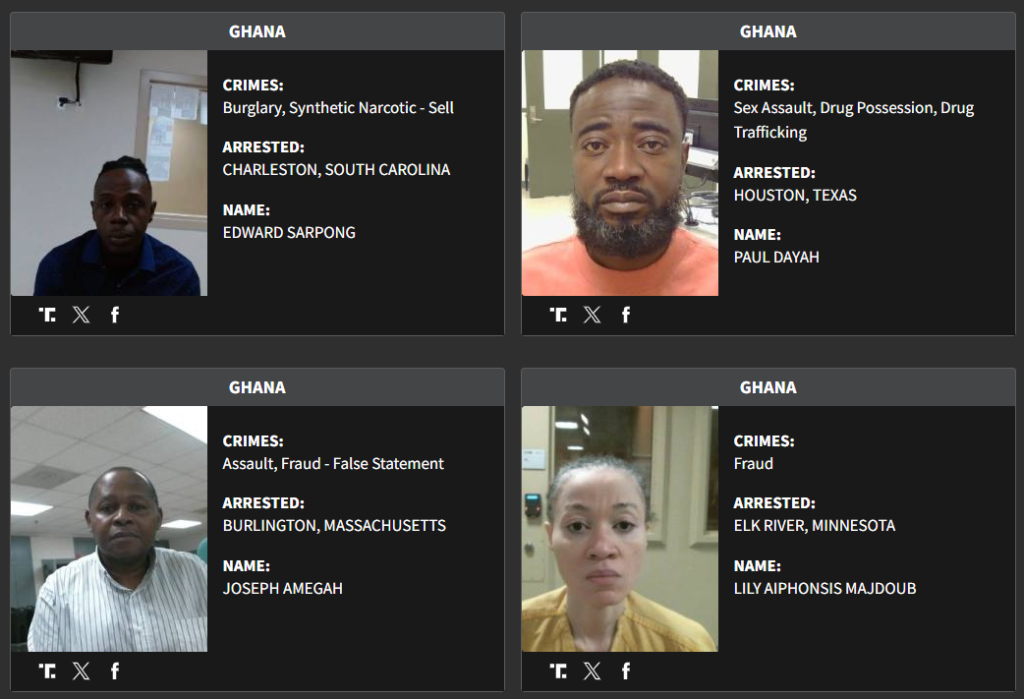
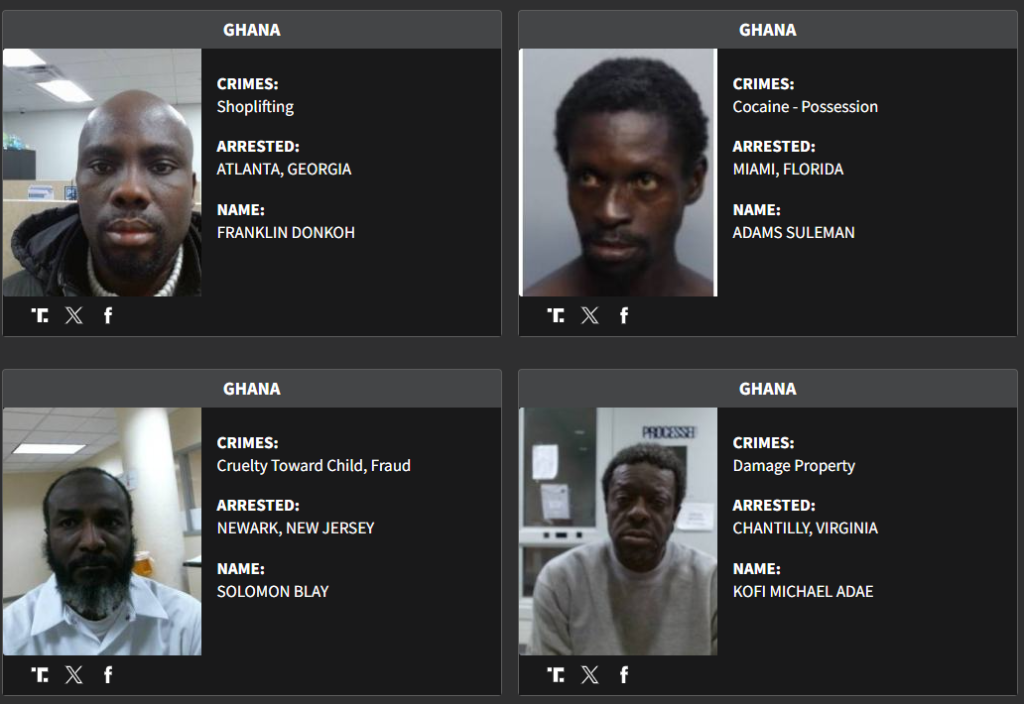
- Franklin Donkoh (Atlanta, Georgia) – Shoplifting
- Adams Suleman (Miami, Florida) – Cocaine Possession
- Solomon Blay (Newark, New Jersey) – Cruelty Toward Child, Fraud
- Kofi Michael Adae (Chantilly, Virginia) – Damage Property
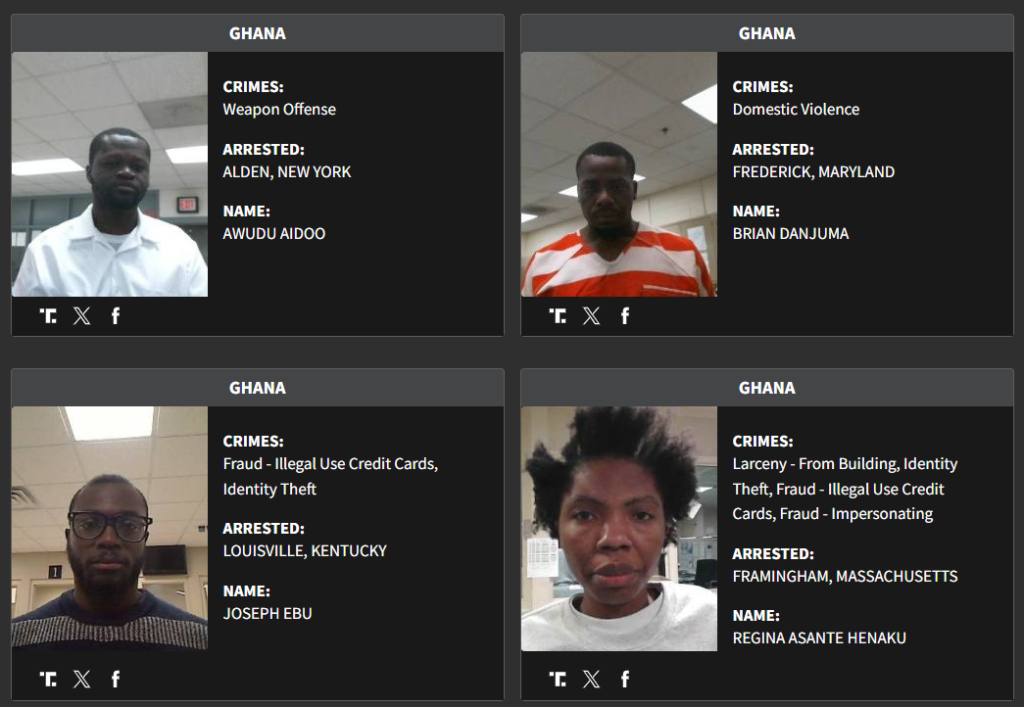
- Awudu Aidoo (Alden, New York) – Weapon Offence
- Brian Danjuma (Frederick, Maryland) – Domestic Violence
- Joseph Ebu (Louisville, Kentucky) – Fraud, Illegal Use of Credit Cards, Identity Theft
- Regina Asante Henaku (Framingham, Massachusetts) – Larceny, Identity Theft, Fraud
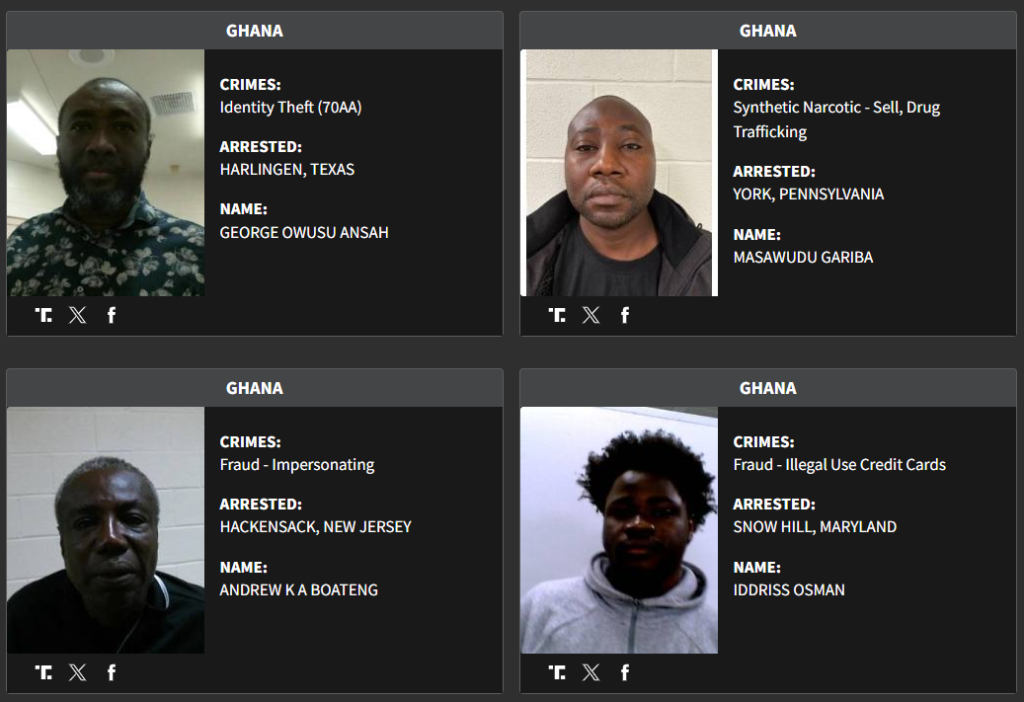
- George Owusu Ansah (Harlingen, Texas) – Identity Theft
- Masawudu Gariba (York, Pennsylvania) – Synthetic Narcotic Sale, Drug Trafficking
- Andrew K A Boateng (Hackensack, New Jersey) – Fraud (Impersonating)
- Iddriss Osman (Snow Hill, Maryland) – Fraud (Illegal Use of Credit Cards)
- Edward Sarpong (Charleston, South Carolina) – Burglary, Synthetic Narcotic Sale
- Paul Dayah (Houston, Texas) – Sex Assault, Drug Possession, Drug Trafficking
- Joseph Amegah (Burlington, Massachusetts) – Assault, Fraud (False Statement)
- Lily Aiphonsis Majdoub (Elk River, Minnesota) – Fraud
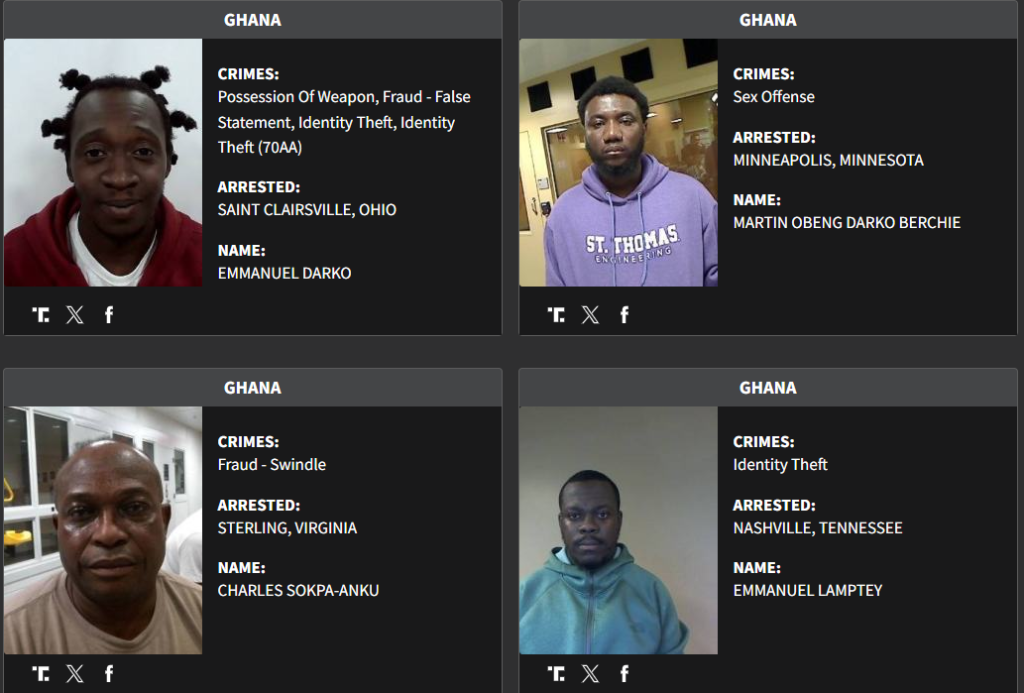
- Emmanuel Darko (Saint Clairsville, Ohio) – Possession of Weapon, Fraud, Identity Theft
- Martin Obeng Darko Berchie (Minneapolis, Minnesota) – Sex Offence
- Charles Sokpa-Anku (Sterling, Virginia) – Fraud (Swindle)
- Emmanuel Lamptey (Nashville, Tennessee) – Identity Theft
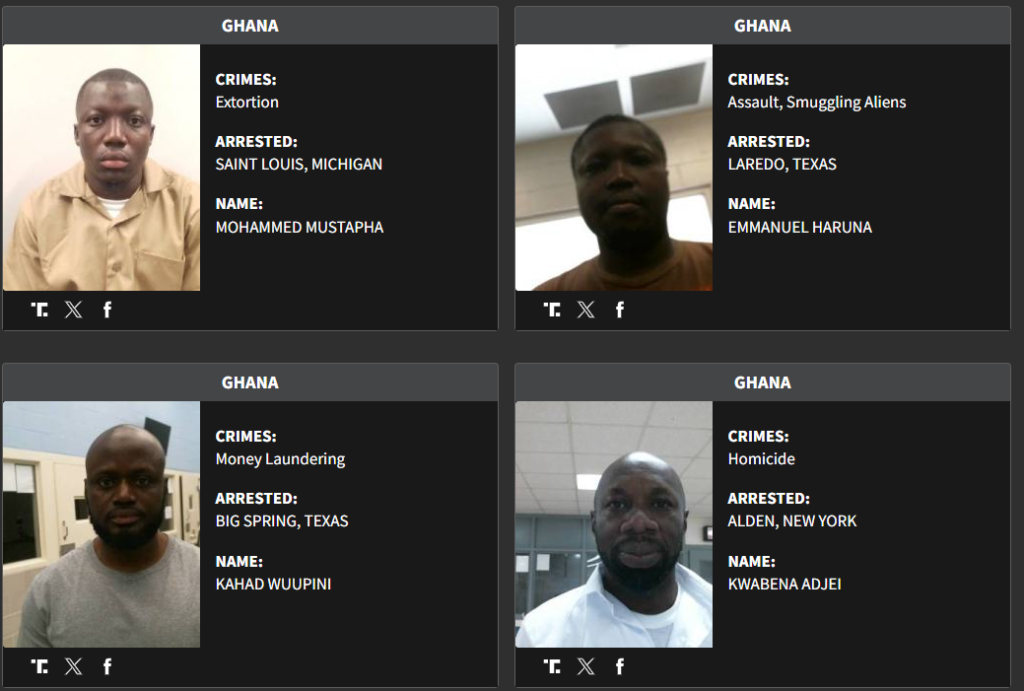
- Mohammed Mustapha (Saint Louis, Michigan) – Extortion
- Emmanuel Haruna (Laredo, Texas) – Assault, Smuggling Aliens
- Kahad Wuupini (Big Spring, Texas) – Money Laundering
- Kwabena Adjei (Alden, New York) – Homicide
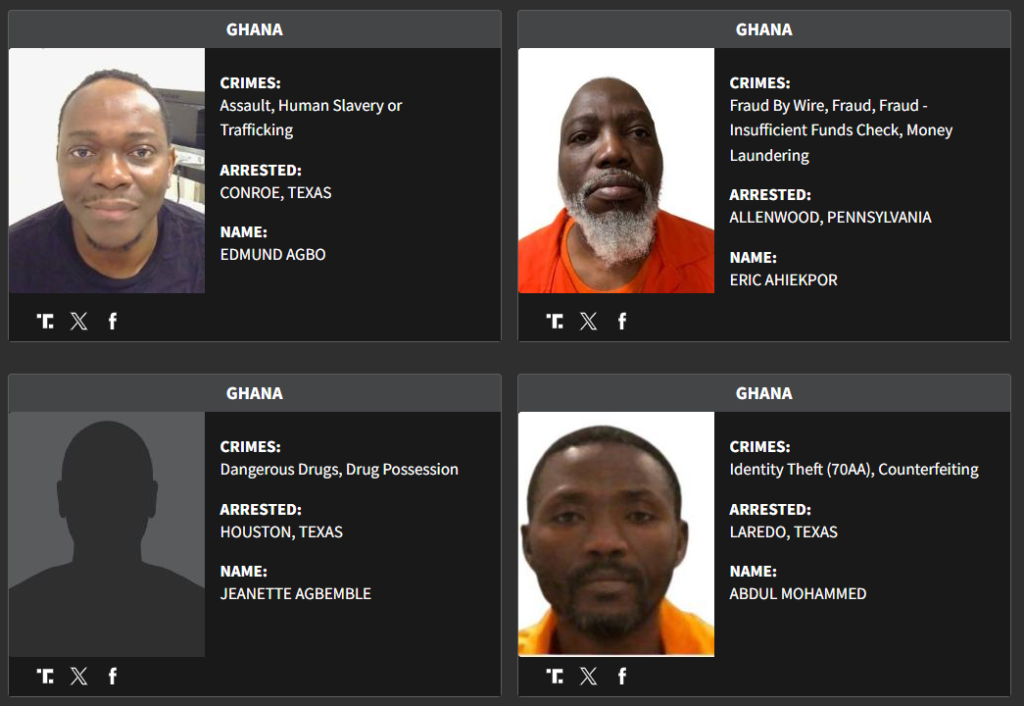
- Edmund Agbo (Conroe, Texas) – Assault, Human Slavery or Trafficking
- Eric Ahiekpor (Allenwood, Pennsylvania) – Fraud by Wire, Fraud, Money Laundering
- Jeanette Agbemble (Houston, Texas) – Dangerous Drugs, Drug Possession
- Abdul Mohammed (Laredo, Texas) – Identity Theft, Counterfeiting
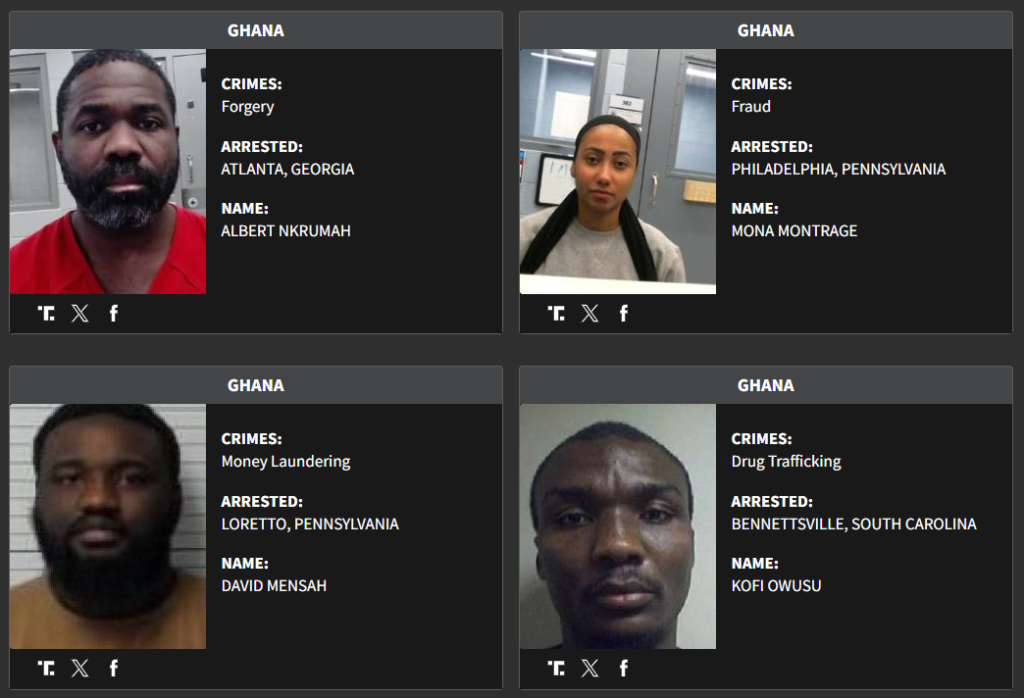
- Albert Nkrumah (Atlanta, Georgia) – Forgery
- Mona Montrage (Philadelphia, Pennsylvania) – Fraud
- David Mensah (Loretto, Pennsylvania) – Money Laundering
- Kofi Owusu (Bennettsville, South Carolina) – Drug Trafficking
Enforcement Drive Expands
The publication of the names comes amid a wider expansion of immigration enforcement operations across the United States. DHS officials have said immigration officers are prioritising individuals with serious criminal records, gang affiliations or national security concerns. Recent nationwide operations have resulted in thousands of arrests involving foreign nationals identified by authorities as enforcement priorities. The development also follows growing political debate in the United States over immigration policy, border security and deportation procedures.
Researchers Urge Caution
While DHS presents the database as a transparency initiative, immigration researchers have questioned whether the information could create a misleading public impression. Data published by the Transactional Records Access Clearinghouse (TRAC) at Syracuse University indicate that a significant proportion of individuals held in ICE detention facilities do not have criminal convictions.
According to TRAC, more than 70% of detainees held by ICE at one point during 2025 had no criminal conviction record, highlighting the distinction between arrest, detention and conviction. Researchers argue that public databases should be interpreted carefully to avoid conflating allegations with proven criminal conduct.
What It Means for Ghanaians
The appearance of 32 Ghanaian nationals in the database is likely to attract attention within Ghana and among Ghanaian communities in the United States. However, it is important to place the figures in context. The Ghanaian-American community numbers in the hundreds of thousands, making those listed a very small fraction of the wider diaspora population.
Many Ghanaian migrants in the United States are students, professionals, entrepreneurs, healthcare workers and business owners who contribute significantly to both the US and Ghanaian economies. The listing of a small number of individuals should therefore not be interpreted as representative of the broader Ghanaian community.
Deportation Not Automatic
Immigration experts note that inclusion in the DHS database does not itself trigger deportation. Removal proceedings depend on multiple factors, including immigration status, criminal history, court outcomes and available legal remedies.
Individuals facing removal may challenge decisions through the US immigration court system, pursue appeals or seek other forms of legal protection depending on their circumstances. As a result, some individuals listed in the database may ultimately remain in the United States if they successfully challenge enforcement actions.
Ghana Yet to Comment
At the time of publication, neither Ghana’s Ministry of Foreign Affairs nor the Ghana Immigration Service had publicly commented on the publication of the names. Nukunya has not seen any official statement from Ghanaian authorities regarding the database or whether consular support is being provided to any affected individuals.
Why This Matters
The publication of the list highlights broader questions surrounding immigration enforcement, due process and public transparency. It also underscores the increasing scrutiny facing foreign nationals amid tougher immigration policies in the United States.
For Ghana, the development is significant because of the country’s sizeable diaspora community in North America and the economic importance of remittances, which contribute substantially to household incomes and national foreign exchange earnings. While the DHS database reflects the priorities of US immigration authorities, legal experts emphasise that every individual listed remains entitled to due process and fair treatment under the law.
Related posts:
 US Tightens Visa Rules for Foreign Students and Journalists Under Trump Administration
  How New UK, US and EU Immigration Rules Are Affecting Ghanaians Abroad
  Ghana Evacuates 345 More Citizens from South Africa as Other African States Study Rescue Plan
  Ghana Embassy in US Yet to Receive World Cup Tickets for Diaspora Distribution
  Ghanaian popularly known as “Dada Joe Remix”, extradited to the US, pleads guilty in US$4.4m romance fraud case