Floods Destroy More Than 24 Buildings in Samreboi and Asankragwa in Ghana’s Western Region

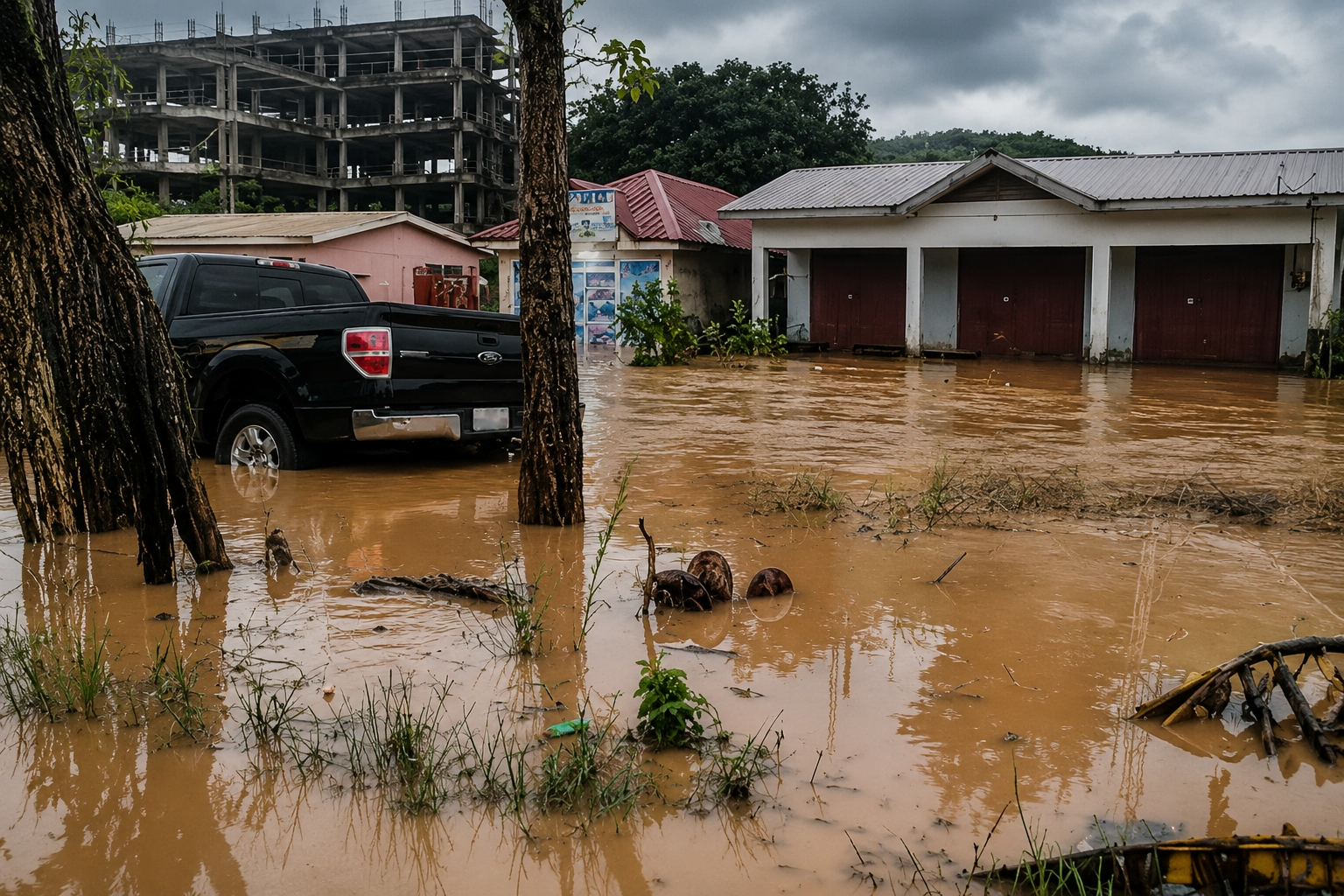

Severe flooding triggered by heavy rainfall and overflowing rivers has destroyed homes, displaced residents and disrupted livelihoods in Samreboi and Asankragwa. Authorities have launched emergency relief operations as affected communities assess the scale of the damage.
SAMREBOI, Ghana — More than 24 buildings have collapsed after severe flooding swept through Samreboi and Asankragwa, two communities in Ghana’s cocoa-producing Western Region, following days of heavy rainfall that caused the Samre and Tano rivers to overflow their banks. Authorities say the disaster has displaced residents, damaged property and disrupted economic activity across parts of the Wassa Amenfi West Municipality.
The National Disaster Management Organisation (NADMO) confirmed that extensive destruction had been recorded in affected communities, although no fatalities had been reported as of Thursday evening. Emergency teams have relocated displaced residents to temporary shelters while damage assessments continue.
Municipal NADMO Director Elvis Koffie said floodwaters inundated several low-lying communities after heavy rainfall caused the rivers to burst their banks. Authorities have not yet released a confirmed figure for the number of residents displaced by the disaster.
“We have a safe place for them which they are currently living with their families,” Koffie said, adding that emergency response teams remain on the ground coordinating relief efforts.
Communities Cut Off by Rising Waters
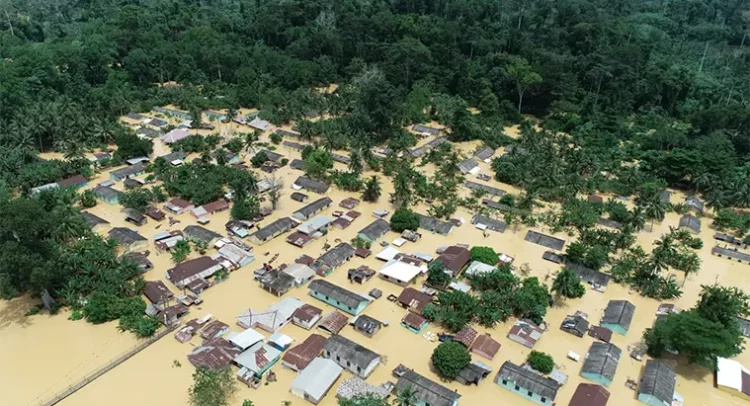
Images from the affected areas show homes, roads and public spaces submerged beneath muddy floodwaters. Residents reported that water levels rose rapidly after intense rainfall, leaving some families stranded and forcing others to abandon their homes.
Local authorities said several buildings suffered structural damage, while others collapsed completely under the force of the floodwaters. Community leaders have appealed for urgent assistance, including food, bedding, clean water and other essential relief items. Residents are also calling for long-term flood mitigation measures to address what many describe as a recurring problem during periods of heavy rainfall.
Economic Impact Raises Concern
The flooding has raised concerns about the economic consequences for one of Ghana’s important agricultural zones. The affected area lies within a major cocoa-producing region, where farming remains a key source of employment and household income. While officials have not yet released estimates of agricultural losses, prolonged flooding could affect farms, transportation routes and local commerce if waters remain high.
Businesses operating within the municipality may also face disruptions as damaged roads and flooded communities limit movement of goods and services.
Environmental Questions Re-emerge
The disaster has also renewed debate about environmental management and flood resilience in the Western Region.
Some residents and environmental advocates argue that years of illegal mining, commonly known as galamsey, may have increased flood risks by degrading waterways, removing vegetation and contributing to siltation in river systems. However, authorities have not established a direct link between the latest flooding and mining activities.
Environmental experts have long warned that degraded river ecosystems and blocked drainage channels can increase the severity of flooding during periods of intense rainfall.
Part of a Wider National Challenge
Flooding remains one of Ghana’s most persistent natural disasters.
Communities across the country frequently experience flooding during the major rainy season, particularly in low-lying areas and settlements located near rivers and streams. Rapid urbanisation, drainage challenges and environmental degradation are often cited by experts as factors that increase vulnerability during heavy rainfall events.
The latest flooding in the Western Region follows reports of flood-related disruptions in other parts of Ghana, highlighting the growing pressure on local infrastructure and disaster management systems.
Why This Matters
The destruction in Samreboi and Asankragwa highlights wider environmental and infrastructure challenges facing communities across Ghana.
Increasingly unpredictable rainfall patterns are raising flood risks in vulnerable areas.
Drainage limitations and ageing infrastructure can increase the impact of heavy rainfall events.
Local authorities face growing pressure to strengthen emergency planning and response capabilities.
River management, land-use planning and ecosystem protection remain critical to reducing future flood impacts.
What Happens Next?
NADMO officials say assessment teams remain on the ground working with local authorities to determine the full extent of the damage. Additional support may be requested from regional and national authorities as recovery efforts continue.
For affected residents, immediate priorities include shelter, food, healthcare and the restoration of damaged infrastructure. Longer-term attention is likely to focus on rebuilding efforts and measures designed to reduce the risk of similar disasters in the future.
While no lives have been reported lost, the flooding has once again demonstrated how quickly extreme weather can disrupt communities and livelihoods across Ghana’s flood-prone regions.
Related posts:
 Ghana Allocates GH¢442 Million for Flood Recovery and Coastal Protection
  Ghana floods displace families as heavy rains hit Cape Coast
  Ghana Parliament Passes Human Sexual Rights and Family Values Bill
  Avenor Building Collapse Death Toll Rises to Three as Safety Concerns Intensify
  Missing Newborn at Salaga Hospital Sparks Police Investigation