1 Million in Artisanal Mining Should Make Us Think — Germany

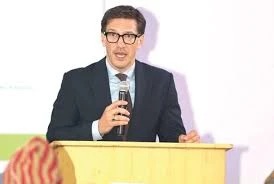

1 Million People Work in Artisanal Mining — That Should Make Us Think, Says German Ambassador
German Ambassador to Ghana Frederik Landshöft is urging stakeholders to look beyond excavators and polluted rivers when talking about illegal mining, and to remember the people caught in the middle of it.
Speaking at the Kumasi edition of Climate Talks 2026 on Wednesday, September 23, Landshöft pointed to a striking figure an estimated one million people are currently engaged in artisanal and small-scale mining across Ghana. For him, that number alone should shift how the country approaches the illegal mining conversation.
Around one million people are estimated to work in artisanal and small-scale mining. That number should make us think because behind the debate about illegal mining are not only excavators, polluted rivers and degraded lands, there are also people, young people looking for a job, families looking for income, communities looking for opportunities and better future and we should not lose sight of that, he said.
Landshöft was direct about the economic reality driving many into illegal mining. When legitimate job opportunities are scarce, he argued, galamsey becomes an easier, more attractive option out of necessity rather than choice.
Limited economic opportunities can make illegal mining more attractive, he noted.
He said this reality places real responsibility on stakeholders, particularly government, to genuinely factor in the livelihoods of people involved in artisanal mining when designing responses to the environmental damage the practice causes.
Still, Landshöft was careful not to let this framing soften the seriousness of illegal mining’s consequences. He was clear that considering people’s livelihoods shouldn’t distract from the real destruction galamsey causes to farmlands, forests, and water bodies.
When mining destroys farmlands, forests and water bodies, it damages precisely the natural resources on which communities depend, he said.
For Landshöft, this is exactly where illegal mining intersects with a much bigger issue climate resilience. He pointed out that climate change is already straining livelihoods through unpredictable rainfall, floods, droughts, and declining agricultural productivity. Illegal mining, by damaging the very resources communities rely on to cope with these pressures, only compounds the problem further.
Landshöft outlined how the German Embassy sees its own role in this space primarily as a platform bringing together government, security agencies, traditional authorities, researchers, civil society organisations, communities, the private sector, and young people to share experiences and work through possible solutions together.
He believes this kind of collaborative engagement can help stakeholders find real ways to break the cycle where limited economic opportunity keeps pushing people toward galamsey in the first place.
He also acknowledged the progress Ghana has made so far, commending government for what he described as important steps already taken to address the challenge.