Ghana Card Photocopying Crackdown Begins November 2: Biometric Rules, Fines and Your Rights
Ghana begins enforcing biometric Ghana Card verification on 2 November 2026. Understand the GH¢600–GH¢24,000 fine ranges, legal exceptions, data privacy risks and practical FAQs.



Ghana’s National Identification Authority begins its announced nationwide enforcement phase on 2 November 2026 against organisations that rely on Ghana Card photocopies or visual inspection instead of approved biometric verification. Institutions could face fines of GH¢6,000–GH¢24,000 on conviction, while individuals face different penalties. Here is what the rules mean for customers, businesses and personal data.
ACCRA, Ghana — The National Identification Authority (NIA) is moving from a transition period to nationwide compliance enforcement under the National Identity Register (Amendment) Regulations, 2026 (L.I. 2523), targeting identity checks based only on looking at or copying the Ghana Card.
The NIA’s Biometric Verification Taskforce is scheduled to begin enforcement today, following a transition period intended to help institutions acquire approved equipment, connect to the Authority’s Identity Verification System Platform (IVSP) and train staff. The announcement does not, by itself, establish that any business has already been prosecuted or fined.
Crucial distinction: L.I. 2523 was already in force on 9 June 2026. November 2 is the announced end of the compliance transition and start of active enforcement, not the date the regulation first became law. The NIA’s official notice confirms the June commencement date, while its website prominently advertises the November enforcement date.
What has changed for Ghana Card verification?
For identity checks covered by the regulations, institutions must use real-time biometric authentication through the NIA-approved verification system or approved methods such as match-on-card verification. Looking at the photograph on a Ghana Card, keeping a photocopy or scanning it is not an adequate substitute.
The NIA says organisations must not request, photocopy, scan or retain copies of Ghana Cards for identity verification purposes, except where permitted by law. This qualification matters: the rules should not be misreported as prohibiting every conceivable lawful use of a card image, irrespective of another legal obligation. Nor do they mean the physical Ghana Card is abolished; the Authority says it need not be presented where biometric verification is available.
Who is affected?
The NIA has directed businesses, ministries, departments and agencies, and other institutions that verify identity to begin onboarding without delay. The government has specifically identified banks, telecommunications operators, insurers, hospitals, schools and public agencies as sectors requiring attention. The underlying identity-card framework also covers transactions including bank-account opening, SIM registration, insurance, tax, pensions, health insurance, passports and certain government services.
Different sectors may have additional legal requirements. For example, the Bank of Ghana’s revised Ghana Card notice, effective 1 December 2025, requires biometric verification for customers of regulated financial institutions and liveness checks for remote onboarding. Institutions must reconcile sector-specific record-keeping duties with the prohibition on unnecessary Ghana Card copies.
Ghana Card fines: the actual calculation
Public statements about L.I. 2523 identify a penalty range of 500–2,000 penalty units for offending organisations and 50–500 penalty units for individuals. At the reported current rate of GH¢12 per penalty unit, the monetary equivalents are:
| Category | Minimum units | Maximum units | Minimum fine | Maximum fine |
|---|---|---|---|---|
| Institution | 500 | 2,000 | GH¢6,000 | GH¢24,000 |
| Individual | 50 | 500 | GH¢600 | GH¢6,000 |
Nukunya calculation: 500 × GH¢12 = GH¢6,000; 2,000 × GH¢12 = GH¢24,000; 50 × GH¢12 = GH¢600; and 500 × GH¢12 = GH¢6,000. These are ranges reported for the relevant offences, not automatic fines issued when an inspector observes a photocopier. The exact charge, available defences, court process and sentence depend on the applicable provision and facts. The Interior Minister has also warned of possible imprisonment in some cases and administrative consequences such as restrictions on verification-system access.
Why the NIA says photocopies are unsafe
A photocopy can show that someone possesses an image of a card, but it cannot reliably establish that the person standing at a counter is the legitimate cardholder. Copies can be altered, stolen, reused or retained in insecure filing systems. Biometric verification is intended to authenticate the person against an approved identity record at the point of transaction.
That improvement does not make the new system risk-free. Biometric identifiers are difficult or impossible to replace if compromised, and a centralised verification infrastructure can create availability, security and exclusion risks. Good implementation must therefore address both fraud prevention and the rights of legitimate cardholders.
Ghana Card Biometric Verification: Know Your Rights
Explore the new identity verification regime, understand the safeguards institutions should consider and learn what to do if a verification attempt fails.
Explore five governance tests
Choose a principle to understand what responsible biometric verification should address.
Data minimisation
Institutions should obtain only the information genuinely necessary to verify identity and complete an authorised transaction.
Question to askIs a verification result sufficient, or is the institution collecting unnecessary personal information?
Interactive: institutional readiness assessment
Tick the controls your organisation has actually verified. This is an indicative governance self-assessment, not NIA certification or legal advice.
Select the safeguards that have been independently verified within your institution.
What should you do?
Guidance for card holders
- Ask why an institution needs a copy of your card and what legal provision authorises it.
- Use verified service channels for identity checks.
- Request the approved escalation procedure if biometric verification fails.
- Avoid sending card images or biometric information to unverified contacts.
Frequently asked questions
Can a bank or mobile network photocopy my Ghana Card?
The NIA says photocopying or scanning should not replace the verification required under the new regime, subject to applicable legal exceptions. Ask the institution to explain its legal basis.
Do I need to carry my physical Ghana Card?
The NIA indicates that physical presentation may not be necessary where approved real-time biometric verification is available. Other lawful identification requirements may still apply.
What if fingerprint or facial verification fails?
Ask for the provider’s approved retry, escalation or alternative procedure. A failed biometric match does not by itself prove fraud. A universal fallback process has not been established in the reviewed material.
Will I be fined simply for showing my card?
No such general offence is established by the supplied account. Penalties must be interpreted according to the specific contraventions and persons covered by the regulations.
How can I avoid identity-verification scams?
Use official institutional channels and avoid unsolicited requests for card photographs, biometric details or personal credentials.
How can I report suspected non-compliance?
Use the NIA’s officially published contact channels. Keep relevant evidence securely and avoid publishing your Ghana Card details.
Effective verification must not come at the cost of exclusion
Stronger identity checks may reduce some forms of impersonation, but responsible implementation also requires data protection, transparent oversight and accessible procedures for people who cannot complete biometric checks reliably.
The real measure of success is secure, lawful verification that protects personal information while preserving fair access to essential services.
Related posts:
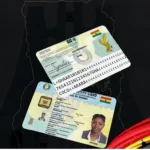 Ghana Bans Ghana Card Photocopies for Transactions, Makes Biometric Verification Mandatory
 Ghana Card Extortion Allegations: Six NIA Staff Arrested, Seven Dismissed Over Free Registration
 Ghana gives government agencies seven days to fix critical PHP security vulnerabilities.
 Ghana Parliament Passes Human Sexual Rights and Family Values Bill
 GTEC, TUTAG Agree on Strike Suspension Plan as Technical Universities Await Return to Classes