Ghana Health Service Trains Over 30 Agencies to Strengthen Humanitarian Emergency Response
Ghana Health Service, WHO and AFENET are training representatives from more than 30 agencies to improve humanitarian emergency preparedness. The programme aims to strengthen coordination, resource management and public protection, but how will success be measured?

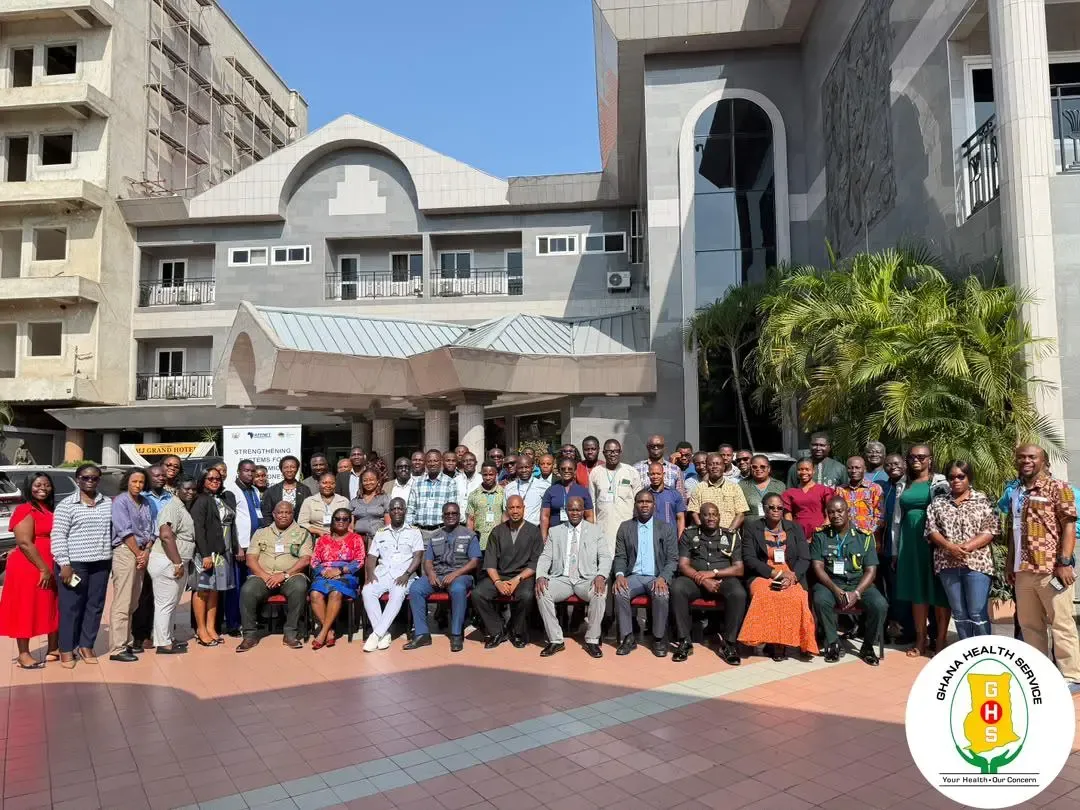

Ghana’s health authorities have launched a multi-agency training programme with WHO and AFENET to improve the country’s response to humanitarian emergencies. The initiative brings together more than 30 departments and agencies, but questions remain about how preparedness will be measured.
ACCRA, Ghana — The Ghana Health Service (GHS) has launched a multi-agency training programme aimed at strengthening the country’s ability to manage humanitarian crises, coordinate emergency responses and protect essential public services during major disruptions.
The programme is being organised in collaboration with the Africa Field Epidemiology Network (AFENET), the World Health Organization (WHO) and other partners, with support from the Pandemic Fund.
According to the Ghana Health Service, representatives from more than 30 departments and agencies, including security institutions, are participating.
The training focuses on risk assessment, coordination between government institutions, resource management, protection of affected populations and the continuity of essential services.
It was officially opened by GHS Director-General Dr Samuel Kaba Akoriyea.
The initiative forms part of wider efforts to strengthen Ghana’s public health emergency preparedness.
However, the announcement does not establish that the country has experienced a new humanitarian disaster or that a specific emergency response has been activated because of the training.

Ghana’s Emergency Preparedness: Training and Readiness Tracker
Explore the Ghana Health Service’s humanitarian crisis training, its objectives and the evidence needed to measure operational readiness.
Training programme structure
This visual represents the announced schedule, not independently confirmed completion of each cohort.
Interactive: five emergency preparedness priorities
Risk assessment
Identifying and assessing potential humanitarian threats before and during emergencies.
Evidence needed to assess effectivenessPublished risk assessments, scenario exercises and documented mitigation plans.
What the available figures establish
| Indicator | Reported information |
|---|---|
| Agencies in current programme | More than 30 |
| Current training cohorts | Four |
| Cohorts scheduled weekly | Two |
| Current trainee total | Not disclosed |
| Regions and districts represented | Not disclosed |
| Programme funding | Pandemic Fund support; amount not specified |
| Earlier Africa CDC trainees | 50 technical experts in a separate programme |
Interactive: what should Ghana measure next?
Emergency activation time
Measure how quickly relevant authorities activate a coordinated response after a serious incident is reported.
No measured result for this indicator was supplied in the current GHS announcement.
Three connected but distinct functions
Detecting, reporting and monitoring potential health threats.
Coordinating decisions, institutions, personnel and resources.
Providing assistance and protecting affected communities and essential services.
Preventive training does not establish that an Ebola outbreak or other public health emergency is occurring in Ghana.
The test is operational performance
Training more than 30 institutions’ representatives may strengthen coordination, but institutional representation alone does not establish national operational readiness.
Meaningful evaluation would require evidence of trained personnel, regional coverage, realistic exercises, response times and improvements implemented after those exercises.
Ghana’s preparedness will ultimately be judged by how effectively institutions protect people and maintain essential services during real emergencies.
Sources: Ghana Health Service announcement and Africa CDC emergency preparedness reporting, as described in the supplied article. Figures for the two training programmes are not combined. This dashboard is an editorial snapshot, not a live monitoring system.
Related posts:
 Ghana’s malaria cases decline as vaccination rollout expands
 WHO Warns DR Congo Ebola Outbreak May Be Spreading Faster as Death Toll Hits 131
 Midwife Assault at Tema Polyclinic Sparks National Push for Health Worker Safety
 DR Congo Ebola deaths rise to 447 as WHO launches first treatment trial
 Four measles cases confirmed at Kpone Kokompe as health authorities intensify surveillance