Sahel Coup Belt: 9 Ways Europe’s African Diaspora Is Shaping the AES Political Divide


Sahel Coup Belt: How Europe’s African Diaspora Is Being Drawn Into a Growing Political Divide
The political upheaval across the Sahel is no longer confined to Mali, Burkina Faso, and Niger. Increasingly, the struggle over legitimacy, governance, and sovereignty is extending beyond Africa’s borders and into European cities, where large African diaspora communities are finding themselves caught between supporting their home countries and opposing military-led governments.
Since military coups reshaped leadership in the three countries between 2020 and 2023, the ruling juntas have sought to consolidate both regional alliances and international support. Their efforts have not only transformed politics in the Sahel but have also intensified divisions within African communities living abroad.
How the Alliance of Sahel States Is Expanding Its Influence
Following the coups that brought Assimi Goïta in Mali, Captain Ibrahim Traoré in Burkina Faso, and General Abdourahamane Tiani in Niger to power, the three nations formed the Alliance of Sahel States (AES).
Initially established through the Liptako-Gourma Charter in September 2023 as a mutual defence pact, the alliance later evolved into a political confederation after all three countries withdrew from ECOWAS in 2024.
Today, the AES presents itself as a regional alternative built on:
- Security cooperation
- Political sovereignty
- Economic independence
- Reduced dependence on former colonial powers
However, the alliance’s influence is increasingly reaching Africans living overseas.
Diaspora Communities Become Political Battlegrounds
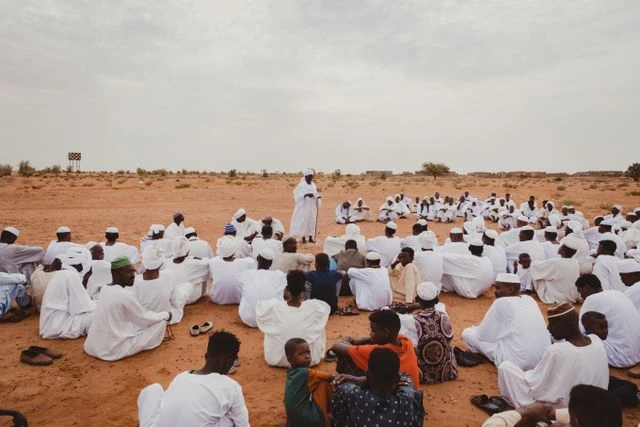
One of the clearest examples emerged earlier this year in Paris, where hundreds of Malians gathered in support of Mali’s transitional government.
Organizers insisted the demonstration was intended to show solidarity with the Malian people rather than endorse military rule.
Yet critics argue that such public displays inevitably strengthen the legitimacy of ruling juntas internationally.
This has exposed a growing divide among Africans living abroad.
On one side are diaspora members who believe the military governments represent a break from decades of foreign influence and ineffective political leadership.
On the other are activists, journalists, academics, and opposition figures who warn that military governments are restricting democratic freedoms and silencing dissent.
Ibrahim Traoré’s International Popularity
Among the region’s military leaders, Captain Ibrahim Traoré has emerged as perhaps the most recognizable figure internationally.
His speeches are frequently translated, subtitled, and widely shared across social media platforms, attracting support from Pan-African audiences throughout Africa, Europe, and North America.
Supporters often portray him as continuing the legacy of former Burkinabe leader Thomas Sankara, emphasizing:
- African sovereignty
- Resource control
- Anti-colonial politics
- Economic independence
These narratives have resonated particularly among younger Africans in the diaspora.
Critics Raise Human Rights Concerns
While support for the juntas has grown in some diaspora circles, international human rights organizations continue to express concerns about political developments inside the Sahel.
Several organizations have documented allegations including:
- Restrictions on opposition political parties
- Arrests of activists
- Pressure on journalists
- Limits on freedom of expression
Analysts argue that these developments have made some members of the diaspora reluctant to openly criticize military governments for fear of possible consequences for relatives still living at home.
Economic Influence Goes Beyond Politics
The political debate is increasingly tied to economic influence.
In December 2025, the three AES governments announced the creation of the Confederal Investment and Development Bank (BCID-AES) with nearly $895 million in initial capital.
The institution aims to finance development projects while reducing dependence on traditional regional financial systems.
Observers believe diaspora communities could become increasingly important to these ambitions through:
- Remittances
- Diaspora investments
- Potential diaspora bonds
- Private capital flows
Because remittances already represent one of Africa’s largest sources of external finance, governments view overseas citizens as critical economic partners.
The Debate Over Sovereignty
Supporters of the AES argue that the alliance offers African countries an opportunity to reclaim political and economic independence after decades of foreign military presence and external financial influence.
Many believe the bloc represents a new model of African-led governance focused on sovereignty and self-reliance.
Critics, however, caution that calls for sovereignty should not come at the expense of democratic institutions, judicial independence, and civil liberties.
They argue that strong governance requires both national independence and accountable leadership.
Europe Emerges as a New Arena
Analysts increasingly suggest that Europe’s African diaspora has become an extension of the political contest unfolding in the Sahel.
Public demonstrations, online campaigns, financial contributions, and advocacy efforts now shape international perceptions of the region’s military governments.
At the same time, opposition groups operating from Europe continue to campaign for democratic reforms, making the diaspora itself a contested political space.
What Happens Next?
As the Alliance of Sahel States strengthens regional cooperation and pursues greater economic independence, the role of Africans living abroad is likely to become even more significant.
Questions remain over whether diaspora communities will evolve into:
- A major source of political legitimacy for the AES,
- An important source of investment and development finance,
- Or a growing platform for democratic opposition.
Whichever direction emerges, the political future of the Sahel is increasingly being influenced not only in Bamako, Ouagadougou, and Niamey, but also in Paris, Brussels, London, and other European cities where large African communities now play an expanding role in shaping the region’s future.
Read On
Related posts:
 Burkina Faso, Mali and Niger launch joint bid to host 2032 AFCON
  Ghana Pushes Border Cooperation as Sahel Insecurity Raises Regional Security Risks
  Ghana seeks AU intervention over xenophobic attacks in South Africa
  Mahama Calls for Renewed Pan-African Unity and Reparations Agenda During UK Visit
  Ghana moves nearly 900 citizens to safe havens ahead of South Africa protests