Ghana’s power supply stability improves amid energy reforms

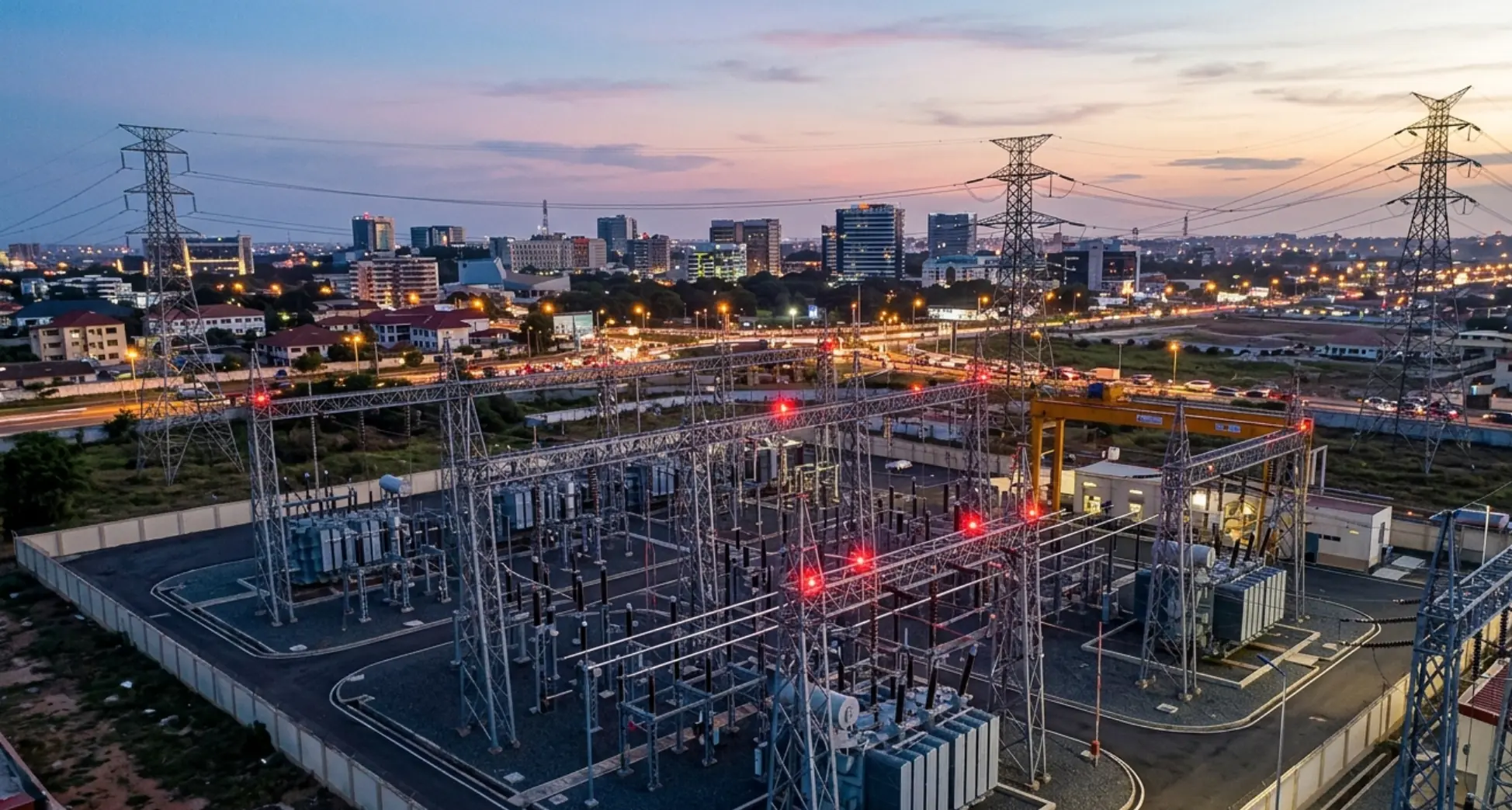

Energy sector reforms and improved fuel supply are stabilising Ghana’s electricity system, but experts warn that underlying financial risks remain unresolved.
ACCRA, Ghana — 4 May 2026
Ghana’s power supply stability has improved recently, with fewer widespread outages reported as energy sector reforms and fuel supply management strengthen electricity generation and distribution. Officials say the enhanced stability of Ghana’s power supply reflects coordinated efforts across generation, transmission, and distribution systems, helping to reduce disruptions that previously affected households and businesses.
The reduction in outages has been linked to better fuel procurement for thermal plants, improved maintenance schedules, and enhanced coordination between state-owned energy institutions. This has contributed to more consistent electricity delivery across major urban centres.
Why Ghana’s power supply stability is improving
Ghana’s power supply stability has benefited from targeted reforms aimed at addressing long-standing inefficiencies in the energy sector. Authorities have prioritised ensuring a reliable fuel supply for power plants, particularly natural gas and liquid fuels used in thermal generation. Interruptions in fuel supply have historically been a major cause of outages.
“Stable fuel supply has been a critical factor in maintaining generation levels,” said Nana Kofi Mensah, an energy analyst. “Without that, even well-maintained plants cannot operate consistently.” Transmission infrastructure has also seen improvements. The Ghana Grid Company has increased system monitoring and maintenance, reducing technical losses and improving grid resilience.
At the distribution level, the Electricity Company of Ghana has implemented measures to reduce faults and improve response times to outages. These include upgrading equipment and enhancing network monitoring systems.
Impact on businesses and economic activity
The improvement in Ghana’s power supply stability is beginning to have a measurable impact on economic activity, particularly for small and medium-sized enterprises. Businesses that rely heavily on electricity, such as manufacturing firms and cold storage operators, have reported fewer interruptions to operations. This has helped reduce costs associated with backup power sources such as generators.
“Before, we had to run generators almost every week,” said Ama Serwaa, who runs a food processing business in Accra. “Now outages are less frequent, so we save money on fuel.” For larger industries, improved electricity reliability supports production planning and reduces uncertainty. This is particularly important for export-orientated sectors that depend on consistent output.
However, some businesses caution that the benefits are not yet uniform across the country. Rural and peri-urban areas continue to experience more frequent disruptions compared to major cities.
Household experience and cost pressures
For households, Ghana’s power supply stability has improved daily life by reducing unexpected outages that disrupt work, education, and basic services. Reliable electricity is essential for activities such as home-based businesses, remote work, and access to digital services. The reduction in outages has helped restore some level of normalcy for many families. Despite this improvement, concerns remain about the cost of electricity. Tariff adjustments recently have increased the financial burden on households, even as supply becomes more stable.
“Power is more reliable now, but bills are still high,” said Kwame Owusu, a resident in Kumasi. “Stability is good, but affordability is just as important.”
Financial challenges in the energy sector
While Ghana’s power supply stability has improved, the financial health of the energy sector remains a key concern for analysts. State-owned energy companies continue to face significant debt, partly due to inefficiencies in revenue collection and legacy contractual obligations. These financial pressures can affect the sector’s ability to sustain improvements.
“There is progress on the technical side, but financial sustainability is still a major issue,” said Dr Efua Asante, an energy economist. “Without addressing that, stability may not be durable.” Delayed payments within the energy value chain, from distribution companies to generators, have historically contributed to operational challenges. Addressing these issues is seen as critical to maintaining stable supply.
Risks to sustained Ghana power supply stability
Despite recent gains, Ghana’s power supply stability remains vulnerable to several risks. One key risk is fuel price volatility. Changes in global energy prices can affect the cost and availability of fuel needed for electricity generation, particularly for thermal plants.
Another risk is infrastructure reliability. While improvements have been made, we still need to invest in ageing infrastructure to prevent future failures. Climate-related factors also pose challenges. Changing rainfall patterns can affect hydropower generation, which depends on water levels, adding another layer of uncertainty.
Outlook for the power sector
The outlook for Ghana’s power supply stability will depend on continued reforms and investment in both infrastructure and financial management. Authorities are expected to maintain focus on improving efficiency, strengthening revenue collection, and ensuring consistent fuel supply. Long-term solutions may include diversifying energy sources, increasing renewable energy capacity, and enhancing regional power trade within West Africa.
For now, the improvement in electricity reliability marks a significant step forward, but analysts say sustained stability will require addressing deeper structural issues in the sector.
Sources: Ministry of Energy Ghana · Electricity Company of Ghana · Ghana Grid Company.
Additional reporting and analysis by Nukunya News Desk.
Related posts:
 Accra flooding risk warning issued as rains intensify
  Dr Ofori Sarpong donates 600-bed dormitory to PRESEC Legon to ease student congestion
  President Mahama Signs Legal Education Reform Bill 2026 Into Law
  Ghana Pushes Border Cooperation as Sahel Insecurity Raises Regional Security Risks
  Ghana Partners Google for Education to Expand AI and Digital Skills in Schools