
Ghana cedi stability improves amid foreign inflow gains

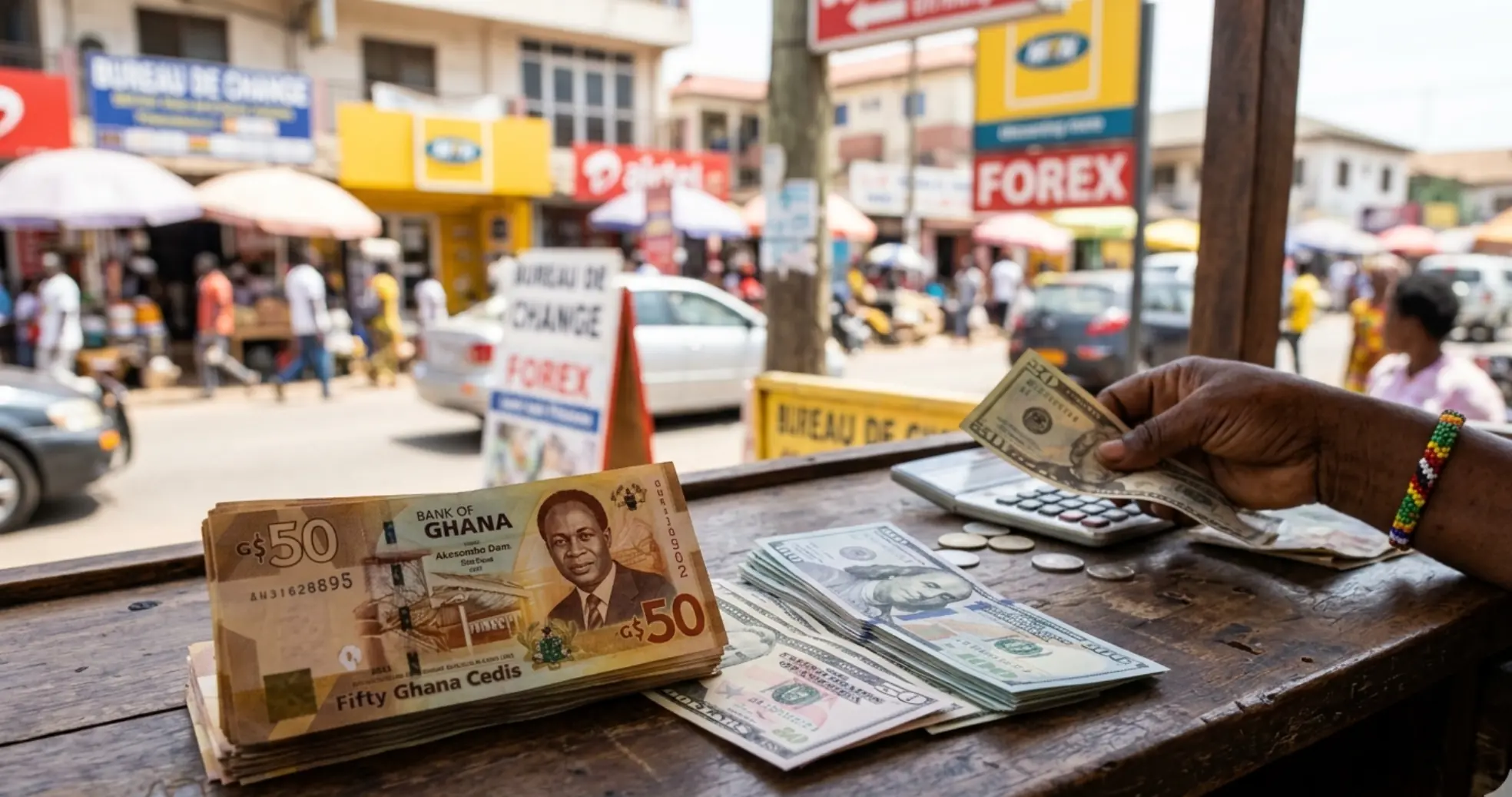

Ghana’s currency shows signs of stability as foreign inflows rise, but analysts warn that structural pressures could still challenge long-term gains.
ACCRA, Ghana — 4 May 2026
Ghana cedi stability has strengthened in recent weeks, supported by rising foreign inflows and improved market confidence, according to central bank data and market analysts. The local currency has shown reduced volatility against major trading currencies, particularly the US dollar, as external financing and export earnings improve liquidity conditions. Officials say the trend reflects a combination of policy interventions and increased inflows from international financial institutions and commodity exports. This has helped ease pressure on import costs and inflation.
How sustainable is Ghana’s cedi stability?
Improved foreign exchange inflows, including support linked to ongoing economic reform programmes, have largely driven the recent stability of the Ghana cedi. The Bank of Ghana has implemented measures aimed at tightening liquidity and stabilising the foreign exchange market. These actions have helped reduce speculative pressure and improve confidence among investors. “The current stability is encouraging, but it depends heavily on continued inflows,” said Kojo Mensah, a financial analyst based in Accra. “Without sustained support, the gains could reverse.” Export performance, particularly in gold and cocoa, has also contributed to stronger foreign exchange reserves. Higher commodity prices have boosted earnings, providing additional support for the currency.
Impact on businesses and households
For businesses, the stability of the Ghana cedi is beginning to ease the cost of imported goods and raw materials. This has provided some relief to manufacturers and retailers who rely on foreign inputs. Lower exchange rate volatility allows firms to plan more effectively and manage pricing strategies. However, many businesses say that consumer prices do not yet fully reflect the benefits. “Import costs have stabilised slightly, but we are still dealing with past increases,” said Kwesi Boateng, a small business owner. “It will take time before customers see real price reductions.” For households, the effects remain limited. While currency stability helps reduce further price spikes, the high cost of living continues to affect spending behaviour.
Structural risks remain
Despite the positive trend, economists warn that Ghana cedi stability remains vulnerable to both domestic and external risks. The reliance on foreign inflows means the currency could face renewed pressure if external financing slows or global market conditions change. “There is still underlying fragility,” said Dr Efua Owusu, an economist. “Structural issues such as fiscal deficits and debt levels have not disappeared.” Exchange rate stability also depends on maintaining investor confidence, which is influenced by fiscal discipline and policy consistency.
Outlook tied to policy discipline
The outlook for the Ghanaian cedi will hinge on the authorities’ ability to sustain tight macroeconomic discipline while navigating a complex external environment. Analysts broadly agree that recent signs of currency stabilisation reflect a combination of restrictive monetary policy, improved fiscal signalling, and support from international financial programmes, but they warn that these gains remain fragile.
The Bank of Ghana is expected to maintain an elevated policy rate stance in the near term to anchor inflation expectations and support the currency. This matches traditional stabilisation frameworks often highlighted by institutions like the International Monetary Fund, which stress the importance of monetary credibility in restoring investor confidence in emerging markets facing inflationary shocks.
However, monetary tightening alone is unlikely to secure lasting stability. Fiscal consolidation remains critical. Markets will closely watch the government’s efforts to improve domestic revenue mobilisation, rationalise expenditure, and reduce reliance on external borrowing. Ghana’s participation in IMF-supported reforms has already imposed stricter fiscal discipline, but implementation risks persist, particularly in an environment of social pressure and political constraints.
External conditions add another layer of uncertainty. Global interest rate trajectories, particularly in advanced economies such as the United States, will influence capital flows and exchange rate pressures. A prolonged period of high global rates could sustain outflows from frontier markets, including Ghana, placing renewed pressure on the cedi. At the same time, commodity price dynamics, especially gold and cocoa, remain pivotal. Strong export performance could provide a buffer, while volatility in global commodity markets could quickly reverse recent gains.
There are also structural considerations. Economists note that durable currency stability will require deeper reforms beyond cyclical policy adjustments. These include strengthening the export base, improving productivity, and reducing structural import dependence, particularly in energy and manufactured goods. Without such reforms, the cedi remains vulnerable to recurring external shocks.
For now, market sentiment appears cautiously optimistic. The cedi’s relative stability in recent months signals improving confidence, but analysts caution against mistaking the situation for a full recovery. As one Accra-based economist put it, the current trajectory reflects “stabilisation, not transformation”.
In that context, the near-term outlook can be characterised as conditional stability. Progress is evident, but its durability will depend on sustained policy discipline, consistent reform execution, and a supportive global environment.
Sources: Bank of Ghana · Ministry of Finance Ghana · IMF.
Additional reporting and analysis by Nukunya News Desk.
Related posts:
 Ghana’s inflation slows for third straight month, easing pressure on households
  Ghana’s inflation slows for third consecutive month as food prices ease
  IMF PCI to Strengthen Bank of Ghana’s Balance Sheet
  Ghana Nears First Non-Interest Banking Licence as BoG Warns on Fintech Trust
  MTN Ghana to Start Charging Customers for MoMo-to-Bank Transfers From June 1