
Why Ghana’s Youth Mental Health Crisis Is Becoming Impossible to Ignore: What Every Family Needs to Know in 2026


Follow Nukunya
Get the latest breaking news and updates from Nukunya.
Experts Call for Greater Awareness, Early Support and Improved Access to Mental Health Services
ACCRA, Ghana — Mental health experts are raising concerns about the growing psychological challenges facing young people in Ghana, warning that anxiety, depression and emotional stress are becoming increasingly common as economic pressures, academic demands and social expectations continue to intensify.
Although mental health awareness has improved in recent years, healthcare professionals say many young Ghanaians still struggle to access appropriate support due to stigma, limited specialist services and a lack of understanding about mental illness.
Psychologists and public health specialists believe addressing youth mental health is essential not only for individual wellbeing but also for Ghana’s long-term social and economic development.
“Young people are facing multiple pressures at the same time,” said a clinical psychologist in Accra. “Many are dealing with financial uncertainty, unemployment, academic stress, family responsibilities and the influence of social media, all of which can affect mental wellbeing.”
A Growing Public Health Concern
Mental health disorders are increasingly recognised as one of the leading causes of illness and disability among young people worldwide. In Ghana, healthcare providers report that more adolescents and young adults are seeking help for symptoms associated with anxiety, depression, stress-related disorders and emotional burnout.
Experts say the growing awareness of mental health has encouraged more people to seek assistance, but many cases remain undiagnosed because individuals fear discrimination or misunderstand what mental illness involves. Unlike many physical illnesses, mental health conditions are not always visible, making early recognition more difficult.
Social Media and Digital Pressures
Mental health specialists say social media has transformed how young people communicate, learn and interact, but it has also introduced new psychological pressures. Constant exposure to carefully curated lifestyles, unrealistic beauty standards and online comparisons can contribute to low self-esteem, anxiety and feelings of inadequacy. Cyberbullying and online harassment have also emerged as growing concerns.
Some young people report feeling pressure to maintain a constant online presence, while others experience stress linked to misinformation, negative comments or fear of missing out. Experts recommend maintaining a healthy balance between online activities and real-life relationships while encouraging regular breaks from digital devices.
Economic Challenges Affect Mental Wellbeing
Youth unemployment and financial insecurity continue to present significant challenges for many young Ghanaians. Graduates entering an increasingly competitive labour market often face uncertainty about employment opportunities and future career prospects.
Mental health professionals say prolonged financial stress can contribute to anxiety, depression and reduced self-confidence.
For young entrepreneurs, rising living costs and limited access to business financing can add further emotional strain.
“Financial uncertainty can have a significant impact on mental health,” said a public health researcher. “Supporting young people through employment initiatives and skills development can also benefit psychological wellbeing.”
Academic Pressure and Performance Anxiety
Students in secondary schools, colleges and universities often experience considerable academic pressure. Preparing for examinations, meeting family expectations and planning future careers can create persistent stress.
While moderate levels of stress may motivate performance, excessive or prolonged stress can negatively affect concentration, sleep quality and emotional health. Education specialists are encouraging schools and universities to strengthen counselling services and provide greater emotional support for students experiencing difficulties.
Recognising the Warning Signs
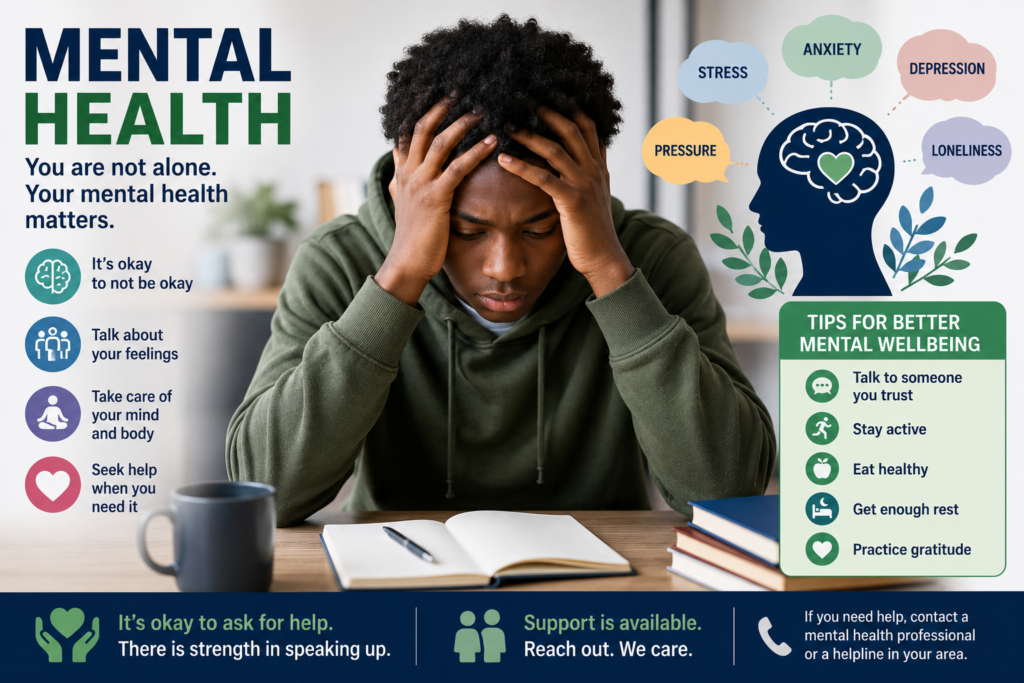
Mental health experts encourage parents, teachers and friends to recognise early signs that a young person may be struggling emotionally.
Warning signs may include:
- Persistent sadness or hopelessness
- Withdrawal from friends and family
- Changes in sleeping or eating habits
- Difficulty concentrating
- Loss of interest in activities previously enjoyed
- Irritability or mood changes
- Declining academic performance
- Increased alcohol or substance use
- Expressions of hopelessness or thoughts of self-harm
Healthcare professionals emphasise that experiencing one or more of these symptoms does not necessarily indicate a mental illness, but persistent symptoms should be assessed by a qualified healthcare professional.
Breaking the Stigma
Despite growing awareness, stigma remains one of the biggest barriers preventing young people from seeking help. Some individuals worry they may be judged, misunderstood or labelled if they discuss emotional difficulties.
Mental health advocates say changing public attitudes requires open conversations within families, schools, workplaces and communities.
Religious organisations, community leaders and educational institutions also have an important role in promoting understanding and encouraging people to seek professional support when needed.
Experts stress that mental illness is a health condition rather than a sign of personal weakness.
Improving Access to Mental Health Services
Mental health specialists say expanding access to counselling, psychological services and community-based mental healthcare should remain a national priority. Although Ghana has made progress through reforms in mental healthcare and increased public awareness campaigns, demand for services continues to exceed available resources in many areas.
Healthcare professionals are calling for greater investment in mental health education, more trained psychologists and psychiatrists and improved integration of mental healthcare into primary healthcare services. Schools and universities are also encouraged to strengthen student counselling programmes to identify concerns before they become more serious.
What lies ahead?
Experts believe improving youth mental health requires collaboration between government, healthcare providers, schools, families and communities. Encouraging open conversations, reducing stigma and ensuring timely access to professional support could help many young people receive assistance before problems worsen.
As Ghana continues to invest in education, employment and national development, healthcare professionals argue that protecting young people’s mental wellbeing should remain a public health priority.
A mentally healthy generation is more likely to succeed academically, participate productively in the workforce and contribute positively to society. By recognising mental health as an essential part of overall wellbeing, Ghana can strengthen support systems for young people while building healthier and more resilient communities for the future.
Related posts:
 Why More Ghanaians Are Being Diagnosed with Type 2 Diabetes
  How to Prevent Haemorrhoids: Simple Lifestyle Changes Every Ghanaian Should Know
  The Hidden Power of Sleep: 4 Essential Reasons It Supports Health, Wellbeing and Long-Term Survival
  Hirsutism: The 5 Reasons That Causes Excess Hair Growth and Emotional Stress
  Malaria Cases Rise During Rainy Season: What Ghanaians Need to Know